Test for Chlorine (OCR GCSE Chemistry A, Combined (Gateway Science Suite)): Revision Notes
📚Revision Notes
8.2.4 Test for Chlorine
Identifying Chlorine Gas
Note
Chlorine is a toxic gas that can be produced during certain chemical processes, such as electrolysis. It has a distinct, sharp smell and is often used in disinfectants and bleaching agents. Due to its reactive nature, chlorine can be easily identified with a simple test involving damp litmus paper.
Note
How to Test for Chlorine: The Litmus Paper Test
-
Collect the Gas: Capture the chlorine gas produced in a reaction by collecting it in a test tube. Make sure to handle chlorine gas with care as it can be harmful.
-
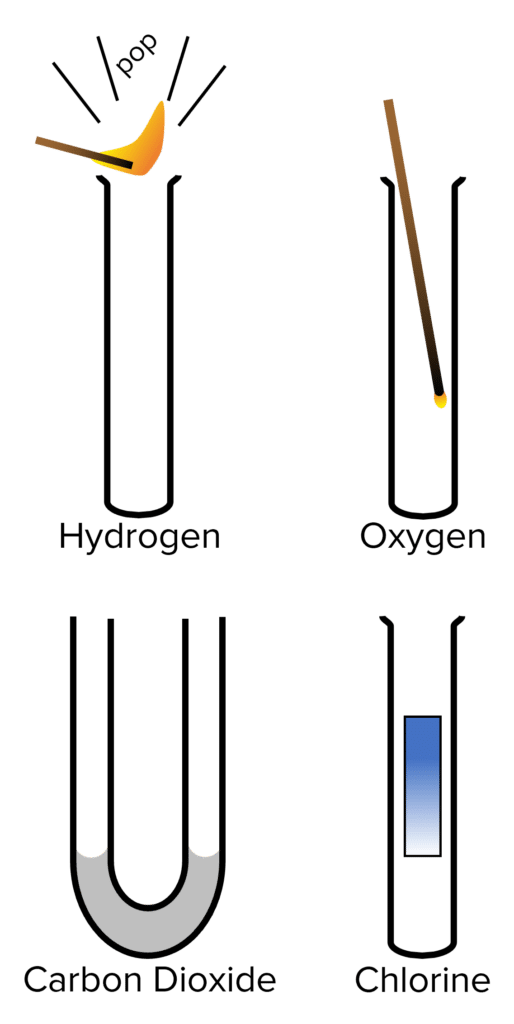
Prepare the Litmus Paper: Take a piece of blue litmus paper and dampen it slightly with water. The paper should be moist, but not soaking wet. This step is important because chlorine reacts more effectively with damp litmus paper.
-
Perform the Test: Place the damp blue litmus paper into the test tube containing the chlorine gas.
-
Observe the Result: If chlorine gas is present, the blue litmus paper will quickly be bleached. This means the paper will change from blue to white. The bleaching effect occurs because chlorine reacts with the water on the litmus paper to form hydrochloric acid, which then destroys the dye in the paper.