The pH Scale & Neutralisation (OCR GCSE Chemistry A, Combined (Gateway Science Suite)): Revision Notes
📚Revision Notes
4.2.6 The pH Scale & Neutralisation
What are Acids and Bases?
Note
Acids and bases can be defined based on the ions they produce when dissolved in water:
Note
Acids: Substances that produce hydrogen ions (H⁺) in aqueous solutions. The more H⁺ ions a substance produces, the more acidic it is. Bases: Substances that produce hydroxide ions (OH⁻) in aqueous solutions. Bases that are soluble in water are called alkalis. When an alkali dissolves in water, it creates an alkaline solution. The more OH⁻ ions a substance produces, the more basic (or alkaline) it is.
Note
Common Examples of Acids and Bases
- Acidic Substances: Examples include vinegar, citric acid, and milk (although milk is only very mildly acidic).
- Basic (Alkaline) Substances: Bases are often found in cleaning products. Common examples include bleach and ammonia, both of which are strongly basic compounds.
Note
Understanding the nature of acids and bases is fundamental to grasping the pH scale, as it is the concentration of H⁺ and OH⁻ ions that determines the pH and whether a substance is acidic, neutral, or alkaline.
The pH Scale
Note
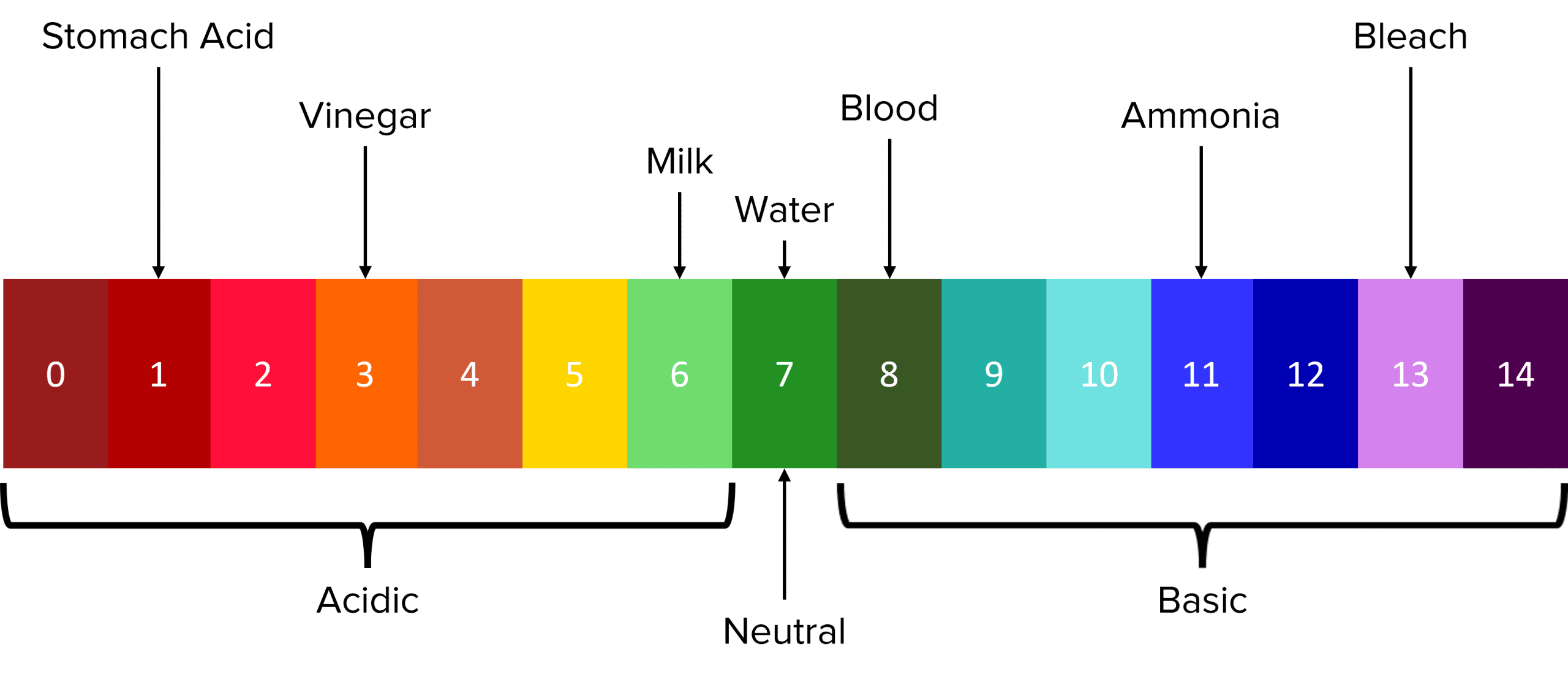
The pH Scale is a widely used method for measuring the acidity or alkalinity (basicity) of a substance. The scale indicates the concentration of hydrogen ions (H⁺) in a solution, with pH being a logarithmic measure of this concentration. The lower the pH value, the higher the concentration of H⁺ ions, making the solution more acidic.
- pH Range: The pH scale ranges from 0 to 14, with 7 being neutral.
- Acidic Substances: Have a pH between 0 and 6. The closer the pH is to 0, the stronger the acid. Examples include:
- Battery acid (pH 0)
- Vinegar (pH 3)
- Milk (pH 6)
- Neutral Substances: Have a pH of 7. Pure water is a common example.
- Alkaline (Basic) Substances: Have a pH between 8 and 14. The closer the pH is to 14, the stronger the base. Examples include:
- Baking soda (pH 9)
- Ammonia (pH 11)
- Blood (pH 8)
Measuring pH
Note
pH can be measured using a universal indicator, which is a chemical mixture that changes colour depending on the pH of the solution. When added to an acid or base, the indicator produces a colour that corresponds to a specific pH value on the pH scale. For example:
- Red typically indicates a strong acid (pH 1-3).
- Green indicates a neutral solution (pH 7).
- Purple indicates a strong alkali (pH 12-14).
Neutralisation Reactions
Note
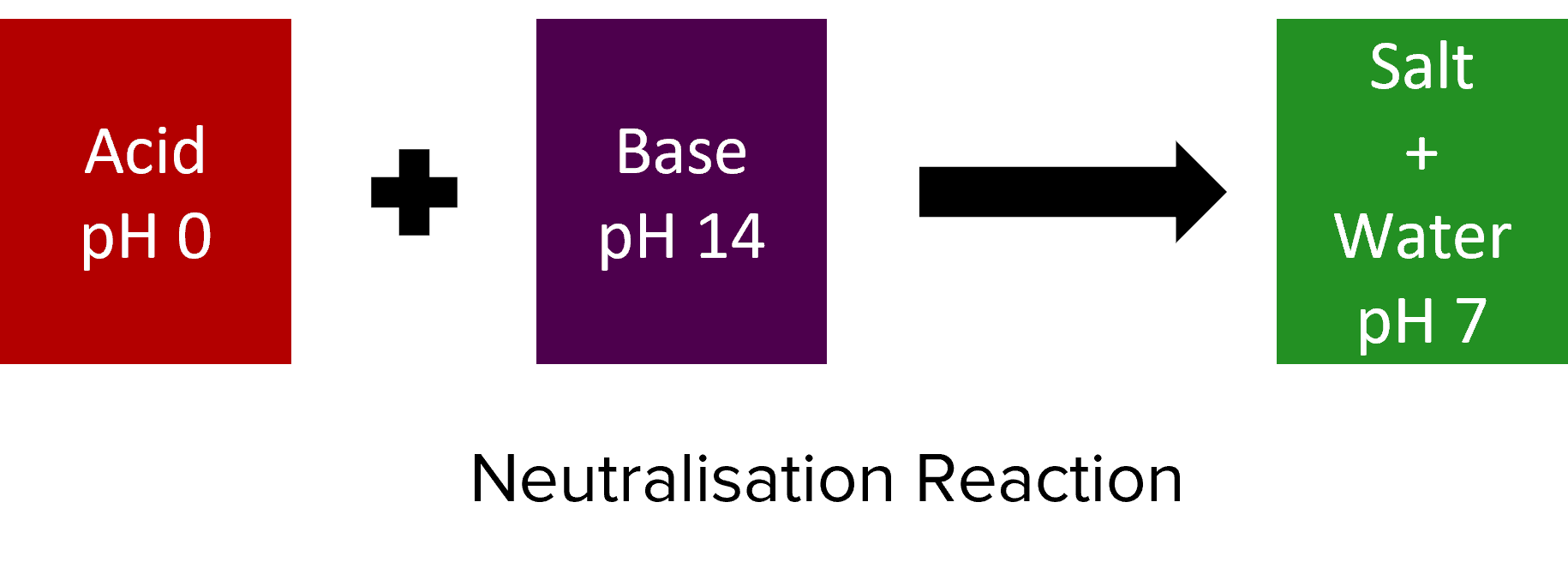
Neutralisation is a chemical reaction between an acid and a base that results in the formation of a salt and water.
Note
The general word equation for this type of reaction is:
In a neutralisation reaction:
- The H⁺ ions from the acid react with the OH⁻ ions from the base to form water (H₂O).
- The remaining ions from the acid and base combine to form a salt.
Formation of Salts
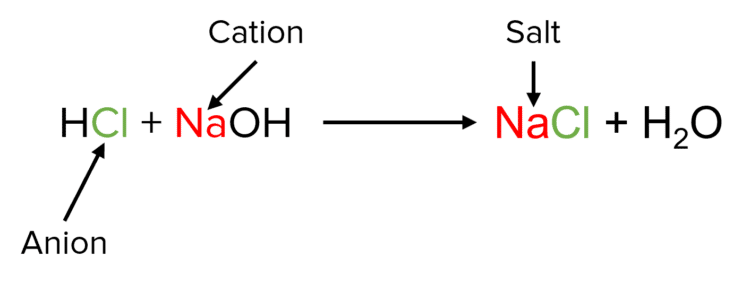
Salts are ionic compounds that result from the neutralisation of an acid by a base. They are typically formed when the cations (positive ions) from the base combine with the anions (negative ions) from the acid.
Note
For example:
- When hydrochloric acid (HCl) reacts with sodium hydroxide (NaOH), sodium chloride (NaCl) and water (H₂O) are formed:
Note
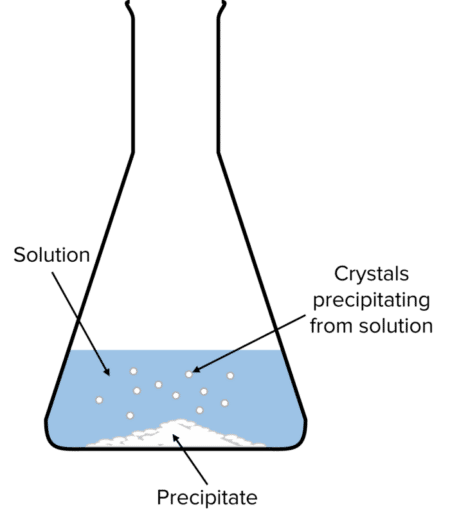
Salts are often insoluble in water, meaning they do not dissolve easily and may form a precipitate. A precipitate is a solid that forms in solution and settles at the bottom of the reaction vessel. This can be separated from the solution using filtration.
In summary, the pH Scale provides a measure of how acidic or alkaline a substance is, while neutralisation is the process of mixing an acid and a base to form a neutral solution, typically resulting in the formation of a salt and water. Understanding these concepts is fundamental to many chemical processes and reactions.