Atmospheric Pollutants from Fuels (OCR GCSE Chemistry A, Combined (Gateway Science Suite)): Revision Notes
📚Revision Notes
9.3.1 Atmospheric Pollutants from Fuels
Atmospheric Pollutants from Fuels
Note
Atmospheric pollutants are harmful substances released into the air, primarily through the combustion of fossil fuels. These pollutants can act as greenhouse gases, contribute to climate change, or cause direct harm to human health and the environment. One significant consequence of atmospheric pollutants is the production of acid rain, which damages both natural and man-made environments.
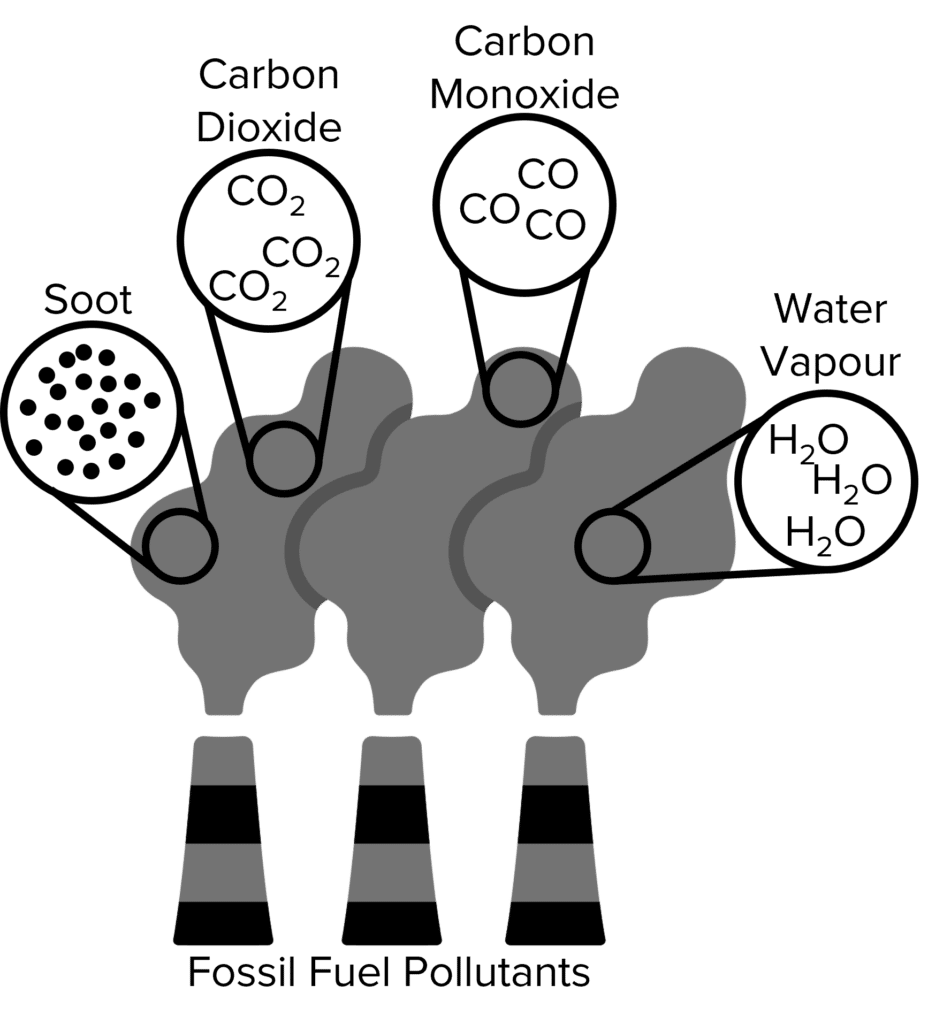
Fossil Fuel Pollutants
Note
Fossil fuels are a major source of atmospheric pollutants. In 2021 alone, 57 million tonnes of oil were burned in the UK, releasing large amounts of pollutants into the atmosphere. Fossil fuels are burned daily in power stations, homes, and vehicles, contributing to hundreds of millions of tonnes of pollutants each year.
- Complete Combustion:
- When fossil fuels undergo complete combustion, they primarily release carbon dioxide (CO₂) and water vapour (H₂O). These pollutants are both greenhouse gases, meaning they trap heat in the Earth's atmosphere and contribute to climate change by intensifying the greenhouse effect.
- Incomplete Combustion: Incomplete combustion occurs when there is not enough oxygen to fully oxidise all the hydrocarbons in the fuel. This process produces carbon monoxide (CO), a toxic gas. When inhaled, carbon monoxide binds to red blood cells in place of oxygen, preventing oxygen circulation in the body. High levels of exposure can lead to fainting, coma, or even death.
Note
Incomplete combustion also produces carbon soot, which is emitted as fine particles known as particulate matter. Particulate matter can be inhaled, causing respiratory problems, and it also contributes to environmental pollution by creating clouds that reflect sunlight, reducing the amount of light that reaches the Earth's surface.