Metals & Non-Metals (OCR GCSE Chemistry A (Gateway Science Suite)): Revision Notes
📚Revision Notes
1.2.3 Metals & Non-Metals
Metals
Examples: Iron, magnesium, and gold are examples of metal elements.
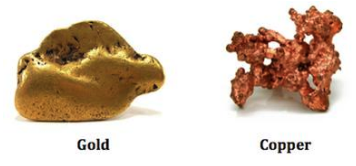
Common Properties:
- Shiny, especially when they are freshly cut.
- Good conductors of heat and electricity.
- Malleable (they can be bent and shaped without breaking).
Additional Properties:
-
Solid at room temperature, except mercury.
-
Hard and strong.
-
High density.
-
Sonorous (they make a ringing sound when hit). Magnetism:
-
Three metals (iron, cobalt, and nickel) are magnetic.
-
Steel, which is mostly iron, is also magnetic.
-
The other metal elements are not magnetic.
Non-metals
Examples: Oxygen, carbon, sulphur, and chlorine are examples of non-metal elements.
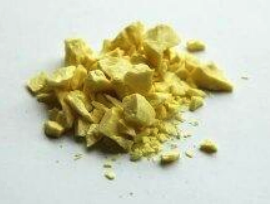
Common Properties:
- Dull (not shiny).
- Poor conductors of heat and electricity (they are insulators).
- Weak and brittle (they easily break or shatter when solid).
Additional Properties:
-
Low density (they feel light for their size).
-
Not sonorous (they do not make a ringing sound when hit). States at Room Temperature:
-
Eleven non-metals are gases at room temperature, including oxygen and chlorine.
-
One non-metal, bromine, is a liquid at room temperature.
-
The other non-metals are solids at room temperature, including carbon and sulphur.