Le Chatelier’s Principle: Temperature Changes on Equilibrium (OCR GCSE Chemistry A (Gateway Science Suite)): Revision Notes
📚Revision Notes
6.2.6 Le Chatelier's Principle: Temperature Changes on Equilibrium
The Effect of Temperature Changes on Equilibrium
According to Le Chatelier's principle, an equilibrium shifts its position to oppose any change in its temperature.
Note
This means that, when the temperature is increased, the equilibrium will shift towards whichever side of the reaction produces a lower temperature. This reduces the temperature of the reaction and opposes the change.
-
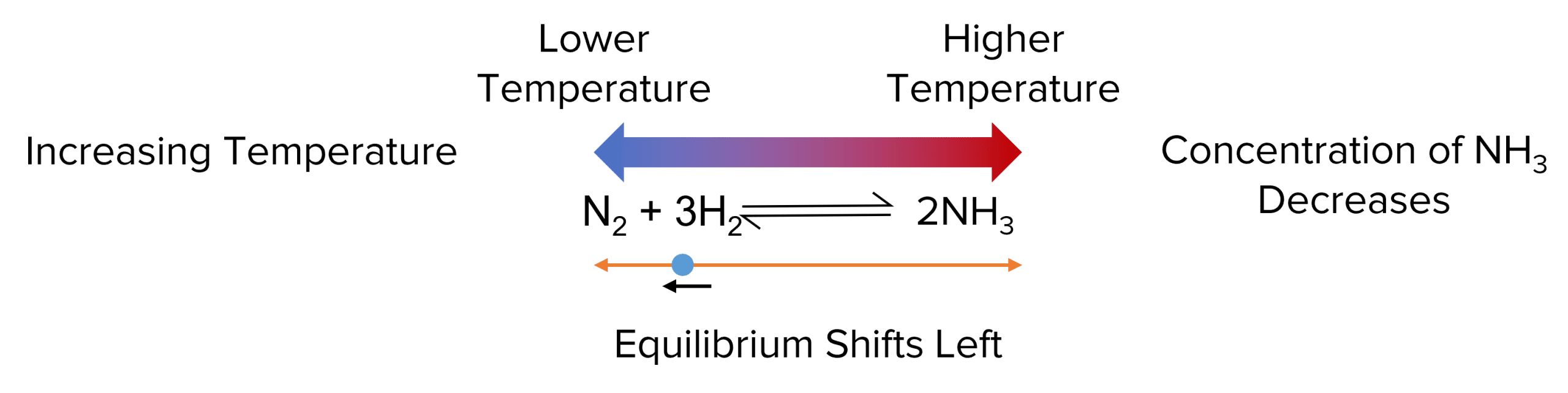
If the temperature is increased, the equilibrium will shift towards the side of the reaction that absorbs heat (the endothermic side). This helps to reduce the overall temperature.
-
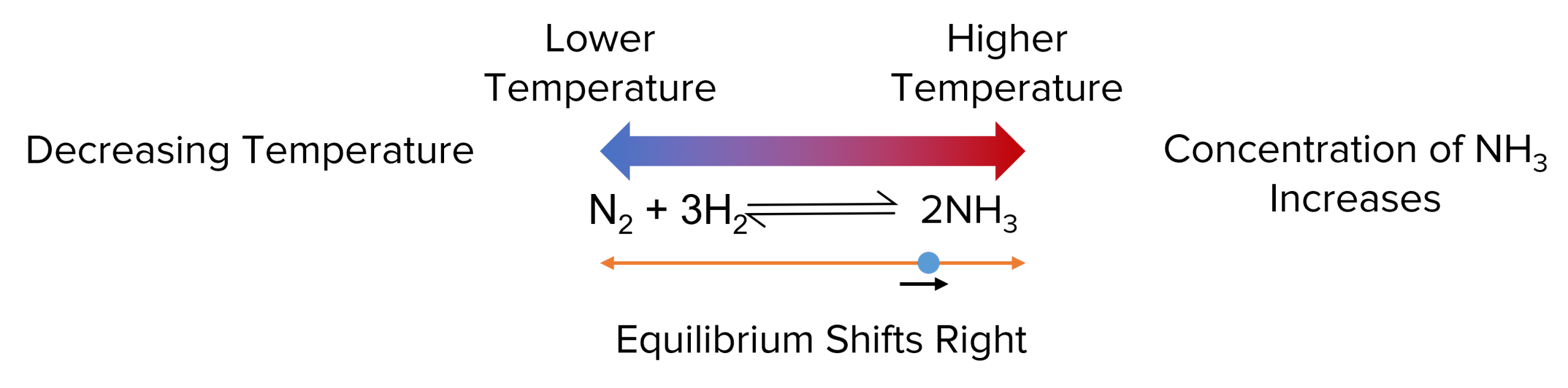
If the temperature is decreased, the equilibrium will shift towards the side of the reaction that releases heat (the exothermic side) to increase the temperature.
Example
Example: In the ammonia formation reaction:
-
This reaction is exothermic, meaning the forwards reaction releases heat.
-
If the temperature is increased, the equilibrium will shift to the left, towards the endothermic side (the reactants), to absorb the excess heat, decreasing the concentration of ammonia.
-
If the temperature is decreased, the equilibrium will shift to the right, towards the exothermic side (the products), to release more heat, increasing the concentration of ammonia.