Networks & Topologies (OCR GCSE Computer Science): Revision Notes
📚Revision Notes
Star & Mesh Networks
Network Topologies
Topology refers to the layout or structure of a computer network. Different topologies are used to organise devices and manage the flow of data.
Star Network
In a Star Network, all devices are connected to a central switch or server. The central device controls the data flow between devices.
How it works
Data is sent from a device to the central hub, which then forwards it to the destination device.
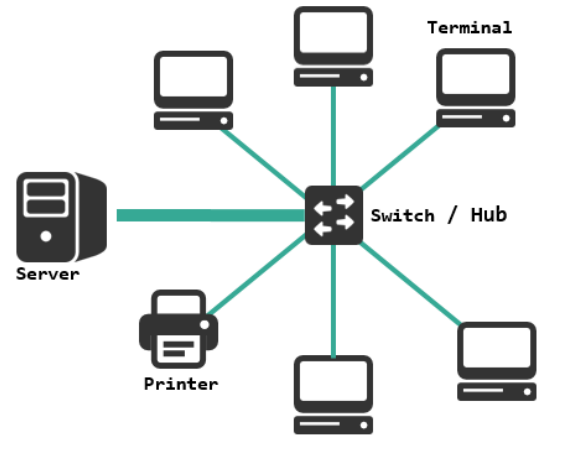
Advantages of Star Topology
- Fast data transfer: The central device manages communication, reducing the risk of data collisions.
- Reliable: If one cable or device fails, the rest of the network remains unaffected.
- Easy to set up and maintain: Adding or removing devices does not affect the whole network.
Disadvantages of Star Topology
- Central point of failure: If the central switch or server fails, the entire network goes down.
- Expensive: Requires a lot of cables and the central device can be costly, especially for larger networks.
Mesh Network
A Mesh Network connects devices either directly to each other or through intermediate devices. It can be either full mesh (where every device is connected to every other device) or partial mesh (only some devices are interconnected).
How it works
Data is transmitted along the fastest path available between devices. If one path fails, data can take an alternative route.
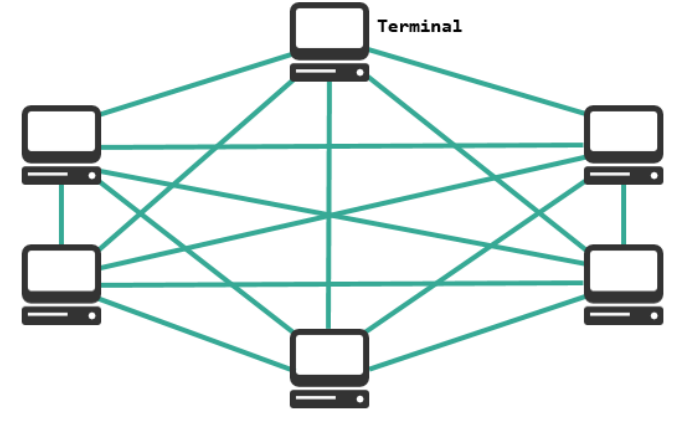
Advantages of Mesh Topology
- Highly resilient: If one connection fails, data can still be rerouted through another path, meaning there is no single point of failure.
- Simultaneous data transmission: Multiple data transfers can occur at the same time, improving network speed and efficiency.
Disadvantages of Mesh Topology
- Complex setup: Requires many connections, especially in full mesh networks, making it expensive and harder to set up.
- Difficult maintenance: Troubleshooting and managing the network can be complex due to the many interconnections.
Understanding Networks
- Scenario 1: Small office with a limited budget: A Star Network would be a better choice. It is simpler to manage and cheaper to install, as a small office might not need the resilience of a Mesh Network.
- Scenario 2: Large organisation with high reliability needs: A Mesh Network would be ideal here, especially in critical systems where uptime is crucial. Mesh networks ensure that data can still flow even if some connections fail.
Summary of Star vs Mesh
| Feature | Star Network | Mesh Network |
|---|---|---|
| Structure | All devices connect to a central switch or server | Devices connect directly to each other |
| Data transfer | Data goes through the central hub | Data takes the fastest available route |
| Resilience | If the central hub fails, the whole network goes down | Redundant paths ensure the network keeps working even if connections fail |
| Cost | Cheaper and easier to install | Expensive due to multiple connections |
| Maintenance | Easier to troubleshoot | Complex to manage and maintain |
Packet Switching
Packet Switching is the process of splitting data into small packets and sending them individually over a network. Each packet can take different routes to reach its destination. Packet switching is used in many types of networks, including the Internet because it is efficient and reliable for transferring large files or data over complex networks like mesh topologies.
How Packet Switching Works
- The data is broken into packets of fixed size.
- Each packet is given a header containing important information like the destination address and packet number.
- Packets travel independently across the network.
- At the destination, the server reassembles the packets into the original file.
- If packets are missing or corrupted, they are re-requested from the sender.
Packet Structure
- Header: Contains the destination address, source address, packet number, and routing information.
- Payload: The actual data being transmitted.
- Footer: Contains error-checking data, like a checksum, to ensure data integrity.
Note
Key Points to Remember
- Star topology connects all devices to a central hub, making it easy to manage and reliable but vulnerable if the central hub fails.
- Mesh topology connects devices directly, providing multiple data routes for resilience, but it is expensive and complex to set up.
- Star networks are suitable for smaller, low-budget setups, while mesh networks are ideal for large organisations needing high reliability.
- Packet switching splits data into packets that travel independently, making it efficient for complex networks like the Internet.