Tropical Rainforest Ecosystem (OCR GCSE Geography A (Geographical Themes)): Revision Notes
📚Revision Notes
2.2.1 Tropical Rainforest Ecosystem
Key Characteristics
- Tropical rainforest is a hot, wet ecosystem found on and near the Earth's equator.
- Contains far more species of plants and animals than any other biome.
- Covers approximately 6% of the Earth's surface.
- Receives about 2,000 mm of rain per year.
- Temperatures range from around 27 to 32°C.
- Conditions are wet and hot all year round, making it a good environment for growth.
Why is it Hot & Wet in a Rainforest?
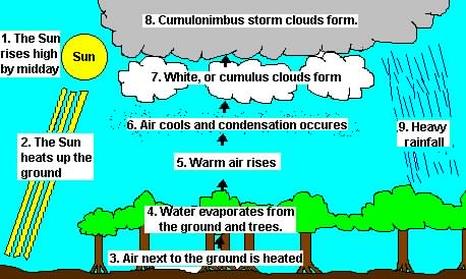
- Sun's Rays
- Shine directly on the land and sea at the equator, making it the hottest part of the Earth.
- Heat warms the land, air, and sea, causing water to evaporate into the air.
- Warm Air
- Can hold a lot of water.
- As the air rises, it cools, and the water turns back into rain, creating clouds.
- Results in a lot of rain in the forests around the tropics.
Structure of the Rainforest
Structure of the Rainforest
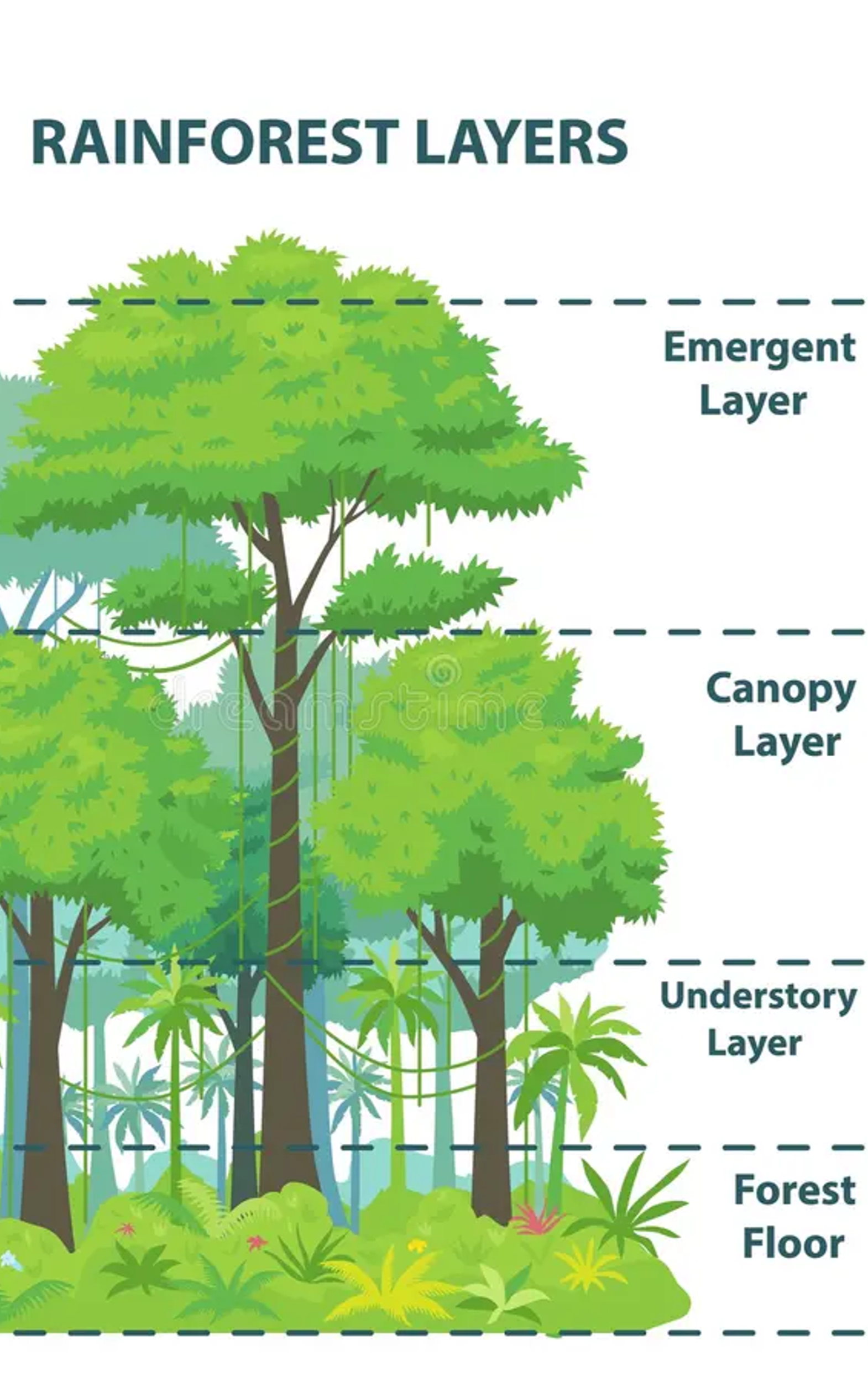
- The Emergent Layer
- The tallest layer, over 40 metres.
- Contains only a few tall trees which grow taller than the trees of the canopy.
- Plants are adapted for dry conditions with small, waxy leaves to prevent drying out.
- Canopy
- The second-highest layer, 30-45 metres.
- The canopy blocks out the sun from lower layers and intercepts (catches) rainfall.
- Contains the most plant species and animal species.
- Understory
- Low light conditions (2-15%).
- Plants adapted to low light grow here.
- Habitat for birds, butterflies, frogs, snakes, and lots of insects.
- Forest Floor
- Very little light (2%) reaches the forest floor, so plants grow slowly.
- The ground is covered in fallen leaves, rotting branches, and a network of shallow roots.
- Habitat for lots of insects.