Urban Change (OCR GCSE Geography A (Geographical Themes)): Revision Notes
📚Revision Notes
4.1.1 Urban Change
What is Urbanisation?
- Urbanisation:
- Growth in the proportion of a country's population living in an urban area.
- Nearly 60% of the world's population now live in cities, that's 3.8 billion people.
- Happening fastest in LIC/NEE countries. Good transport, internet, and communication networks mean people can live in rural areas perfectly well in HICs.
- Urban areas are growing rapidly, causing a range of opportunities and challenges.
- Urban planning is important to maximise opportunities and minimise challenges.
Rural to Urban Migration
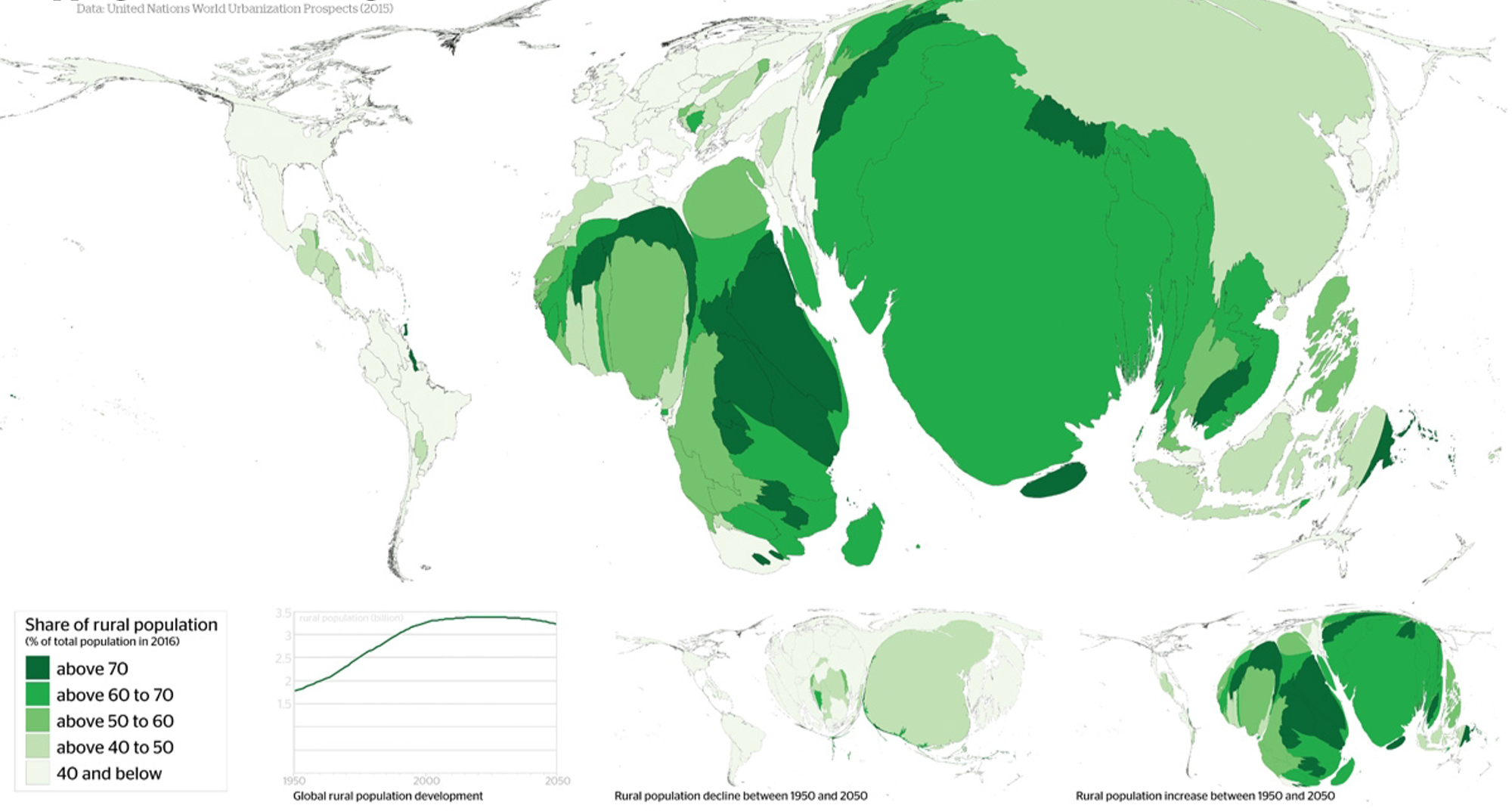
Rural to Urban Migration
- Rural to urban migration:
- Movement of people from the countryside to the city.
- Rate is affected by push factors (things that encourage people to leave) and pull factors (things that encourage people to move to an area).
Note
Push Factors
- Natural disasters
- War and conflict
- Mechanisation (less farming jobs due to agricultural equipment)
- Drought/Desertification
- Lack of employment
Note
Pull Factors
- More jobs
- Better education & healthcare
- Increased quality of life
- Following family members
- Urbanisation is caused by natural increase:
- Natural increase is when the birth rate is higher than the death rate (more people being born than dying), so the population grows.
- Young Population:
- Young people move to cities to find work.
- Family Growth:
- Young people who move to cities start families, increasing the population.
- Better healthcare means people in cities live longer.
- Growth of Mega Cities:
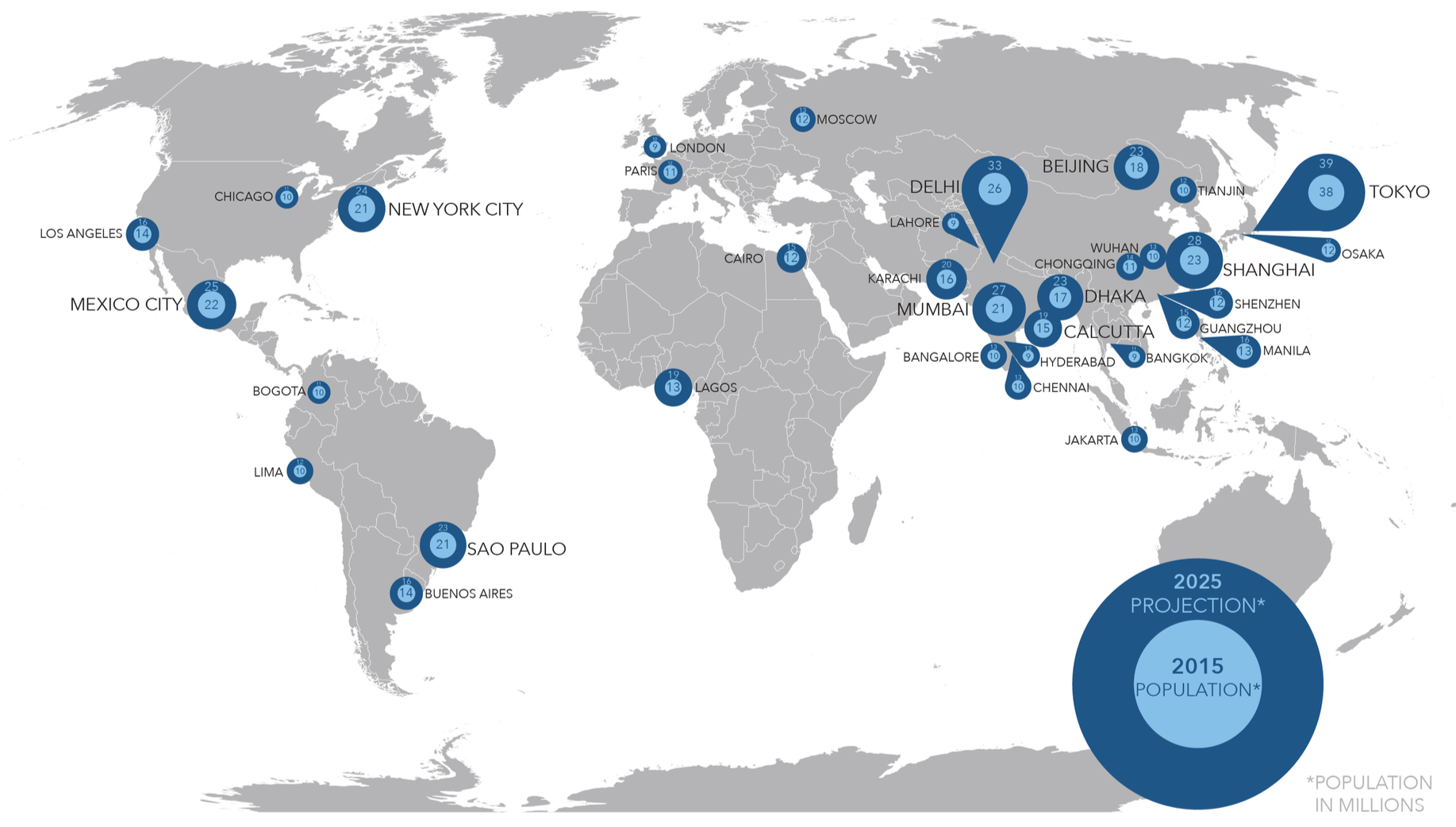
- High rates of urbanisation lead to the growth of mega cities.
- A megacity has a population over 10 million.
- In 2020, there were 35 megacities, most located in Asia (red circles on the map below).