A Wind Farm Controversy (OCR GCSE Geography B (Geography for Enquiring Minds)): Revision Notes
📚Revision Notes
A Wind Farm Controversy
Introduction
Scout Moor Wind Farm is one of the largest onshore wind farms in England and serves as an important case study for understanding renewable energy development in the UK. This site demonstrates both the benefits and challenges of wind energy projects, particularly when they are located near populated areas.
Note
The key question for this topic is: Where should the UK get its energy from in future?
Location and key facts
Scout Moor Wind Farm is located on open moorland to the north of Rochdale in Greater Manchester. The wind farm can be found in grid squares 8218, 8318, 8317, and 8417 on the Ordnance Survey map.
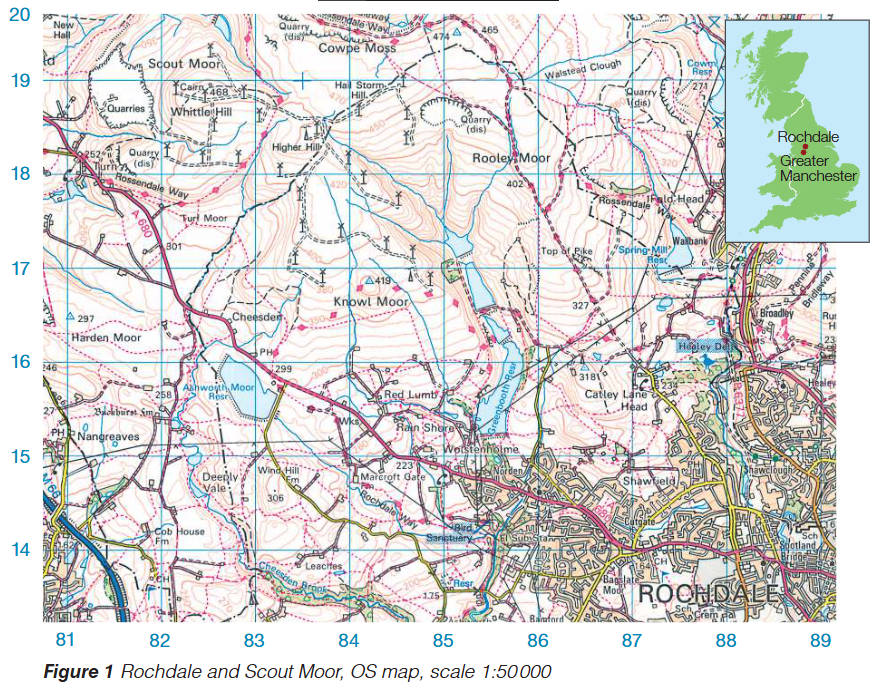
Key statistics:
- Number of turbines: 26 wind turbines
- Energy generation: Produces enough electricity for approximately 40,000 homes
- Location type: Open moorland in the South Pennines
- Status: One of England's largest onshore wind farms
Factors to consider when choosing a wind farm site
When planning a wind farm, several geographical and environmental factors must be evaluated to ensure maximum efficiency and minimum negative impact.
Essential site characteristics
Wind availability
The site must be in a location with consistent, strong winds. Ideal locations include:
- Flat land with unobstructed wind flow
- Hilltops where wind speeds are naturally higher
- Open moorland with few barriers to wind movement
Clear surroundings
Wind turbines require space free from obstructions. Sites should be:
- Away from tall buildings that create wind shadows
- Clear of trees that block or disrupt wind patterns
- Located where turbines can capture maximum wind energy
Important
Distance from settlements
Wind farms must be positioned at least 1 kilometre away from residential areas. This is because:
- Wind turbines generate noise from rotating blades
- The sound can disturb residents, particularly at night
- Planning regulations require minimum separation distances
Environmental and landscape considerations
Sites should avoid areas of outstanding natural beauty where:
- Wind turbines might spoil scenic landscapes
- Visual impact could affect tourism
- Protected habitats or wildlife could be disturbed
Why Scout Moor is suitable for wind energy
Scout Moor Wind Farm meets several important criteria that make it an effective location for wind energy generation:
Exposed moorland location
The open moorland provides consistent wind conditions without significant obstacles. The elevated position on the Pennine hills ensures good wind speeds throughout the year.
Note
Distance from major settlements
Although located north of Rochdale, the wind farm is sufficiently distant from main residential areas to minimize noise disturbance while still being close enough to connect to the electricity grid.
Existing moorland use
The moorland was not designated as an Area of Outstanding Natural Beauty, making it more acceptable for development than protected landscapes.
Energy for local communities
The 40,000 homes supplied with electricity include many in the Greater Manchester area, providing local renewable energy and reducing reliance on fossil fuels.
Potential issues and concerns
Despite meeting site selection criteria, Scout Moor Wind Farm has raised several concerns:
Visual impact
Wind turbines are large structures (typically 60-80 metres tall) that are visible from considerable distances across the moorland and surrounding areas. Some residents and visitors feel they detract from the natural landscape.
Noise considerations
Although located over 1 km from settlements, on quiet days or in certain weather conditions, the sound of rotating turbines can carry further than expected.
Wildlife and habitat
Moorland provides important habitat for birds and other wildlife. Wind turbines can pose collision risks for birds and may affect their flight patterns.
Note
Access and infrastructure
Construction and maintenance of the wind farm required roads and infrastructure across previously undeveloped moorland, causing some environmental disruption.
The 2018 expansion decision
In 2018, the UK government faced a decision about whether to permit expansion of Scout Moor Wind Farm. This decision required weighing:
Arguments for expansion:
- Increased renewable energy generation
- Meeting UK carbon reduction targets
- Providing more clean electricity for homes
- Utilizing an already developed site
Arguments against expansion:
- Additional visual impact on the landscape
- Further environmental effects
- Concerns from local residents
- Impact on moorland habitats
Important
The decision-making process involved consultation with local communities, environmental groups, and energy experts. This demonstrates how planning decisions for renewable energy must balance national energy needs with local environmental and social concerns.
Exam guidance
Important
When answering questions about wind farm site selection:
For 'describe' questions: Focus on physical features you can see on OS maps (height, land use, proximity to settlements).
For 'explain' questions: Link site features to why they make the location suitable (e.g., "The exposed hilltop location is suitable because it receives consistent strong winds needed to turn the turbines efficiently").
For 'assess' or 'evaluate' questions: Present both advantages and disadvantages, then reach a balanced conclusion about overall suitability.
Always use specific details from case studies like Scout Moor to support your answers with real examples.
Remember!
Summary
Key Points to Remember:
-
Scout Moor Wind Farm is one of England's largest onshore wind farms, with 26 turbines generating electricity for 40,000 homes
-
Ideal wind farm sites are on flat land, hilltops, or open moorland with consistent winds, away from buildings and trees, and at least 1 km from settlements
-
Sites must be located outside areas of natural beauty to minimize landscape impact
-
Scout Moor's moorland location north of Rochdale provides good wind conditions while maintaining distance from major residential areas
-
The 2018 expansion decision highlighted the balance needed between renewable energy generation and environmental/social concerns
Key terms: wind farm, wind turbines, onshore wind farm, open moorland, renewable energy, grid reference, OS map, natural beauty, site selection criteria
Critical processes: Site selection for renewable energy requires balancing physical geography (wind availability, terrain), environmental factors (landscape, wildlife), and social considerations (noise, visual impact, distance from settlements)