UK Energy Sources (OCR GCSE Geography B (Geography for Enquiring Minds)): Revision Notes
📚Revision Notes
UK Energy Sources
How the UK generates electricity
The UK produces electricity from a variety of different sources. Understanding these sources and their impacts is essential for making decisions about the country's energy future.
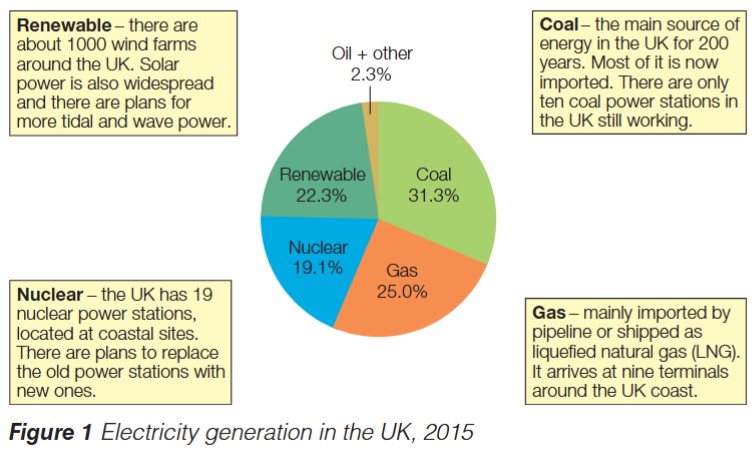
In 2015, the UK generated electricity from five main categories:
- Non-renewable sources (fossil fuels and nuclear) provided more than 75% of electricity
- Renewable sources (wind, solar, tidal, and wave power) generated almost 25% of electricity
Note
This energy mix shows that while the UK still relies heavily on non-renewable sources, renewable energy is playing an increasingly important role in electricity generation.
UK electricity generation mix
Coal (31.3%)
Coal was the dominant energy source in the UK for over 200 years. However, coal-fired power stations are now being phased out due to their environmental impact. Despite this decline, several coal power stations were still operational in 2015, and coal remained the largest single contributor to electricity generation at that time with 31.3% of total generation.
Important
Coal releases higher levels of carbon dioxide compared to gas and oil, and burning coal creates acid rain which damages trees and plant life. These environmental impacts are the main reasons for phasing out coal power.
Gas (25.0%)
Natural gas is the second-largest source of UK electricity, contributing 25.0% of generation. Most gas is imported either through pipelines or shipped as liquefied natural gas (LNG). These imports arrive at nine terminals located around the UK coast.
The North Sea's gas reserves are being depleted and will eventually run out. However, shale gas extraction could potentially replace North Sea gas in the future.
Important
As North Sea reserves decline, the UK will become increasingly dependent on imports. The development of shale gas through hydraulic fracturing (fracking) could provide an alternative, but this technology remains controversial.
Nuclear (19.1%)
The UK operates 19 nuclear power stations, all situated at coastal sites. This coastal location is important for cooling and safety reasons. The government has plans to replace aging nuclear facilities with new power stations. Nuclear power contributes 19.1% of the UK's electricity generation.
Nuclear power relies on uranium, which the UK must import. Current uranium supplies may only last approximately 50 years, raising questions about long-term sustainability.
Note
The coastal location of nuclear power stations serves two key purposes: providing abundant cooling water from the sea, and ensuring that facilities are away from densely populated areas for safety reasons.
Renewable (22.3%)
Renewable energy sources have expanded significantly in recent years, now contributing 22.3% of UK electricity. The UK has approximately 1000 wind farms installed across the country. Solar power installations have also increased, and the country is exploring tidal and wave power technologies.
These renewable sources produce electricity without depleting natural resources, making them increasingly important for future energy security.
Note
Unlike fossil fuels and nuclear power, renewable sources like wind and solar will never run out, providing unlimited long-term potential for electricity generation.
Oil and other (2.3%)
Oil and other minor sources contribute a small percentage (2.3%) to overall electricity generation.
Comparing UK energy sources
Different energy sources have varying impacts on the environment, society, and the economy. Understanding these differences helps explain why the UK is transitioning its energy mix.
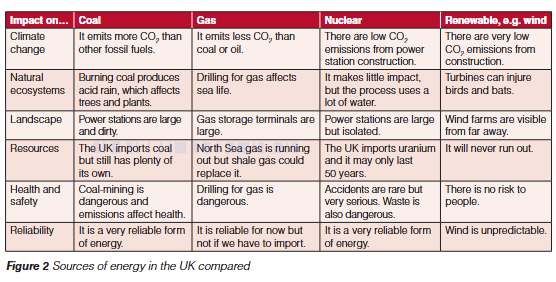
Energy sources can be compared across six key impact categories: climate change, natural ecosystems, landscape effects, resource availability, health and safety, and reliability. Each source has different strengths and weaknesses in these areas.
Climate change impacts
Coal releases higher levels of carbon dioxide than other fossil fuels, making it the most carbon-intensive option.
Gas emits less CO₂ than coal or oil, but still contributes significantly to climate change.
Nuclear power stations produce very low CO₂ emissions during operation. Emissions mainly occur during construction of facilities.
Renewable sources like wind generate extremely low CO₂ emissions, primarily from construction activities.
Important
The transition away from coal towards gas, nuclear, and renewables is primarily driven by the need to reduce CO₂ emissions and combat climate change. Coal's high carbon intensity makes it the least sustainable option for future electricity generation.
Effects on natural ecosystems
Coal: Burning coal creates acid rain, which damages trees and plant life in affected areas.
Gas: Drilling for gas, particularly offshore, can disrupt sea life and marine ecosystems.
Nuclear: The process uses large quantities of water but has relatively minor impacts on ecosystems.
Renewable: Wind turbines can pose risks to birds and bats that may collide with the blades.
Landscape impacts
Coal: Power stations are large industrial facilities that significantly alter the landscape where they are built.
Gas: Storage terminals require substantial land areas for infrastructure.
Nuclear: Power stations are large structures but are typically isolated at coastal locations.
Renewable: Wind farms are highly visible across long distances, which some people consider intrusive on the landscape.
Note
Visual impact on the landscape is one of the main objections to wind farms. Wind turbines can be seen from far away, and their presence in rural or coastal areas is controversial. However, unlike power stations, wind farms produce no emissions during operation.
Resource availability
Coal: The UK imports coal but still has considerable coal reserves available domestically.
Gas: North Sea gas reserves are running out, though shale gas could potentially replace them through hydraulic fracturing (fracking).
Nuclear: The UK imports all its uranium, and global supplies may only last 50 years.
Renewable: Wind and solar resources will never run out, providing unlimited potential.
Important
Energy security concern: Both gas and nuclear depend on imports, making the UK vulnerable to supply disruptions and price fluctuations. Renewable sources offer greater energy independence since wind and solar are domestic resources.
Health and safety considerations
Coal: Coal mining is dangerous work, and emissions from burning coal affect public health.
Gas: Drilling operations carry inherent dangers for workers.
Nuclear: While accidents are rare, they can be extremely serious. Nuclear waste remains hazardous for thousands of years.
Renewable: Wind and solar power present no risk to public health or safety.
Important
Nuclear waste management is a critical long-term challenge. Radioactive waste remains dangerous for thousands of years and must be stored securely. There is currently no permanent disposal solution that has been fully implemented.
Reliability
Coal: Provides very consistent and reliable electricity generation.
Gas: Currently reliable, but future reliability depends on whether the UK can import sufficient supplies.
Nuclear: Offers extremely reliable electricity generation once operational.
Renewable: Wind power is unpredictable because wind speeds vary. This makes it less reliable for consistent base-load electricity supply.
Note
The reliability challenge: Renewable sources like wind and solar are intermittent - they only generate electricity when the wind blows or the sun shines. This unpredictability means they must be combined with other sources or energy storage systems to ensure continuous electricity supply.
Remember!
Summary
Key Points to Remember:
-
The UK generates over three-quarters of its electricity from non-renewable sources (coal, gas, nuclear) and almost one-quarter from renewable sources (wind, solar, tidal, wave).
-
Coal was the UK's primary energy source for 200 years but is being phased out due to high CO₂ emissions and acid rain production.
-
Gas is mainly imported and will become more dependent on imports as North Sea reserves decline, though shale gas could provide an alternative.
-
Nuclear power produces low CO₂ emissions but relies on imported uranium that may only last 50 years, and nuclear waste remains dangerous for thousands of years.
-
Renewable energy sources like wind have very low environmental impacts and will never run out, but wind is unpredictable and less reliable for consistent electricity generation.