Wind Power in the UK (OCR GCSE Geography B (Geography for Enquiring Minds)): Revision Notes
📚Revision Notes
Wind Power in the UK
Wind as a growing energy source
The United Kingdom has experienced significant growth in wind energy generation over recent years. Wind power is becoming an increasingly important part of the UK's energy mix as the country works towards its environmental targets.
Note
The UK has set an ambitious goal to generate 30% of its electricity from renewable sources by 2030. Wind energy is a key component of this target, alongside other renewable technologies.
Growth in wind energy generation
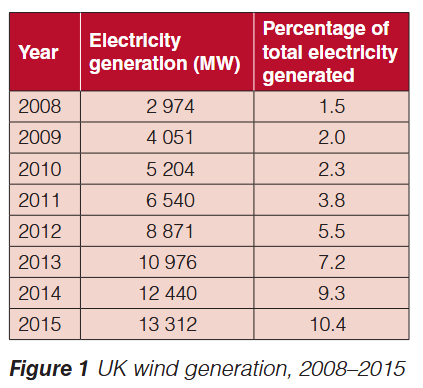
Wind power capacity in the UK has expanded dramatically between 2008 and 2015. Both the total amount of electricity generated from wind and its proportion of the national energy supply have increased substantially.
This data demonstrates that wind energy generation increased nearly fivefold over this seven-year period, rising from under 3,000 MW to over 13,000 MW. The percentage contribution to total UK electricity also grew from just 1.5% to 10.4%, showing wind power's expanding role in the national energy system.
Example
Worked Example: Calculating Growth in Wind Power
To calculate the increase in wind energy generation from 2008 to 2015:
Step 1: Identify the starting and ending values
- 2008: 2,974 MW
- 2015: 13,312 MW
Step 2: Calculate the absolute increase Increase = 13,312 - 2,974 = 10,338 MW
Step 3: Calculate the proportional growth Growth factor = times
This shows wind energy generation increased by approximately 4.5 times (or nearly fivefold) over the seven-year period.
Onshore versus offshore wind farms
The UK utilizes two main types of wind farm installations, each with different characteristics and locations.
Onshore wind farms
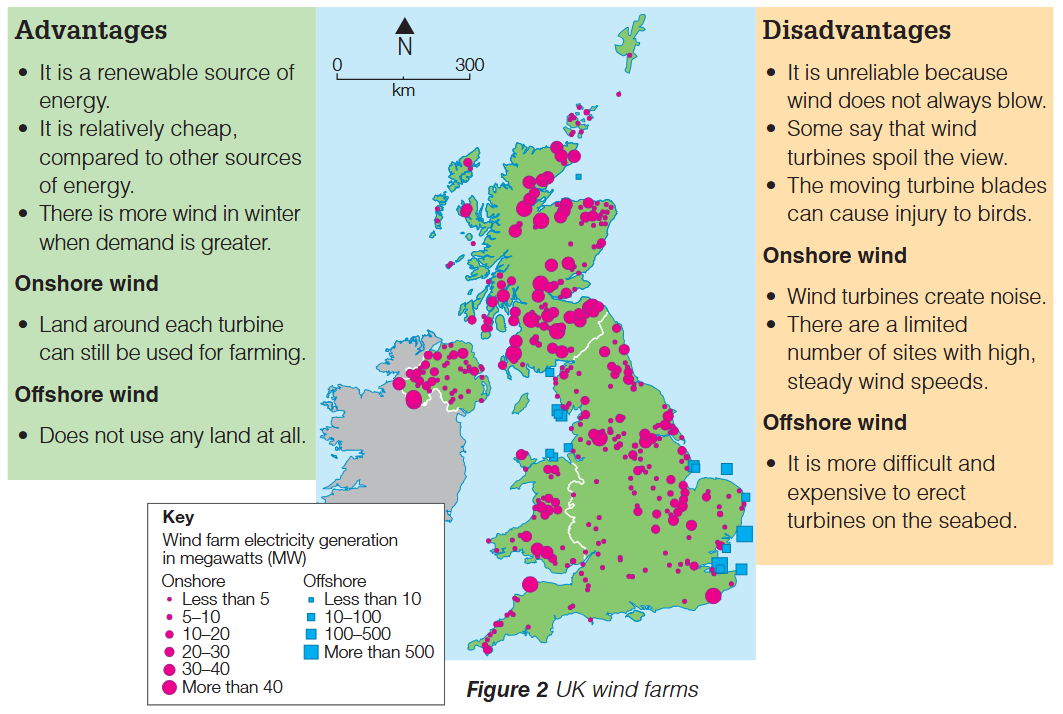
Currently, the majority of UK wind farms are located onshore (on land). These installations are distributed across many regions of the country, particularly in areas with consistent wind conditions such as Scotland, Wales, and parts of England.
Offshore wind farms
A growing number of wind farms are now being constructed offshore (at sea). The UK is particularly well-suited for offshore wind development because it has:
- An extensive coastline providing numerous potential sites
- Large areas of shallow seas surrounding the country
- Strong and consistent wind resources over coastal waters
Note
The potential for further offshore wind farm development is substantial, and this sector is expected to continue expanding in the coming years. The UK's geographical advantages make it one of the world's leading countries for offshore wind energy.
Advantages of wind power
Wind energy offers several important benefits as an electricity generation method.
General advantages
Wind power is a renewable energy source, meaning it will not run out and can be used indefinitely without depleting natural resources. Unlike fossil fuels, wind energy is constantly replenished by natural atmospheric processes.
The cost of generating electricity from wind is relatively low compared to many other energy sources. Once wind turbines are installed, the fuel (wind) is free, making operational costs modest.
Note
Seasonal Benefits
Wind speeds in the UK tend to be higher during winter months, which is beneficial because electricity demand is also greater during this season due to heating requirements and longer hours of darkness. This natural alignment between supply and demand is a significant advantage.
Advantages specific to onshore wind
Land surrounding each turbine can continue to be used for other purposes, particularly farming. This dual land use means that wind farms do not necessarily remove land from agricultural production – sheep can graze and crops can be grown around turbine bases.
Advantages specific to offshore wind
Offshore wind farms do not occupy any land area at all, avoiding competition for space with other land uses such as housing, agriculture, or industry. This is particularly valuable in a densely populated country like the UK.
Disadvantages of wind power
Despite its benefits, wind energy also presents several challenges and drawbacks.
General disadvantages
Important
Unreliable Supply
Wind power is unreliable because wind does not blow consistently. There are periods of calm weather when wind turbines cannot generate electricity, requiring backup power sources or energy storage solutions. This intermittency is one of the most significant challenges facing wind energy development.
Some people argue that wind turbines create visual pollution and spoil the natural landscape, particularly in scenic rural or coastal areas.
The rotating blades of wind turbines can pose a hazard to birds and bats. Collisions with turbine blades can cause injury or death to flying wildlife.
Disadvantages specific to onshore wind
Wind turbines generate noise from both the mechanical components and the movement of blades through the air. This can be disruptive to people living nearby.
There are only a limited number of sites in the UK that have suitable wind conditions – specifically, high and steady wind speeds throughout the year. This geographical constraint limits where onshore wind farms can be effectively located.
Disadvantages specific to offshore wind
Constructing wind turbines on the seabed is significantly more difficult and expensive than building them on land. The marine environment presents engineering challenges including harsh weather conditions, saltwater corrosion, and the need for specialized vessels and equipment.
Summary
Key Points to Remember:
- Wind energy generation in the UK has grown substantially, increasing from 1.5% of total electricity in 2008 to 10.4% in 2015
- The UK aims to generate 30% of its electricity from renewable sources by 2030, with wind playing a major role
- Most UK wind farms are currently onshore, but offshore capacity is expanding due to the UK's long coastline and shallow seas
- Key advantages include:
- Renewable nature – will not run out
- Relatively low cost to operate
- Higher winter output matching seasonal demand
- Compatible with farming (onshore)
- No land use (offshore)
- Main disadvantages include:
- Unreliable supply – wind doesn't blow constantly
- Visual impact on landscapes
- Wildlife hazards to birds and bats
- Noise pollution (onshore)
- Limited suitable sites (onshore)
- High construction costs (offshore)