Using London’s Green Spaces (OCR GCSE Geography B (Geography for Enquiring Minds)): Revision Notes
📚Revision Notes
Using London's Green Spaces
London as a green city
London ranks among the greenest cities in the world, with an impressive 47% of its total area consisting of green space. This extensive coverage of vegetation and open areas makes the capital a leader in urban sustainability and environmental planning.
Note
The city's green spaces are diverse and include several different types of areas:
- Parks provide large open spaces for recreation and nature
- Gardens, both public and private domestic gardens, add greenery throughout residential areas
- Woodland areas offer natural habitats and shaded walking spaces
- Cemeteries, while serving a specific purpose, also contribute green space to the urban environment
- Playing fields provide areas for sports and physical activity
- Allotments give residents space to grow food
- Farmland on the edges of London connects the city to its agricultural heritage
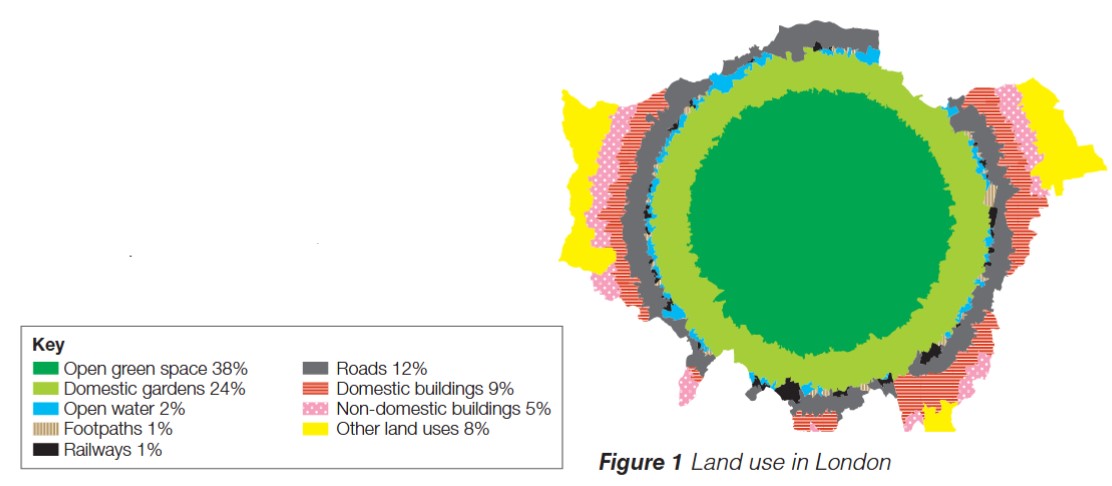
The breakdown of London's land use reveals how the city balances different needs. Open green space accounts for 38% of the total area, making it the single largest category of land use. Domestic gardens add another 24%, meaning that residential green space alone comprises nearly a quarter of London. Open water, including the River Thames and other water bodies, covers 2% of the area. Transport infrastructure includes roads (12%), footpaths (1%), and railways (1%). Buildings are divided into domestic buildings (9%) and non-domestic buildings such as offices and shops (5%). Other land uses make up the remaining 8%.
Benefits of urban green spaces
Green spaces provide crucial benefits to cities and their residents, making urban life healthier and more sustainable. Understanding these benefits helps explain why maintaining and expanding green space is essential for London's future.
Environmental Benefits
Trees generate oxygen through photosynthesis, which supports human respiration and improves air quality. At the same time, trees and plants absorb carbon dioxide from the atmosphere, helping to reduce greenhouse gas concentrations and combat climate change. This dual function makes trees vital for tackling air pollution in busy urban environments.
Vegetation helps to mitigate flood risk by soaking up rainfall and excess water. When rain falls on concrete and tarmac, it runs off quickly and can overwhelm drainage systems, leading to flooding. However, when rain falls on green space, the soil and plants absorb the water, releasing it slowly. This natural drainage system reduces the danger of flooding in built-up areas.
Ecological Benefits
Green areas and woodland offer essential living spaces for diverse wildlife species. As London has grown, these habitats have become increasingly important refuges for birds, insects, and mammals. Protecting and maintaining woodland and green space ensures that urban biodiversity can thrive alongside human development.
Social and Health Benefits
Urban residents use green areas for physical activities that promote fitness and wellbeing. Whether walking, jogging, cycling, or playing sports, people benefit from access to outdoor spaces. This regular physical activity helps keep people fit and healthy, reducing health problems associated with sedentary lifestyles.
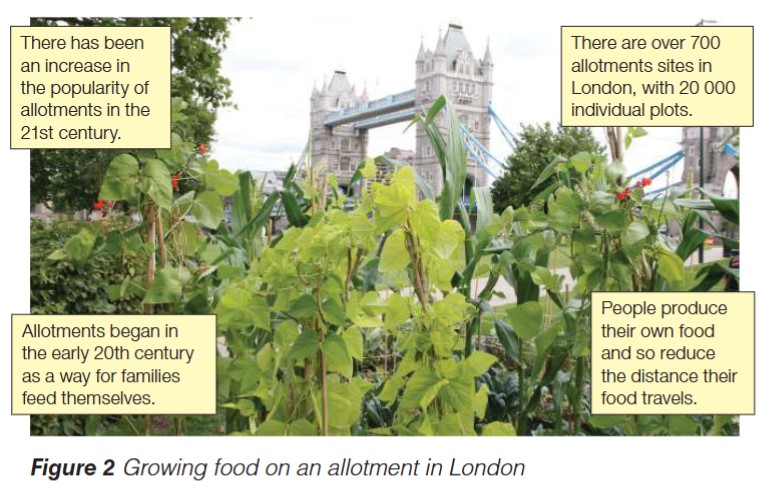
Allotments in London
Allotments emerged in the early 1900s to enable families to grow their own food supply during times of economic hardship. Originally, they provided a practical solution for working-class families who needed to feed themselves but had no garden space. During both World Wars, allotments became especially important as part of the "Dig for Victory" campaigns.
Important
The 21st century has witnessed renewed interest in allotments. This revival reflects growing concerns about food sustainability, environmental awareness, and the desire to know where food comes from. Today, London has over 700 allotment sites containing approximately 20,000 individual plots. This substantial provision demonstrates strong demand for growing spaces across the capital.
By growing food locally, people decrease the distance that food items must travel from production to consumption. This distance is known as "food miles". When food travels long distances, it generates carbon emissions from transport and often requires additional packaging and refrigeration. Producing food on an allotment means the food travels only a short distance from plot to home, significantly reducing its environmental impact. This makes the grower's lifestyle more sustainable and reduces their carbon footprint.
Example
Worked Example: Understanding Food Miles
Consider a tomato grown in your London allotment versus one bought from a supermarket:
Allotment tomato:
- Distance travelled: 1-2 km (from plot to home)
- Transport: Walking or cycling
- Carbon emissions: Near zero
Supermarket tomato:
- Distance travelled: 2,500+ km (e.g., from Spain)
- Transport: Lorries, possibly refrigerated
- Carbon emissions: Significant fuel consumption and CO₂ release
By growing the tomato yourself, you've reduced food miles by thousands of kilometers and virtually eliminated transport-related carbon emissions.
Growing your own food also connects people to where their food comes from, helps them understand seasonal availability, and can provide fresher and more nutritious produce than shop-bought alternatives. For many people, allotments also offer a peaceful outdoor space, social connections with other growers, and the satisfaction of producing something themselves.
Remember!
Summary
Key Points to Remember:
- London is one of the world's greenest cities with 47% of its area consisting of green space, including parks, gardens, woodland, allotments, and playing fields
- Urban green spaces provide environmental benefits by producing oxygen, absorbing carbon dioxide, and reducing flood risk through water absorption
- Green spaces offer habitats for wildlife and recreational areas that support physical and mental health
- London has over 700 allotment sites with 20,000 plots where people grow their own food, reducing food miles and making their lifestyle more sustainable
- Allotments began in the early 20th century and have experienced renewed popularity in recent decades
Key Terms:
- Green space - open areas with vegetation including parks, gardens, woodland, and playing fields
- Allotments - small plots of land rented to individuals for growing food
- Food miles - the distance food travels from where it is produced to where it is consumed
- Carbon emissions - carbon dioxide released into the atmosphere, contributing to climate change