Costa Rica Sustainable Rainforest Management (OCR GCSE Geography B (Geography for Enquiring Minds)): Revision Notes
📚Revision Notes
Costa Rica Sustainable Rainforest Management
Introduction to Costa Rica's rainforests
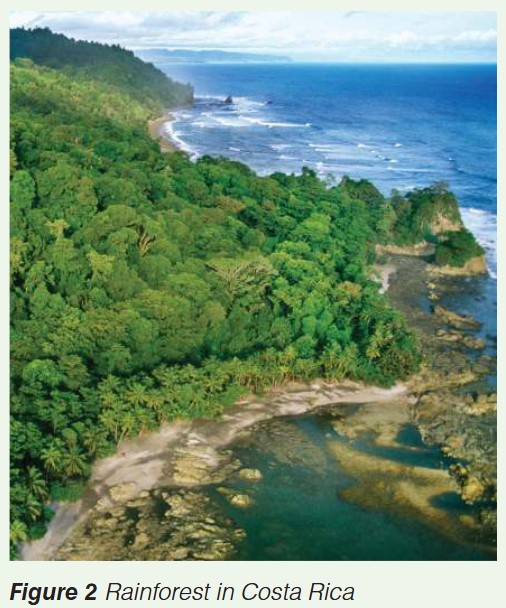
Costa Rica is a small Central American nation that contains an extraordinary 6% of all the world's biodiversity. This remarkable concentration of plant and animal life draws over 2 million visitors annually, who come to explore the country's tropical rainforests and diverse ecosystems.
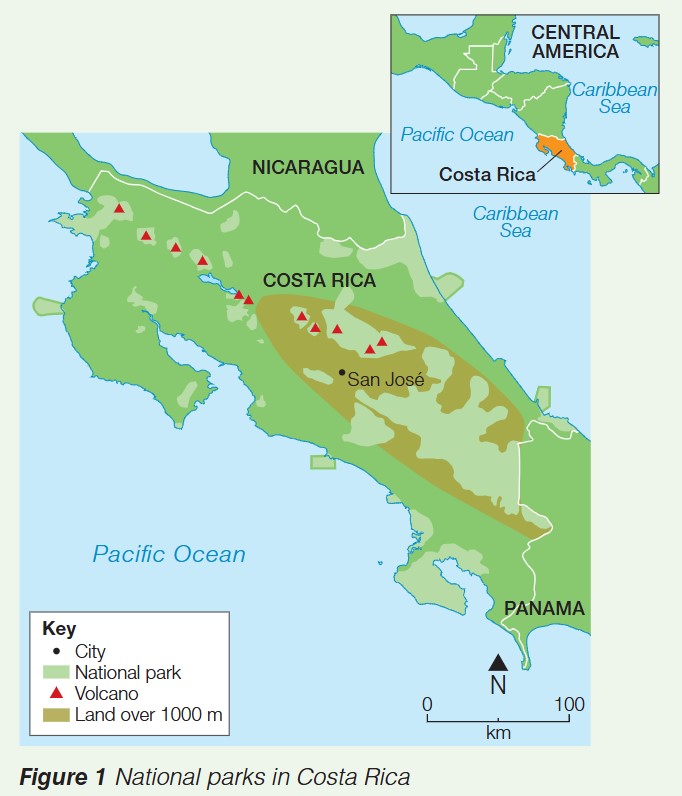
The country's location between the Pacific Ocean and Caribbean Sea, combined with varied terrain and climate zones, creates ideal conditions for rich biodiversity. Costa Rica has become a global model for how countries can successfully protect and manage their natural forest resources while supporting economic development through ecotourism.
Note
Despite covering only 0.03% of the Earth's surface, Costa Rica's unique geographical position and varied climate zones create microclimates that support an incredible diversity of species, including many found nowhere else on Earth.
Historical deforestation problem
Before 1980, Costa Rica faced a severe deforestation crisis. The country experienced one of the world's highest rates of forest loss, primarily driven by two main economic activities:
- Cattle ranching – Large areas of forest were cleared to create grazing pastures for livestock
- Agriculture – Forest land was converted to grow crops for domestic use and export
Important
During this period, the rapid destruction of forests threatened the country's unique biodiversity and ecosystem services. The loss of forest cover also increased soil erosion, reduced water quality, and released significant amounts of carbon dioxide into the atmosphere.
Government protection measures
Recognizing the urgent need to halt forest destruction, the Costa Rican government took decisive action by introducing legislation to prevent further deforestation. This marked a turning point in the country's environmental policy.
Today, Costa Rica's commitment to conservation is evident through:
- 28 national parks – Designated protected areas with strict conservation rules
- Nature reserves – Additional protected zones that safeguard critical habitats
- 24% land protection – Nearly a quarter of the entire country's land area now has legal protection status
Note
Purpose of Protected Areas
These protected areas serve multiple purposes: conserving biodiversity, protecting water sources, maintaining ecosystem services, and providing opportunities for sustainable tourism. The network of parks and reserves creates wildlife corridors that allow species to move between different habitats.
Sustainable management strategies
Beyond simply protecting designated areas, Costa Rica employs several active strategies to manage its rainforests sustainably. These approaches balance conservation needs with economic benefits for local communities.
Agroforestry
This integrated approach involves cultivating trees alongside agricultural crops on the same land. Rather than clearing forest completely for farming, agroforestry maintains tree cover while allowing food production.
Note
Benefits of agroforestry:
- Trees provide shade for crops, reducing water loss through evaporation
- Tree roots stabilize soil and prevent erosion
- Fallen leaves add nutrients to the soil
- Trees absorb carbon dioxide, helping combat climate change
- Farmers can harvest both crops and tree products (fruit, timber, etc.)
- Biodiversity is maintained better than in cleared agricultural land
This system proves particularly effective for crops like coffee and cacao, which naturally grow well in partial shade. Local farmers can maintain their livelihoods while protecting forest ecosystems.
Afforestation
Afforestation involves planting new trees to restore areas where the original forest has been removed. This differs from reforestation (replanting in recently cleared areas) as it aims to recreate forest ecosystems that were destroyed years or decades earlier.
Note
Key features of afforestation programmes:
- Native tree species are prioritized to restore natural ecosystems
- Degraded land (former pastures or exhausted farmland) can be returned to forest
- Creates new carbon sinks that absorb atmospheric carbon dioxide
- Gradually restores habitat for wildlife species
- Improves soil quality and water retention over time
- Can provide future sustainable timber resources
Costa Rica's afforestation efforts have helped the country reverse its deforestation trend. Forest cover has actually increased since the 1980s, making Costa Rica one of few tropical countries to achieve this reversal.
Monitoring
Advanced technology plays a crucial role in protecting Costa Rica's forests. Satellite imaging systems continuously monitor forest areas to detect any unauthorized logging activity.
Note
How monitoring works:
- Satellites capture regular images of forested regions
- Computer systems analyze changes in forest cover
- Officials can identify illegal clearing or logging quickly
- Rapid response teams can intervene to stop illegal activities
- Data helps track forest health and growth over time
This surveillance system acts as both a deterrent to illegal logging and an enforcement tool. The transparency it provides also allows the government to demonstrate its conservation commitments to international partners and investors in environmental programmes.
Selective logging
Rather than clear-cutting entire forest areas, selective logging permits only specific trees to be harvested when they reach a designated maturity height and size.
Note
Principles of selective logging:
- Only mature trees that have reached a certain height may be felled
- Younger trees remain to continue growing
- Forest canopy structure is largely maintained
- Soil remains protected by remaining vegetation
- Wildlife habitats experience less disruption
- Forest can naturally regenerate between harvesting cycles
This approach allows the forestry industry to continue operating while minimizing environmental damage. Trees are treated as a renewable resource that can provide ongoing economic benefits without destroying the ecosystem. The selective removal of mature trees can even benefit forest health by allowing more light to reach younger trees.
Exam guidance
Important
For exam questions on this case study, you should:
- Quote specific statistics (6% biodiversity, 2 million tourists, 28 parks, 24% protection)
- Explain both environmental and economic benefits of each strategy
- Describe how strategies work together as an integrated management approach
- Link strategies to sustainable development principles
- Use command words precisely: 'describe' requires details of what happens; 'explain' requires reasons why strategies are effective
- Compare Costa Rica's situation before and after government intervention to show change over time
Note
Common exam command words:
- Describe – State what the strategies are and what happens (no explanation needed)
- Explain – Give reasons why the strategies help manage forests sustainably
- Assess – Weigh up the effectiveness of different strategies, considering strengths and limitations
- Evaluate – Make an overall judgement about how successful Costa Rica's approach has been
Key facts and figures
| Aspect | Detail |
|---|---|
| Location | Central America (between Pacific Ocean and Caribbean Sea) |
| Biodiversity | Contains 6% of world's total biodiversity |
| Tourism | Attracts over 2 million visitors annually |
| Protected areas | 28 national parks plus nature reserves |
| Land protection | 24% of country's total land area |
| Historical issue | One of world's highest deforestation rates before 1980 |
| Main causes | Cattle ranching and agriculture |
Remember!
Summary
Key Points to Remember:
- Costa Rica transformed from having one of the world's highest deforestation rates to becoming a conservation success story through government action
- The country now protects 24% of its land area through 28 national parks and nature reserves
- Four key sustainable management strategies work together: agroforestry, afforestation, monitoring, and selective logging
- Each strategy balances environmental conservation with economic needs – agroforestry and selective logging allow continued productivity while minimizing damage
- Costa Rica's 6% share of global biodiversity and 2 million annual tourists demonstrate both the ecological and economic value of sustainable management
- The combination of legal protection, active management strategies, and technological monitoring has enabled forest cover to increase since the 1980s