Land, tribute and the role of elites (OCR GCSE History B (Schools History Project)): Revision Notes
📚Revision Notes
Land, tribute and the role of elites
Note
Tribute and taxation was one of the main sources of income of the Aztec Empire and was usually collected every 80 days, 6 months, or 1 year.
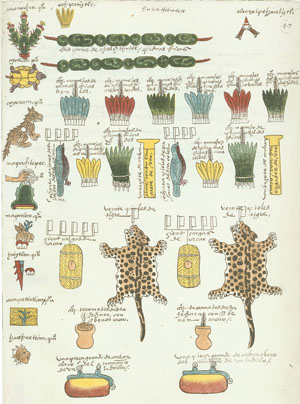
Image showing Aztec tribute record
Who pays tribute?
All commoners including merchants, artisans, and farmers, except orphans, minors, and beggars.
What are the taxed items?
Merchants- goods that were sold
Farmers-
crops produced
Artisans-
value of services
Who collects tributes?
The official tribute collectors were called calpixque who were usually stationed in each conquered land.
What if you fail to pay tribute?
Failure to pay was punishable by slavery and confiscation of property.
Items included warrior costumes, paper, incense, food, feathers, and animal products.
The role of elites
Note
Politically, Aztec nobles were able to create a system of trade and tribute through strategic marriage alliances among their class. Conquered lands were left autonomous so long as they paid tribute. In cases of rebellion in provincial towns, military force was used.
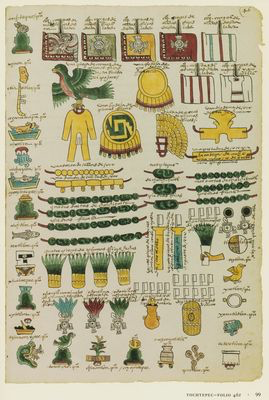
Image depicting tribute list based on the Codex Mendoza
A pochteca was a long-distance merchant who acted as a military spy and administrator of tribute networks.
Members of the nobility were recognised through lavish feather garments. They controlled Aztec land, labour, and tribute. Categorised into three: tlatoani (ruler), tetecuhtin ( high lords), and pipiltin (regular lords), members of the nobility enjoyed privileges with great wealth and power.
Only members of the elite class could be priests, judges, and officials of the government. They acquired land through purchase and as gifts. Every 80 days, 6 months, or 12 months, tributes were collected. Official tribute collectors who were stationed in each conquered land were called calpixque.