Territorial expansion and the nature of warfare (OCR GCSE History B (Schools History Project)): Revision Notes
📚Revision Notes
Territorial expansion and the nature of warfare
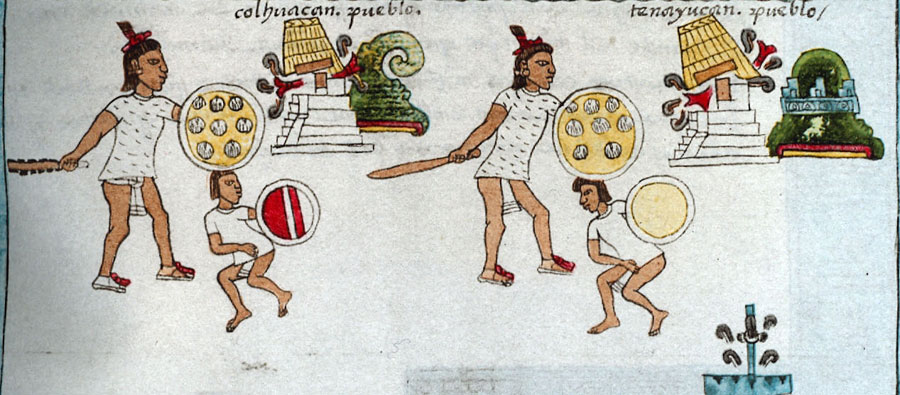
Image showing Aztec conquests as depicted in Codex Mendoza
From 1430 CE, the Aztec Empire continued to expand. Adult Aztec males from Tenochtitlan, its allies, and conquered states were conscripted to the military.
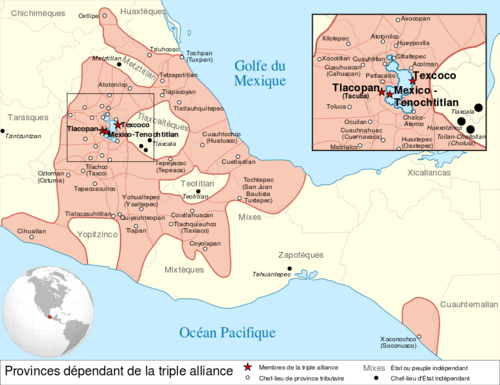
Map showing the Aztec triple alliance
Note
In 1428 CE, the Tepanec War was fought between the small empires of Texcoco and Azcapotzalco. It was a victory for the Texcoco, who made an alliance with Tenochtitlan. The three great cities of Texcoco, Tlacopan and Tenochtitlan formed a triple alliance, which was later dominated by the Tenochtitlan.
Note
In order to acquire territories, resources, and people, the Aztec engaged in yaoyotl or warfare. Through warfare, the Aztecs established a 200,000-square-kilometre empire and extracted tribute from about 371 city-states. They believed that the god of the sun and war Huitzilopochtli began the culture of warfare.
The Templo Mayor located at the Aztec capital of Tenochtitlan was the usual place where human sacrifices to Huitzilopochtli were made.
Structure of the Aztec Army
The tlatoani or the king himself was the commander-in-chief of the Aztec military. Cihuacoatl was the second in command.





Four other high-ranking nobles, usually relatives of the king, were members of the war council with the titles of tlacochcalcatl, tlaccetacatl, tillancalqui, and etzhuanhuanco. Aztec warriors were ranked based on amount of bravery in battle. An example of elite groups were the prestigious jaguar and eagle warriors.
An Aztec boy or man would become a warrior once he took his first captive.
Note
At a young age, Aztec boys were trained to master weapons and military tactics by veteran warriors. They were taught to handle clubs, spears, bows and darts. About 400 men were provided by each town for campaigns.
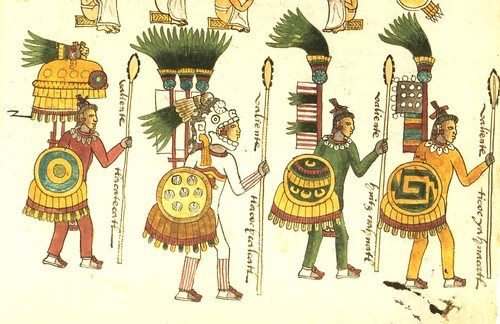
Image depicting Aztec warriors
When did Aztec campaigns occur?
-
Redressing wrong acts, such as murder of traders, failure to send representatives to ceremonies, and refusal to pay tribute.
-
Proving the worth of a new Aztec tlatoani following his accession.
-
Acquiring prisoners for human sacrifice. Impact of successful warfare
-
The Aztec acquired new territories and expanded trade networks.
-
Agreements to pay regular tributes in different forms, including slaves, military service, precious jewellery, metals, cotton, exotic feathers, cacao, grain, salt, dye, rubber, and cloth.
Note
At the height of Moctezuma II's rule from 1502 until 1520, the Aztecs conquered 44 new provinces, except the main rival states of Tlaxcala and Huejotzingo. The aim of Aztec warriors was to capture enemies as captives rather than kill them.
Aztec ritualised capturing enemy warriors through 'flowery wars'.
Note
As warriors of the sun, eagle warriors had a high status in Aztec society. They were granted tax-free land and had the privilege of wearing fine jewellery and clothing in public.
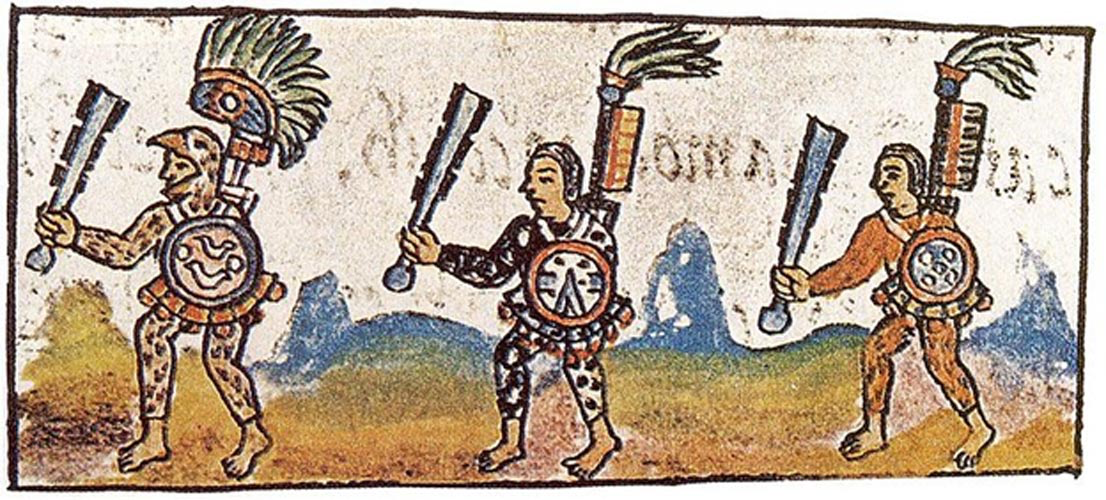
Image depicting the infamous eagle warriors of the Aztec Empire
In Nahuatl language, eagle warriors were called as cuāuhtli, while jaguar warriors were known as the ocēlōtl. They were the largest elite warrior society among the Aztec army. Members were either from the nobility or common class.