India: differing British attitudes toward the Raj, 1900–1914 (OCR GCSE History B (Schools History Project)): Revision Notes
📚Revision Notes
India: differing British attitudes towards the Raj, 1900–1914
- India's historical relationship with Britain dates back to it being governed by the East India Company as a trading colony.
- With the dissolution of the EIC, it fell under the rule of the British government from the mid-19th century.
- Some large areas known as princely states were not ruled by Britain, rather by princes who made treaties with the British to guarantee their security who were 'advised' by a British resident.
- The Raj, as it was called, was considered the 'brightest jewel' in the British crown, and it extended over almost all present-day India, Pakistan, and Bangladesh.
- The Raj provided a market of 300 million people to purchase British-manufactured goods, and cotton and spices were sent back to Britain.
- The administrative cost of running India as a colony was paid in taxes imposed on the Indian people.
- The 1900 population of India consisted of around 210 million Hindus, 75 million Muslims and smaller numbers of Christians, Sikhs, Buddhists and Jains. An estimated 120,000 white people lived in India of which only 6,000 were European public servants and 1,000 were powerful British elite.
- India was governed by a Viceroy, and there were three between between 1900 and 1914 who influenced attitudes towards India.
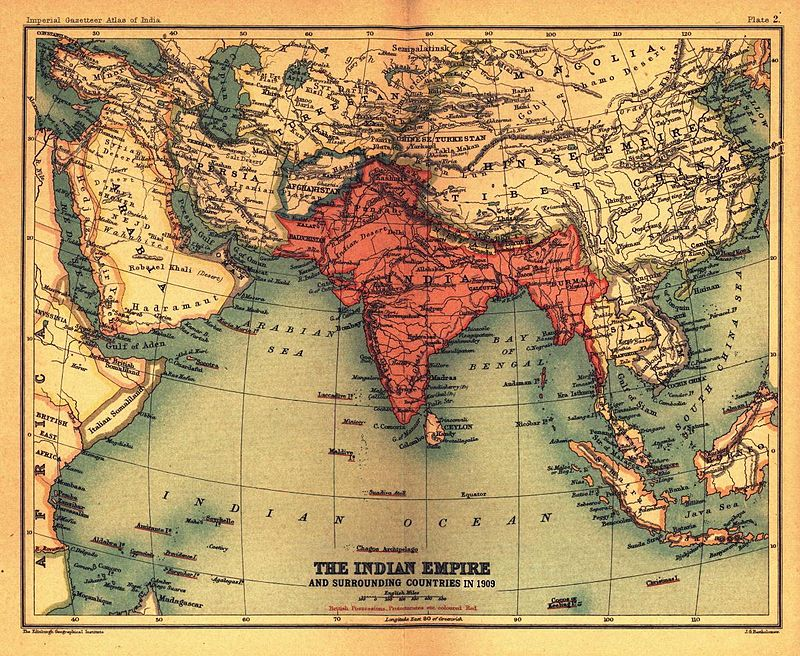
The British Indian Empire and surrounding countries in 1909
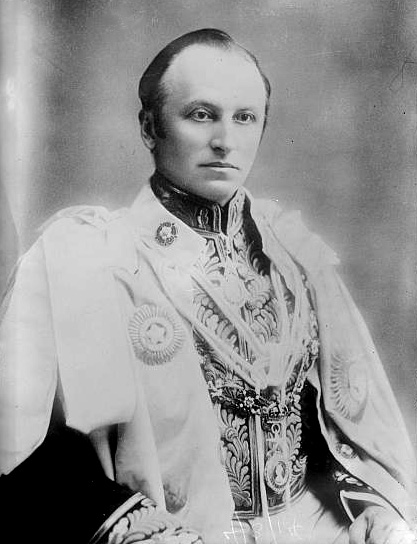
Lord George Curzon, Viceroy of India
Consequently, he earned the trust of Indian princes while at the same time ensuring they had no real power to govern their lands. He also ensured they had military training, but gave them no authority to command troops.
When King Edward VII became King, Curzon held a lavish spectacle in Delhi called a Durbar to show Indian princes who really ruled India.
Lord Curzon served as Viceroy from 1899 to 1905. As a staunch imperialist, he believed that the British Empire was the world's greatest instrument for good.
He also believed, being an aristocrat himself, that aristocrats made the best leaders.
High Points:
- He had a keen interest in Indian history and culture
- He had the Taj Mahal and other important Indian buildings restored
- When an Indian man was killed by an unknown member of the 9th Lancers cavalry, the whole regiment had all leave cancelled for nine months
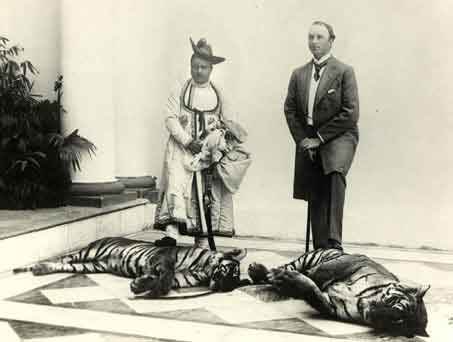
Lord Curzon posing with a hunted tiger
Low Points:
- He viewed university educated Indians as inferiors and called them names like 'Bengali babus'. They were not allowed to apply for senior civil service positions, nor were they allowed to be part of the Viceroy's Executive Council.
- A major famine between 1899 and 1900 killed over 6 million people. Curzon was accused of not doing enough. He believed too much spending on relief would undermine the Indian economy.
- In 1905, without consultation, Curzon partitioned the province of Bengal, which was home to 85 million people. The idea was to make its myriad states easier to run, but created huge problems instead.
The Earl of Minto and John Morley
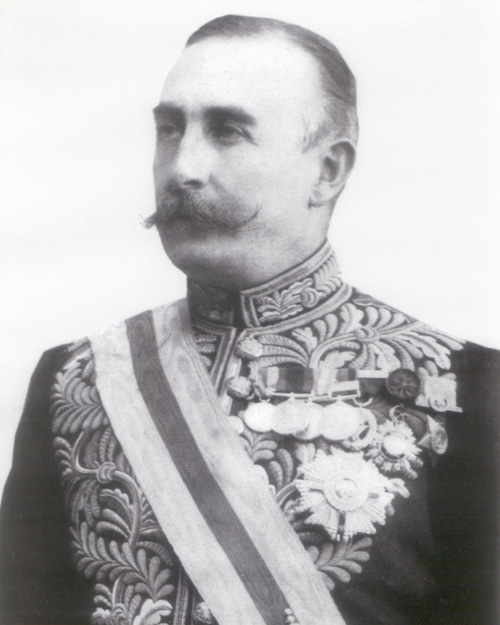
Gilbert Elliot-Murray-Kynynmound, 4th Earl of Minto, Viceroy of India
Note
Minto was the 17th Viceroy of India, serving from 1905, following Curzon's retirement, until 1910. He was a strong believer in imperialism. As a result of Curzon's partitioning of Bengal, upon becoming Viceroy, he inherited immediate difficulties in the form of Indian Nationals calling for an end to British rule. Some of these nationalists had resorted to violence and killing British people.
With a Liberal government how in power back in Britain, Minto was challenged by the new Secretary of State for India, John Morley. Morley was a radical anti-imperialist who had also opposed the Boer War, and was in favour of giving Indians more power to govern themselves. He called for reforms to which Minto responded:
The Raj will not disappear in India as long as the British race remains what it is, because we shall fight for the Raj as hard as we have ever fought… and we shall win.
Note
As a result of the differing attitudes towards India, with Minto being a staunch defender of the empire and Morley in favour of greater Indian participation, the years 1905 to 1910 saw the following:
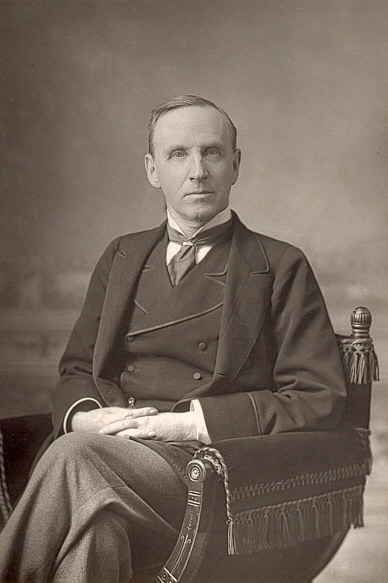
John Morley, Secretary of State for India
- Violence that arose as a result of nationalist activities were violently crushed.
- Nationalist leaders were deported
- The press was strictly censored.
- Through Morley's influence, elections rather than appointments for provincial legislative councils took place.
- An Indian was appointed to the Viceroy Executive Council.
The Morley-Minto Reforms
The Morley-Minto Reforms also known as the The Indian Councils Act, was passed in 1909. It brought about limited increased involvement of Indians in the running of India. A significant part of the reforms was to protect the Muslim minority was the introduction of separate electorates, where seats were reserved for Muslims and in which only Muslims would be polled.
Note
By the time Hardinge became Viceroy, there was growing pressure from Indian nationalists. Indeed, in December 1912, there was an assassination attempt on Hardinge, where a home-made bomb was thrown into his seat atop an elephant. He escaped with flesh wounds but his servant behind him was killed.
After Minto's resignation, the next Viceroy to follow was Lord Charles Hardinge, who was in office from 1910 to 1916.
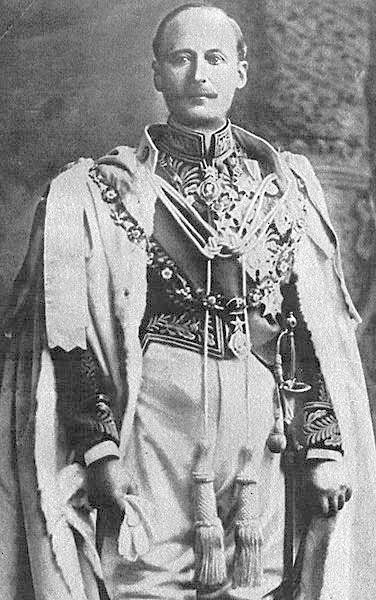
Through his diplomatic efforts, however, relations between Britain and the nationalists improved as he supported the Minto-Morley reforms and he reversed the split of Bengal implemented by Curzon.
When King George V rose to the throne, Hardinge hosted a large Dunbar in Delhi, India in December 1911, which was a mass gathering and celebration to mark George's succession of India. What made this Dunbar different was that the King came in person and maharajas sat much closer to the king.
By this time, racist policies in South Africa affecting Indians working there were garnering attention back in India and by the likes of Gandhi. Hardinge also opposed these policies and was an admirer of Gandhi.
Note
These efforts between King George V and Hardinge paid off, as, in 1914, World War One would be declared and India played a significant in supporting Britain and its allies.
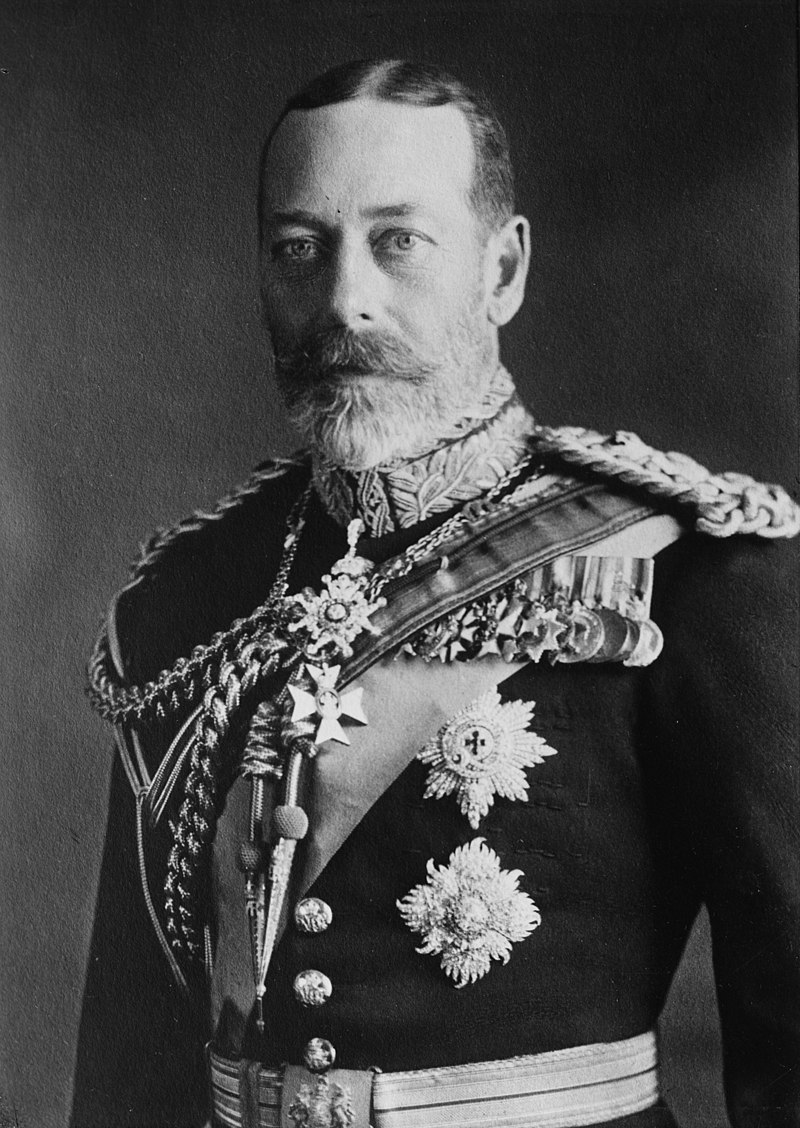
"We are too much inclined to look upon [Indians] as a conquered and down-trodden race, and the Native, who is becoming more and more educated, realises this."
- King George V
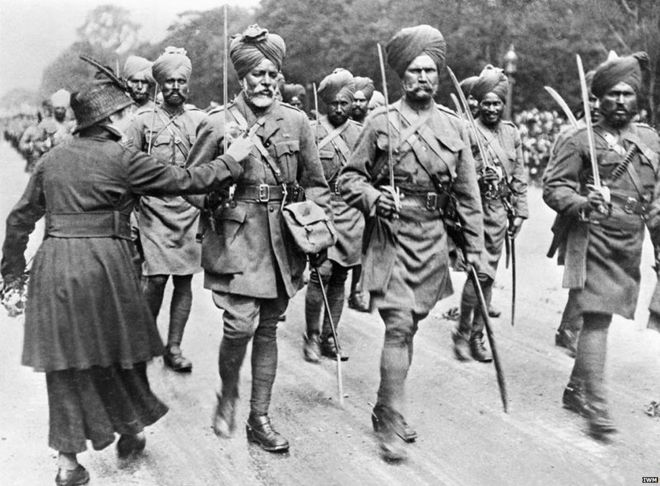
- At the outbreak of WWI, India was loyal to Britain and 1 million sepoys fought for the British Army on multiple fronts. Around 65,000 were killed and as many wounded.
- India's participation in the war heightened its sense of confidence in its ability to participate more in governmental affairs.
Defence of India Act of 1915
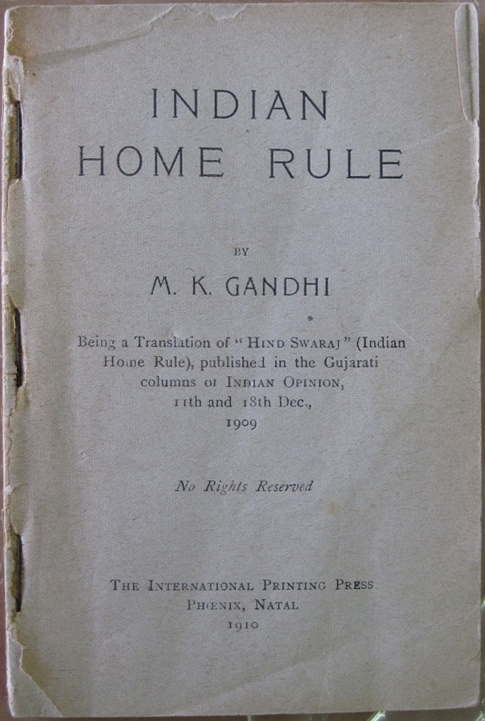
The English translation of Gandhi's "Hind Swaraj" - "Indian Home Rule"
Indians sought equality of dominion status granted to Canada, Australia, and South Africa. Home Rule Leagues, thus, held rallies, published papers and pamphlets, and used preachers to spread the message. By 1917, the Home Rule Leagues had over 60,000 members.
- Britain's response was to create the Defence of India Act of 1915.
Note
The Defence of India Act (1915) was passed in the aftermath of WWI and served as an emergency criminal law aimed at curbing the increase in Home Rule Leagues. It granted widespread power for preventative indefinite detention, imprisonment without trial, and restrictions on freedoms such as writing, speech, and of movement. The Act was applicable to all subjects of Britain in India and deemed necessary to protect the colony from nationalist violence. It had the effect of created hatred towards British rule after the sacrifices of WWI.