Strengths and weaknesses of the established parties and the rise of the Labour Party (OCR GCSE History B (Schools History Project)): Revision Notes
📚Revision Notes
Strengths and weaknesses of the established parties and the rise of the Labour Party
Threats to political stability
Political Context of Edwardian Britain
Note
In Edwardian Britain, there was growing political awareness among the working class. For example, in 1832, the Great Reform Act extended franchise to more than 650,000 men provided they earned sufficient money to pay £10 or more in annual rent. Before that the vote was given to only 400,000 wealthy landed gentry. From the 1830s, Chartism emerged, which was able to bring about the following changes:
Changes
1867 Urban working men given the vote.
1872 Secret voting allowed.
1911 MPs to receive payment.
1918 Full manhood suffrage introduced.
Annual elections was the only Chartist demand that was not implemented.
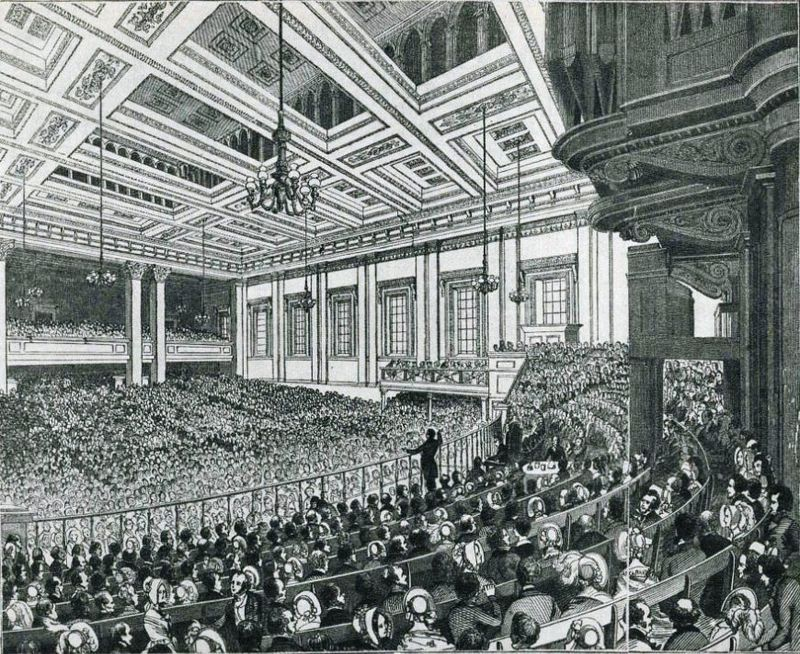
Another example of successful political campaigning was the Anti-Corn Law League. The political
movement was established to abolish the unpopular Corn Laws (1815), which benefited landowners and farmers by levying a tax on imported wheat. This kept the price of bread for the working class higher than it needed to be, which forced factory owners to pay workers more so they could eat. It was a clear example of Parliament favouring rural, wealthy British people than the many, poorer urban people.
Political context of Edwardian Britain: Trade unions
Note
Trade Unions existed in Britain as far back as the 17th century, when boat workers on the River Tyne banded together to negotiate better wages and working conditions. Here, you'll learn about workers' attempts through history to better their wages and working conditions.
Early on, government recognised the potential threat of workers joining forces so much so that in 1799 and 1801, William Pitt the Younger's Parliament passed the Combination Act.
It prohibited trade unions and collective bargaining by workers in Britain and received royal assent.
Note
Rather than successfully end workers gathering together, the Act drove labour organisations underground.
Note
The Combinations of Workmen Act 1825 allowed trade unions to exist but it severely restricted their activity. It imposed criminal sanctions for striking.
Note
Sympathy for the workers and the efforts of Francis Place saw the Act repealed in 1824.
Note
Over time, a series of strikes took place, however, which resulted in the Act being reinstated in 1825.
Note
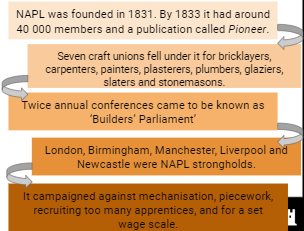
- In the early 19th century, there had been several attempts to form general unions for workers.
- The National Association for the Protection of Labour was established in 1830 by John Doherty and hinged mostly on textile-related unions. Within a few months, membership grew to around 20 000 people across five counties. At its peak, it had around 100 000 members, but by 1832 it was falling into decline over in-fighting.
- General trade unions like the Operative Builders' Union filled the space of the NAPL.
Grand National Consolidated Trade Unions
The GNCTU was established in 1834 and was an early attempt at a general union that combined all workers in different sectors and across the country. It quickly flourished as it was a time of industrial unrest and strikes were common.
The GNCTU tried to discourage strikes, wanting to achieve change through cooperative solutions. This was not successful, however. Like unions before it, the GNCTU succumbed to inside bickering and it collapsed.
Tol Puddle Martyrs
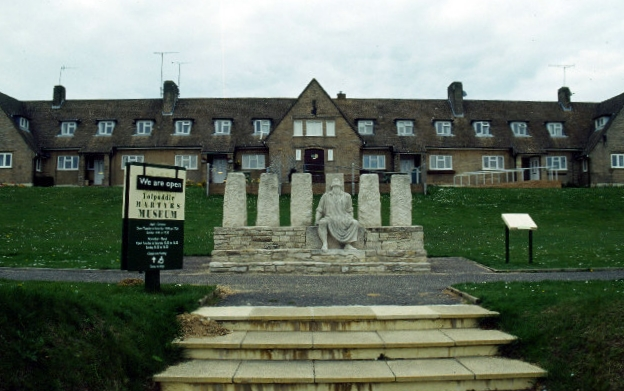
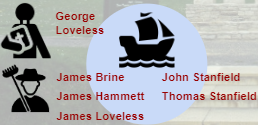
An incident that harmed the popularity of the GNCTU was that of the Tolpuddle Martyrs. In February 1834, five agricultural labourers and a priest in Tolpuddle, Dorset, attempted to form a union to raise wages that had been recently cut. To join, one had to take an oath of allegiance, however, this was not allowed based on the 1797 Act Against Unlawful Oaths. Though gatherings were allowed again, their meetings were discovered and they were prosecuted based on the Oaths Act. They were sentenced to seven years transportation.
Threats to political stability
Political Context of Edwardian Britain:
Tolpuddle Martyrs
"My Lord, if we had violated any law it was not done intentionally. We were uniting together to save ourselves, our wives and families from starvation."
-
George Loveless
-
The decision to sentence the men to the maximum number of years transportation caused an uproar.
-
In April 1834, over 200 000 people marched to Parliament with a petition of 800 000 names demanding the men be released.
-
Unions organised for the families of the men to be supported for three years.
-
Campaigns eventually saw the men pardoned in 1837, although the men had to find their own way home.
-
George Loveless returned in June 1837 and wrote, "The Victim of Whiggery".
-
This incident helped prove the power of labourers working together.
Political Context of Edwardian Britain: New Model Unions and New Unionism
Note
By the 1880s, unions began to emerge that supported unskilled workers, who had until now largely been marginalised. Changes to power were already afoot with education for children being made compulsory in 1870 and the secret ballot being introduced in 1872. The secret ballot was of particular importance because it meant those who were eligible to vote could do so without being dictated to by their employer.
After the Tolpuddle Martyrs, workers' rights in the 19th century was a case of one step forwards and two steps back. Unions in the 1850s and 1860s attempted to bring about change, but government and employers consistently fought back, for example, with the Master and Servants Act (1823), which made it illegal for workers to break their employment contract and strike. Many individuals were prosecuted under this act.
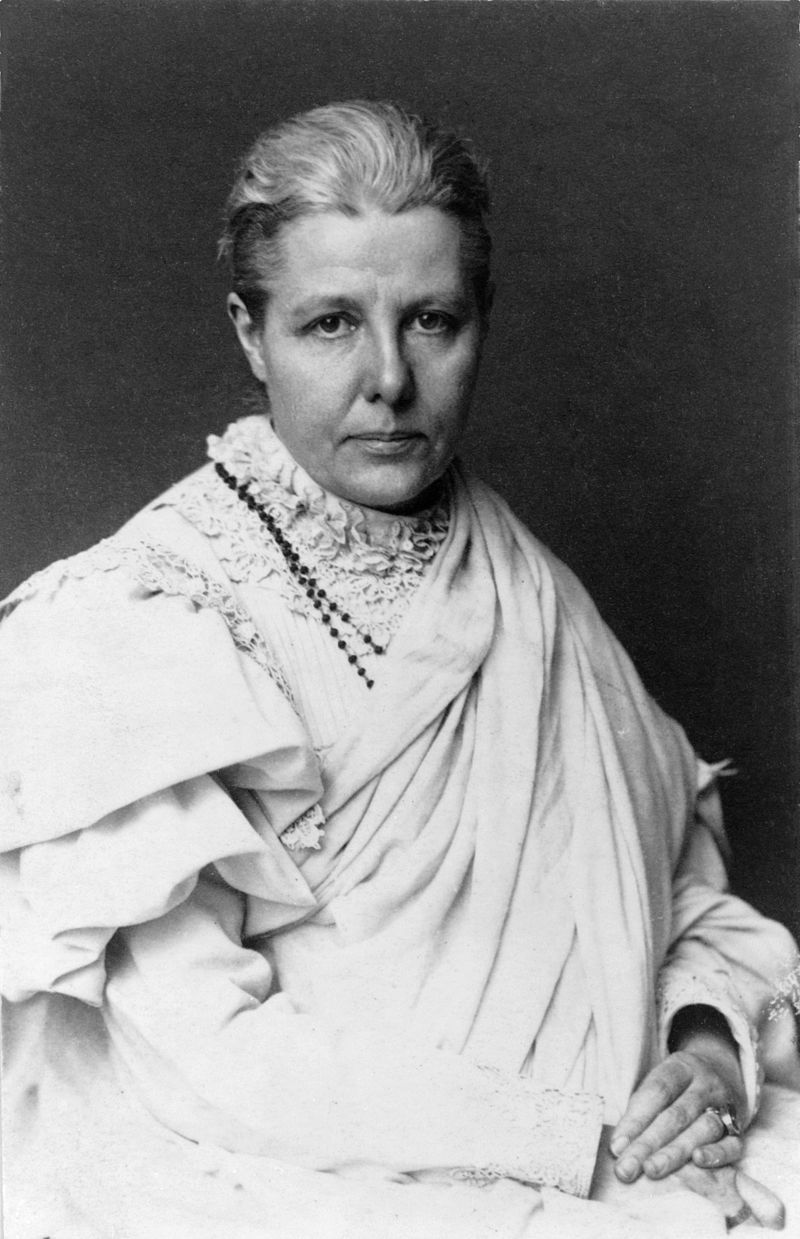
The work of Annie Besant
Besant was a campaigner for workers' rights - particularly female - women's rights such as birth control, freedom of thought, and secularism, to name some.
Note
Besant was a convicted campaigner - she even stood trial for publishing a book on birth control in 1877, which was deemed obscene. She only avoided jail by being acquitted on a technicality. She then founded a weekly publication called The Link in which she published a story titled "The White Slaves of London" in 1888, that detailed the working conditions of women workers at Bryant and May, a match factory.
The match girls
After the article was published, employers tried to get their workers to sign a document stating they were fairly treated. Many refused and they went on strike.
Besant helped the workers formulate their demands and took 50 representatives to Parliament to demand a fair wage.
The strike lasted for around five weeks and most employers gave in to the workers' demands. It was the first time unskilled and non-union workers won.
Workers laboured for 70 hours a week
They earned 5 shillings a week
Exposure to phosphorous for making matches could cause brain tumours and death.
The Dockers' Strike
Note
Following the success of the Match Girls, more strikes erupted in London in 1899. Workers were demanding eight-hour days, better pay and working conditions. The unrest spread to the London docks where there was a surplus of workers, employment was casual and pay was low at around 4d per hour.
Workers demanded the following:
- The Dockers' tanner to be paid 6d per hour
- Overtime to be set at 8d per hour
- Minimum employment to be 4 hours
Note
Employers thought they'd win by starving the strikers into submission. Sympathy strikes erupted around London in support and food was given to the strikers. Remember the activists transported to Australia? In August, Australian trade unions sent £30 000 to support the effort. By September the strikers won.
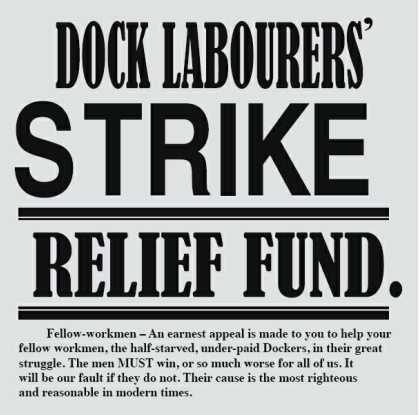
A poster encouraging supporters to help fund the striking dock workers
Political Parties and Parliament in 1900
FAST FORWARDS TO 1900… As a result of reforms and changes, Parliament consisted of the House of Lords (a lord was allowed to sit in the HoL simply by having the title) and the House of Commons (MPs had to be voted in by voters) who played a role in making and passing new laws. The House of Commons was not a paid position, so only those with a private income could afford to become an MP.
Of men allowed to vote, only 2/3rds were eligible by the time they turned 21.
Part of being an eligible male meant being the head of a household, a lodger had to stay at a residence for more than a year, a property had to be worth a certain amount, and you needed to have graduated university.
Depending on what criteria you fulfilled as a man, some men were granted more than one vote!
Only 1/3rd of all adults had the right to vote.
Women were not allowed to vote.
From 1850 to 1900, the political situation in Britain was considered stable. There were two parties - the Conservative Party and the Labour Party - who alternated in taking power...
CONSERVATIVE PARTY
- Supported by landowners and middle-class voters
- The Conservative Party supported the Church of England, the British empire, and agriculture.
- Conservatives generally opposed change.
- The House of Lords was dominated by Conservatives by 7 to 1.
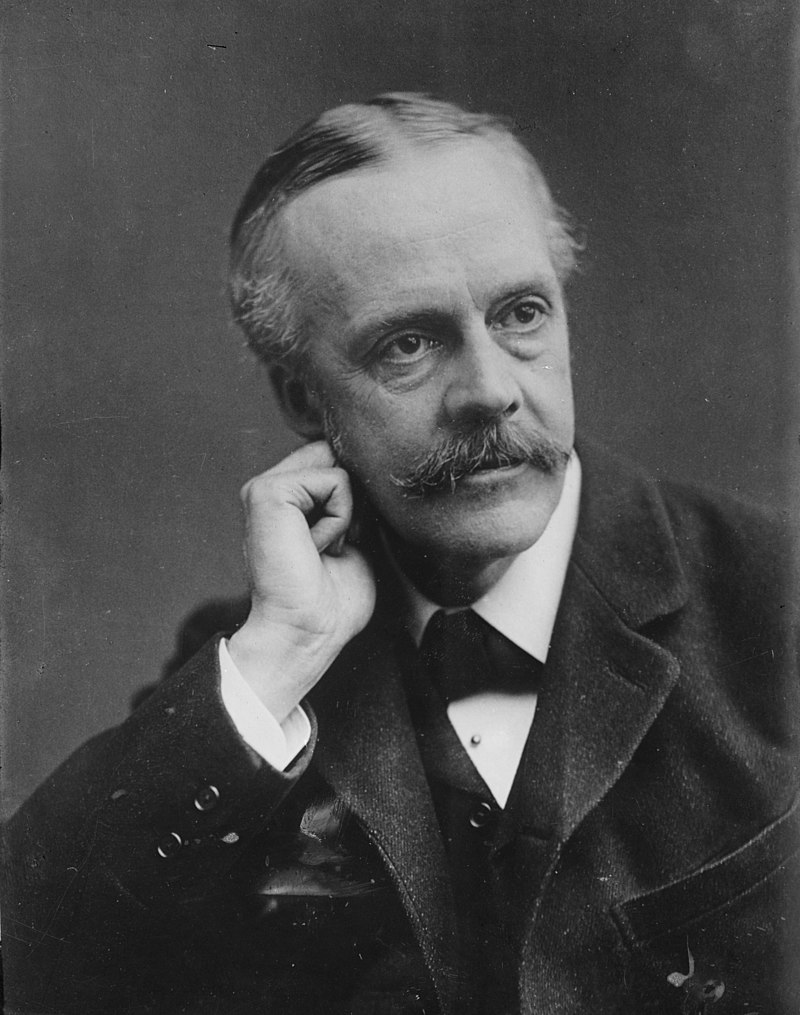
- The Conservatives won the 1900 elections and its leader, Lord Salisbury, was replaced with his nephew, Arthur Balfour, in 1902 when he retired as PM.
LIBERAL PARTY
- Mostly supported by the working class.
- It was supported by non-Conformist Christian churches, e.g. Methodists & Baptists.
- Typically supported by trade unionists - financial support helped some working men join the House of Commons as MPs.
- Liberals preferred gradual reform that improved individual liberty, financial frugality and self-reliance.
- In the 1900 elections, it won 183 seats compared to the Conservatives' 335 seats.
- It was lead by Herbert Asquith, a middle-class mill owner.
IRISH NATIONALIST PARTY
- In 1900, the whole of Ireland was part of Britain.
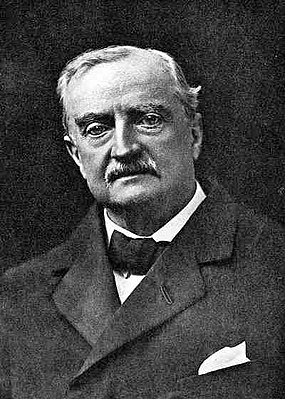
- The leader of the Irish Nationalist Party was the upper-class John Redmond. It was the largest Irish party.
- Ireland was represented in Parliament with 106 seats.
- The whole of Ireland was part of the United Kingdom and was represented in Parliament with 106 seats.
- The Irish Nationalist Party mostly campaigned for Home Rule by peaceful means. When it needed to side with another party on an issue, it was the Liberals.

Emergence of the Labour Party
Being a time of political change, the Labour Party emerged and would grow to replace the Liberals as the opposition to the Conservatives by 1924. Who were they?
The Labour Party came about when Socialists and Trade Unions came together at the end of the 18th century.
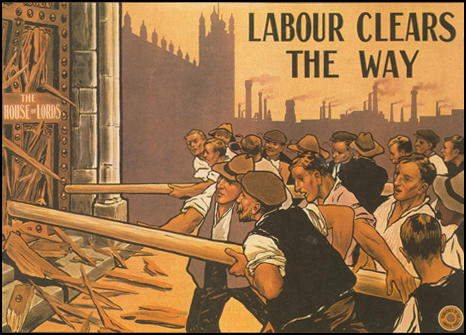
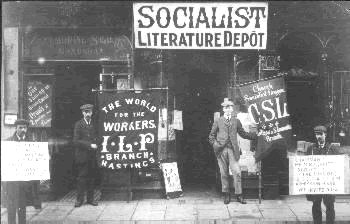
In 1848, Karl Marx fled to London. He published his book The Communist Manifesto, in which he argued that capitalism exploited the workers in order to benefit the wealthy few. Some middle-class intellectuals took up the idea to bring about change in Britain.
Note
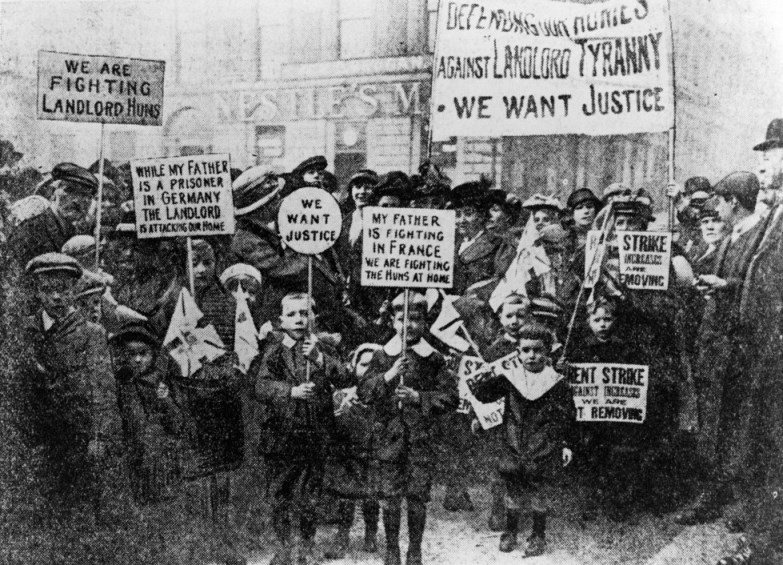
Trade unions, by-and-large, were not interested in socialist revolutions or politics. Their main aim was to improve the working lives of labourers by negotiating with employers. Where negotiations failed, strikes would take place.