The Liberal reforms, the People’s Budget, the clash with the Lords and the Parliament Act of 1911 (OCR GCSE History B (Schools History Project)): Revision Notes
📚Revision Notes
The Liberal reforms, the People's Budget, the clash with the Lords and the Parliament Act of 1911
Liberal Reforms
As mentioned earlier in this module, the Conservative Party and its opposition alternated power with each election. Come 1906, another general election saw the Labour Party come to power. They won a landslide victory with 397 seats in Parliament. Why did they win so many votes?
The Boer War (1899-1902), which took place under a Conservative government, was hugely unpopular with the public. The war cost £22 million (£2,7 billion in 2019), and the lives of nearly 6,000 British soldiers, while many also objected to the cruel treatment of boer women and children in concentration camps.
The Lib-Lab pact. Prior to the 1906 elections, trade unions had a difficult time creating change for workers. Only 30% of trade unions supported Liberal or Labour. They realised it was necessary to change the law to effect change, thus, by 1906, nearly 60% of trade unions supported the lib-labs.
Conservatives supported the empire and imperialism, which meant that food and resources from its colonies could flow freely into Britain, but importing goods from non-empire lands would incur heavy tax. During election campaigns, the Liberals came up with "big loaf, little loaf", which suggested that imperial preference was a little loaf compared to free trade, which was a big loaf'.
Liberal reforms: New Liberalism
Note
The 19th century was characterised by the attitude of laissez-faire, which suggested people were responsible for their own wellbeing, and it was not the responsibility of the government to interfere in the affairs of businesses.
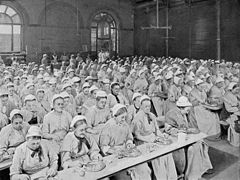
The old Liberal party believed in supporting desperate people only so far as to help them stand on their own two feet. One had to be virtually dying before the state intervened, and this was through workhouses set up under the Poor Law.
Note
Life in workhouses was deliberately harsh and unpleasant to discourage the poor from relying on them and to rather help themselves out of poverty.
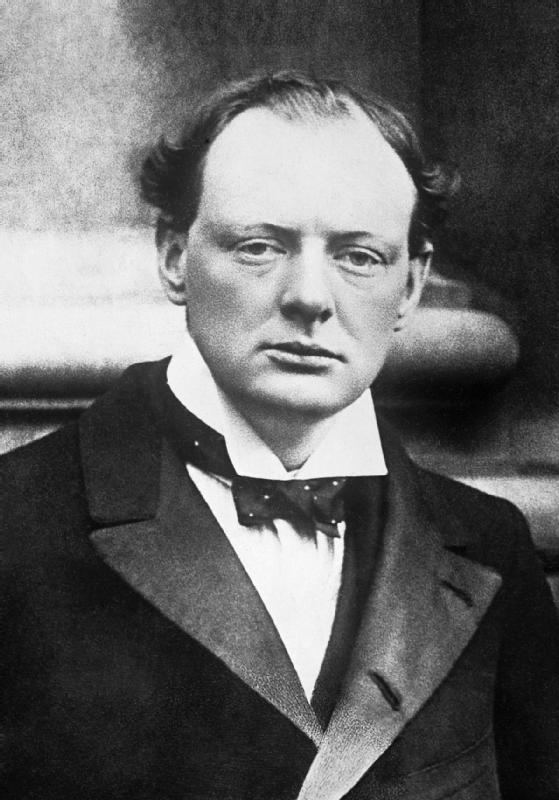
Come 1910, figures like Winston Churchill and David Lloyd Jones had become MPs as new liberals. Using the findings of Rowntree, they argued that non-intervention was not working to relieve poverty.
Note
The ideas of new liberalism was that the government needed to play a greater role in people's lives. This was new and radical thinking.
RIVALRY The early 20th century saw Germany rise up as a rival of Britain. Both nations were engaged in an arms race. Therefore, when Germany introduced old-age pensions and workers' schemes to assist their labourers in the event of illness or injury, Britain felt compelled to push through reforms to measure up.
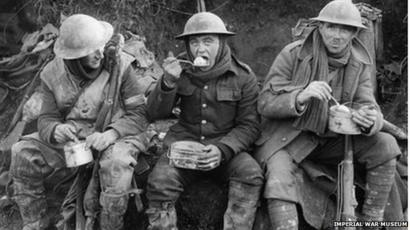
British soldiers in WWI
Note
Becoming an officer of the army was a respectable career for middle and upper class men. However, being a recruit from the working class did not offer the same glamour and prestige - rather, the pay was low and nutrition was poor. With relations between Britain and Germany souring, the health of the armed forces became a matter of national security.
Who took priority with Liberal reforms?
New liberals considered children and the elderly as two groups who were unable to 'stand on their own two feet' and laws were needed to help them. For children, laws for school meals were passed in 1906.
School medical checks were introduced in 1907.
The Children's Charter aimed to help children in trouble with the law as there was no distinction in court for child offenders vs adults and they ended up in adult prisons.
For old people, pensions were introduced in 1908. Over 70s received 25p per week (£30 in 2019). Support was given to couples provided they were earning less than 60p per week and were not drunkards.
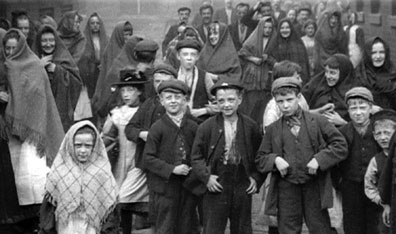
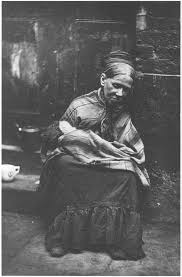
A key issue relating to poverty identified by Rowntree was loss of income as a result of sickness, or unemployment. Workers earning better wages could afford insurance through Friendly Societies or their trade union, lower paid workers (50% of the working population) couldn't afford it. David Lloyd George set about addressing this issue...
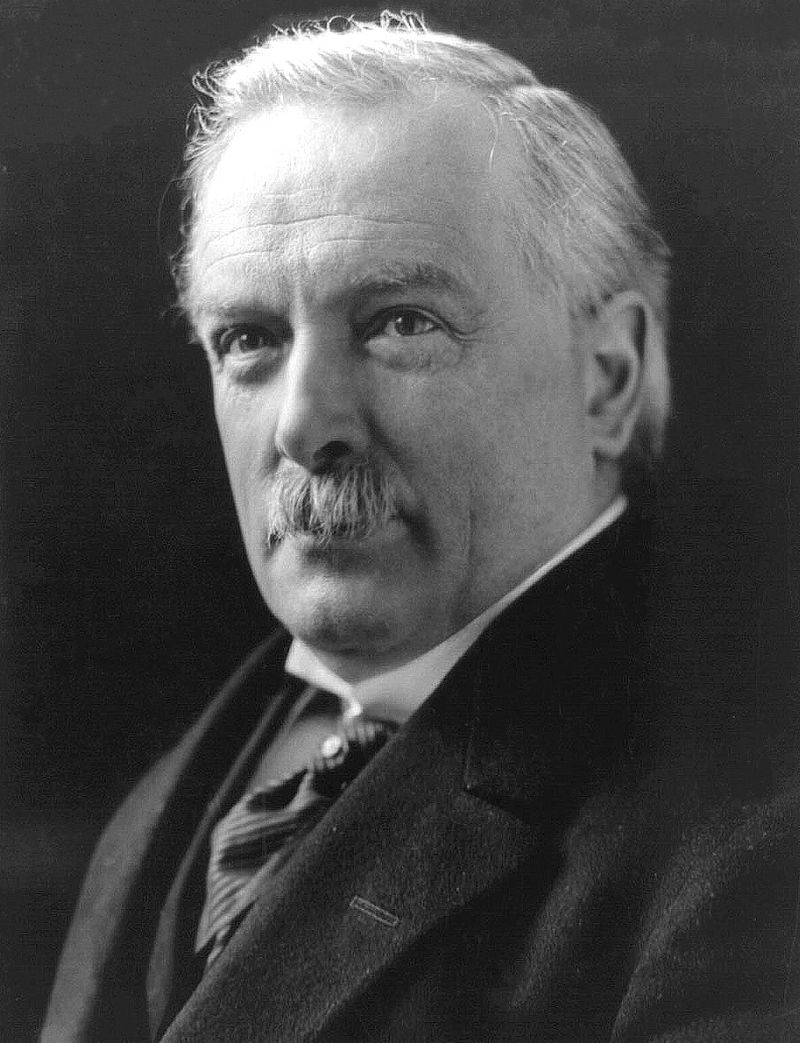
We need to create a model based on Germany uses.
The government needs to run a National Insurance Scheme which will consist of two parts
> > >
NI for sickness
Workers earning less than £160 (£20,000 in 2019) per year had to contribute 1,7p per week to the scheme. Employers added 1,25p and the government another 0.8p. This brought the total to 3,75p in insurance and could claim 50p per week for up to 26 weeks.
NI for unemployment
It initially covered industries where periodic unemployment was common, e.g. construction. Workers, employers and government contributed 1p per week each. Benefits of 35p per week were given for up to 15 weeks.
The scheme was successful because workers had to contribute, the benefits alone were not enough to live off and thus encouraged a swift return to work. It appeased the working class, while not upsetting the middle class.
The People's Budget of 1909
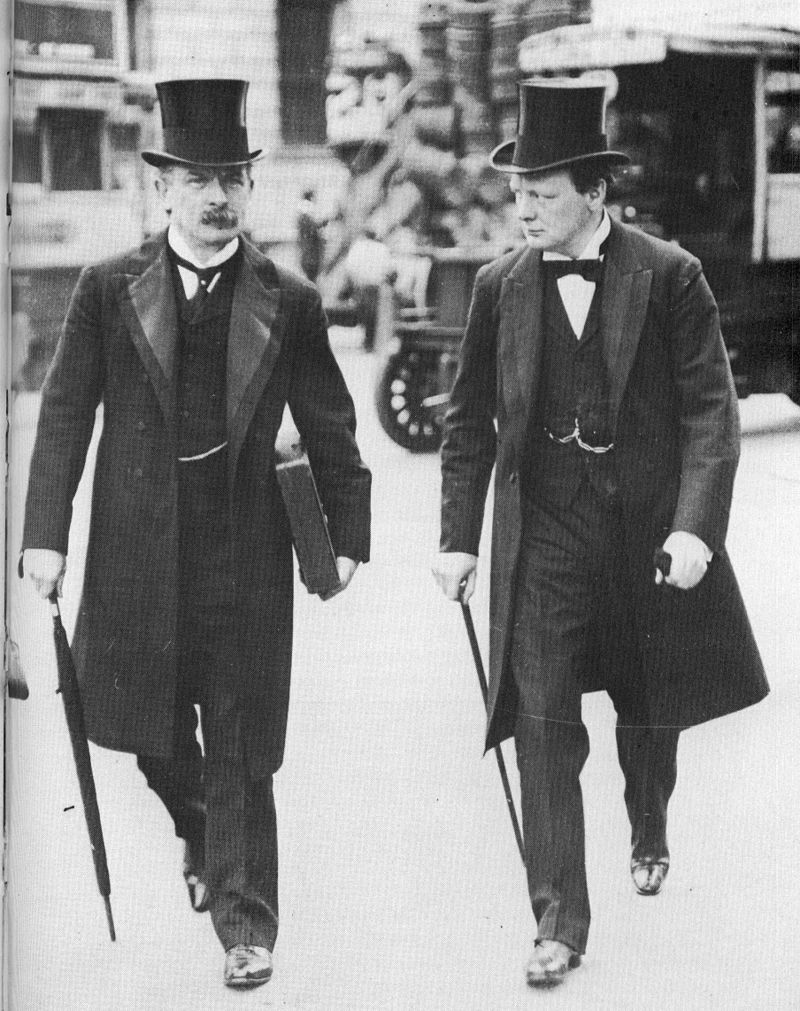
David Lloyd George and Winston Churchill
The People's Budget was a Liberal government proposal championed by Lloyd George and Churchill that introduced unprecedented taxes on the lands and incomes of Britain's wealthy elite in order to fund new social welfare programmes. The House of Commons passed the bill, but the House of Lords blocked its passage for a year before coming into effect in April 1910.
Note
Britain also needed funds to build more battleships for the Royal Navy to keep pace with its arms race with Germany and its naval expansion programme.

Lloyd George needed to find £16 million (£1,8 billion in 2019). The following taxes were thus imposed:
- Income tax was levied on unearned income (investments, rental income etc.) over £3,000.
- Further taxes were levied on over £5,000.
- Petrol and motor vehicles became taxed.
- A 20% tax for unearned income from the sale of land was imposed. It was highly controversial.
Note
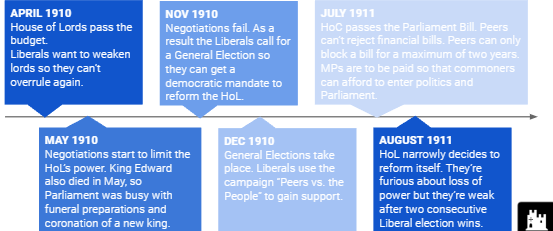
The new taxes were necessary in order for the Liberal government to achieve its reforms. It created a constitutional crisis between 1909-1911, however. The crisis lasted two years and consisted of the following:
What Happened next?
| April 1909: The budget is presented to Parliament | November 1909: The budget is thrown out by House of Lords | January 1910: General elections take place. Liberals stay in power |
|---|---|---|
| • The House of Lords has a permanent Conservative majority. • They wanted to protect their wealth and land • Some lords called it a socialist revolution. | • The House of Lords goes against the norm and rejects the budget. • Lloyd George accuses them of making a revolution more likely through rejection. | • Liberals call a General Election to prove their popular support. • It was close and they lost the majority, but they won. • They relied on the support of Labour and Irish Nationalist MPs . |