Government policy and propaganda in response to the changing demands of war (OCR GCSE History B (Schools History Project)): Revision Notes
📚Revision Notes
Government policy and propaganda in response to the changing demands of war
Historical Context
Commonly known as the First World War (WWI), the Great War was a conflict between the European territories of Germany, Austria-Hungary, Bulgaria and the Ottoman Empire against Great Britain, France, Russia and Italy. It began in 1914 and lasted until 1918. This war saw the emergence of new military tactics and technologies, including trench warfare and battle tanks.
Causes of the First World War
Alliance System
The purpose of an alliance is for countries to collaborate to achieve a common goal. Through alliances, countries are able to help each other and fill each other's gaps and weaknesses.
Militarism
European militarism is thought to have originated from the northern German kingdom of Prussia. Germany's government and armed forces were designed on the Prussian model
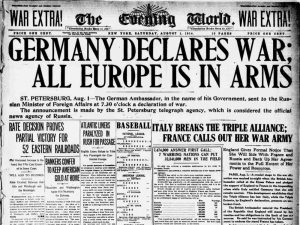
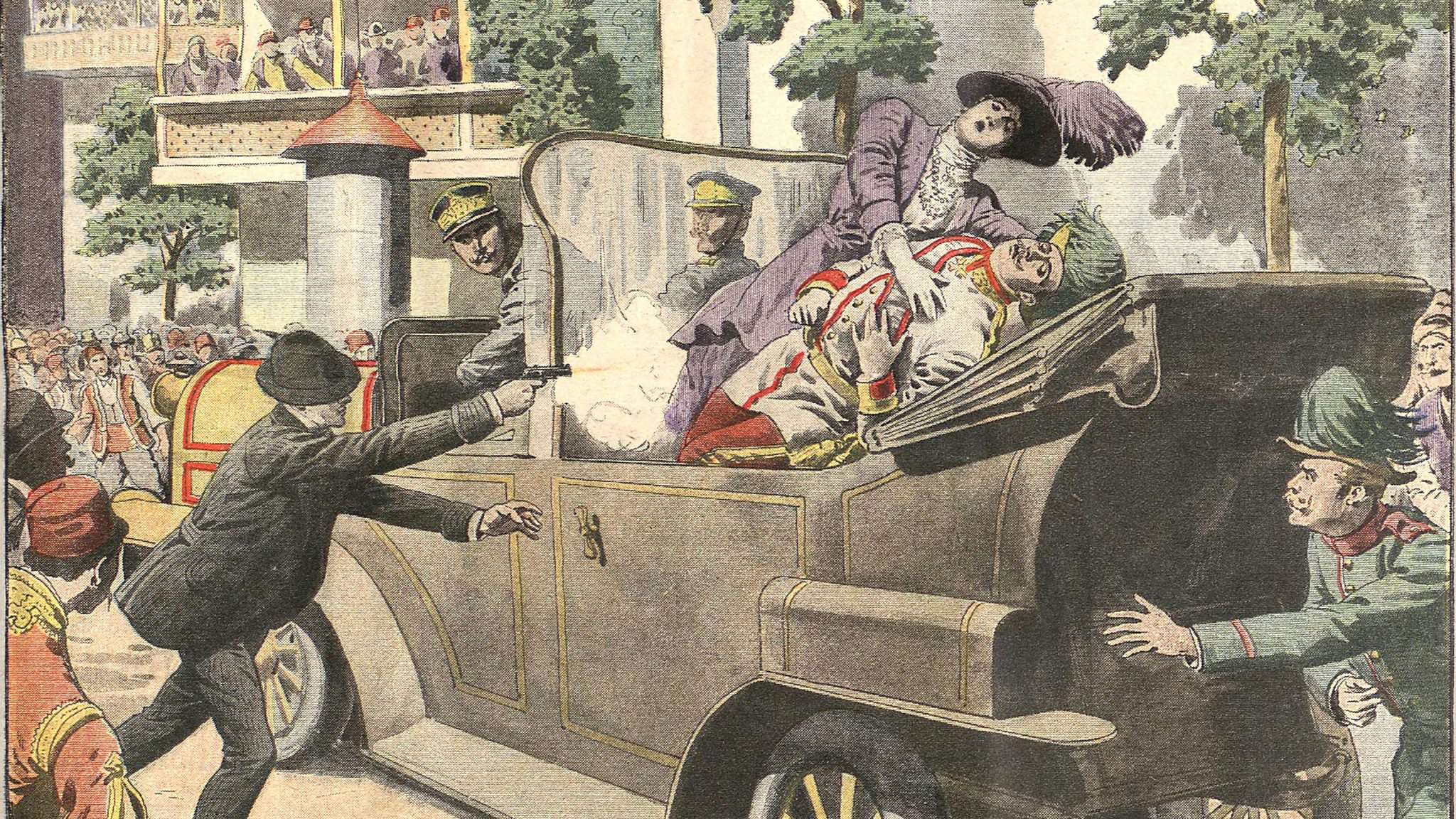
News headline of Germany's declaration of war and Artist's depiction of the assassination of Archduke Franz Ferdinand
Note
Over 4 years, 3 months and 2 weeks, WW1 took the lives of around 10 million soldiers, over 20 million were wounded, and more than 8 million civilians were killed. It changed the social fabric of many countries too, with women and children entering the workforce on the homefront to fill the gaps left by men fighting in the war. The strategy of WWI was also different: men went from being locked down in trenches, to being facilitated with tanks, trains and aircraft to move about. What remained, however, were attrition tactics, which contributed to millions of deaths.
Nationalism
The nationalist movement that had the biggest impact on the outbreak of war was by Slavic groups in the Balkans. Pan-Slavism was the belief that the Slavic people of Eastern Europe should be independent and have their own nation, and that they were a powerful force in the region.
Imperialism
Imperialism reached unmatched heights with European powers in the 19th Century. European imperialism played a significant role in sparking WWI. Colonies were governed either directly by the imperial power, by a puppet government, or a local government of strategic individuals linked to the colonisers.
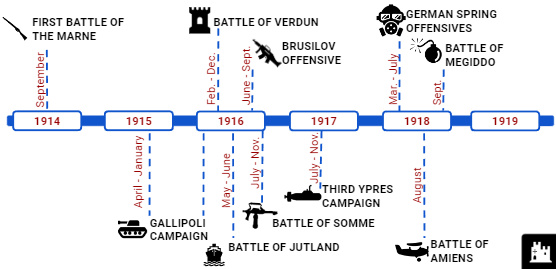
WWI Battle timeline
Government policy and propaganda in response to the changing demands of war including early recruitment, conscription and DORA
Note
Prior to the outbreak of WWI, the British Army had around 80,000 regular troops ready for war. By 1914, around 710,000 men stood in reserve. By the end of WWI, almost 1 in 4 men in Britain had joined the military, totalling 2.67 million as volunteers, and 2.77 million as conscripts. So what compelled so many men to join?
Nationalism, which is an intense form of patriotism, was a prominent force during WWI. Nationalism exaggerated the value and importance of one's home country, placing its interests above others.
Many Britons were convinced of their cultural, economic and military supremacy and that it needed defending from Germany. Politicians, diplomats and royals contributed to this mindset in their speeches and rhetoric, while the media also played into it through its reporting.
Propaganda for Recruitment
Examples of recruitment posters compelling British men to enlist for WWI
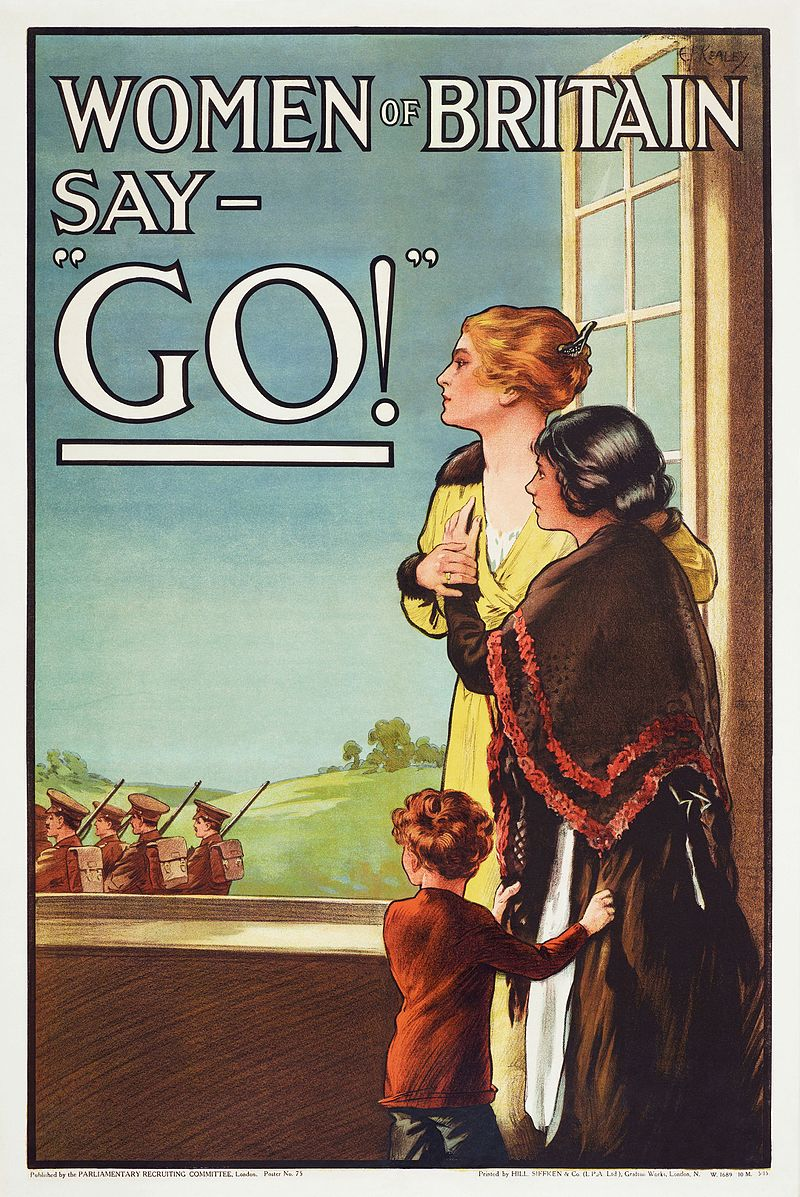
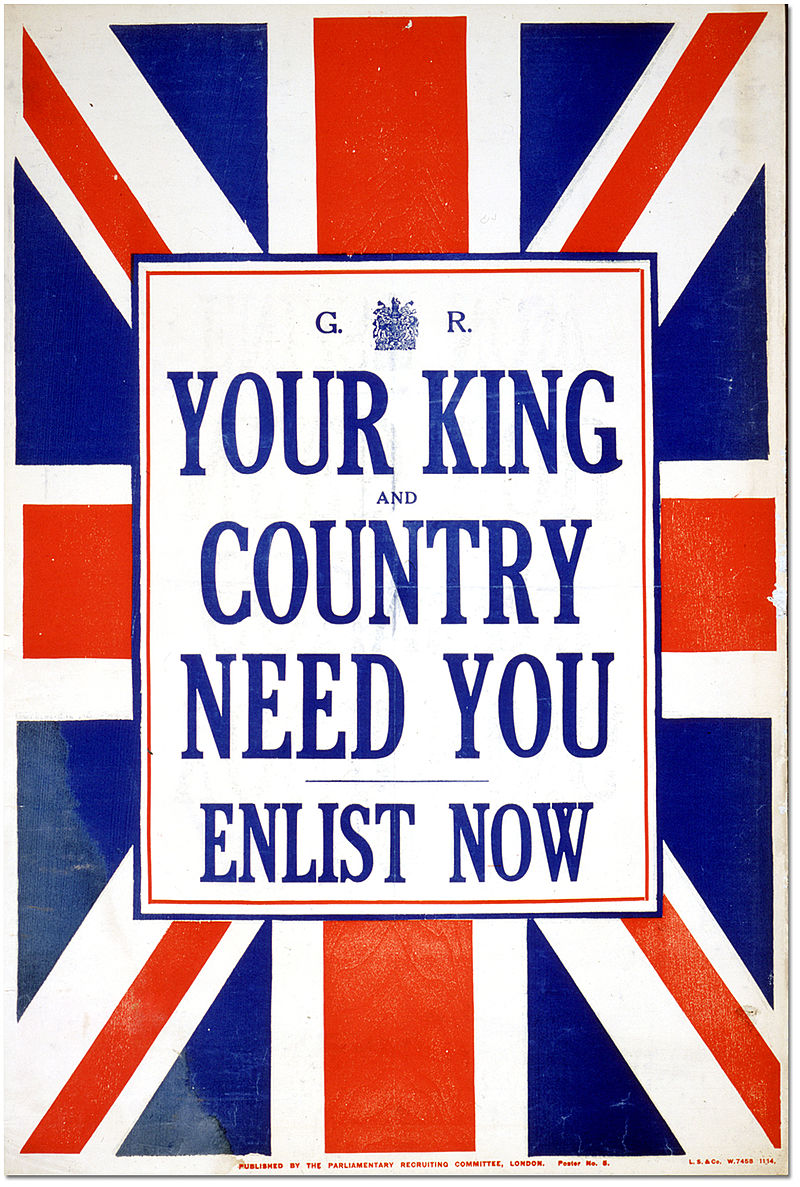
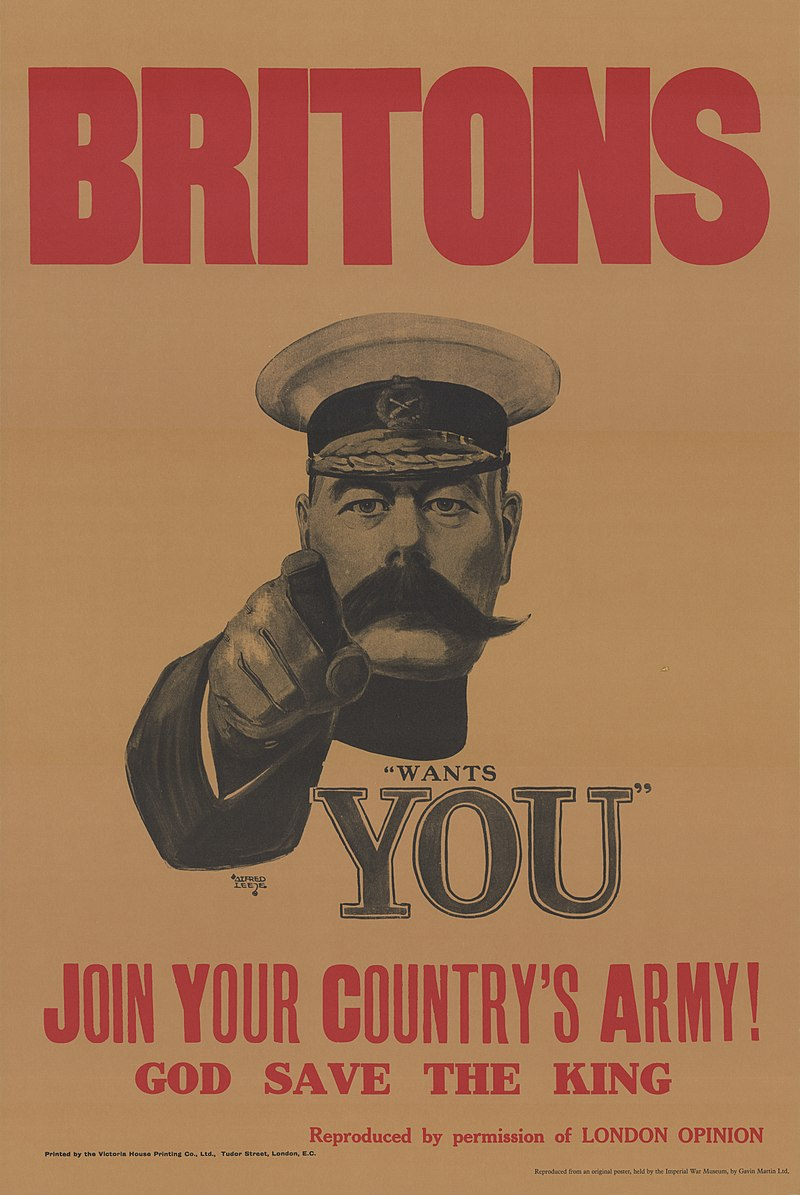
Members of society were also effective in compelling men to sign up. Women, who had only just received suffrage, were very patriotic, and many actively shamed seemingly eligible men for not enlisting. After assaults became prevalent, the Silver War Badge was issued to men who were not eligible (an essential occupation) or had been medically discharged. Through overconfidence in one's country's might, and years since any major conflict, many soldiers believed in the 'glory of war' and their appetite for war grew.
England's penny press was a cheap form of literature responsible for feeding into ideas of British supremacy by telling incredible fictions about foreign intrigues, espionage, future war and invasion. The Battle of Dorking of 1871 (pictured), is one of the best-known examples of invasion literature.
The penny press relied heavily on racial stereotypes such as Germans being cold, emotionless and calculating; Russians as uncultured barbarians; the French as leisure-seeking layabouts, etc.
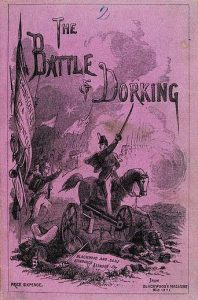
The Battle of Dorking cover
Note
The propaganda machine was highly successful in getting men to enlist. In 1914, the call for 100,000 volunteers was far exceeded with 500,000 men stepping up in two months. Around 250,000 underage boys also volunteered. Sense of loyalty also saw the formation of 'pals battalions' in which groups of men from the same community, football team, or factory joined together.
Conscription
The Derby Scheme was an experiment conducted in the autumn of 1915 to determine whether Britain could meet its WWI manpower goals through volunteers alone, or whether conscription would be necessary. It was named after Lord Kitchener's new Director General of Recruiting, Edward Stanley, 17th Earl of Derby.
Canvassers, who were "tactful and influential men", got men to enter the programme and they were handed a letter from Derby explaining they were in "… a country fighting, as ours is, for its very existence ..." The outcome was that there were 318,553 medically fit single men, but 38% of them publicly refused to enlist. This left the government short, and conscription was introduced in January 1916.
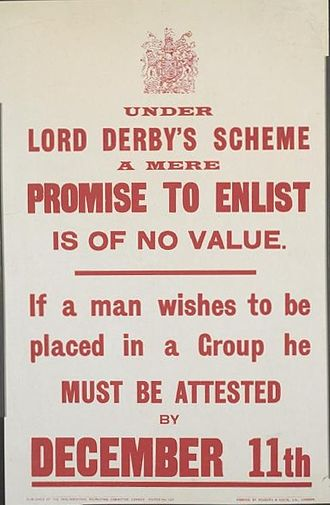
In the UK, conscription has occurred in two periods: The first was from 1916 to 1920 for WWI, and the second was from 1939 to 1960 during and after WWII. WWI conscription began after the passing of the Military Service Act in January 1916. This compelled all men between 18 and 40 (later to 51 years old) to be called up. A tribunal determined whether you were exempt. Due to the political situation in Ireland, conscription was only applied in England, Scotland and Wales.
In May 1916, a second act was passed which extended conscription or compulsory active service in the military to married men. By the following month, about 200,000 people gathered in Trafalgar Square to denounce the conscription. In 1918, the Military Service Act increased the age limit to 51. Throughout WWI, about 2.5 million men were conscripted in the army.
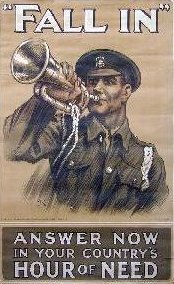
WWI poster from the United Kingdom
Government Censorship-DORA
Note
On 8 August, 1914, days after WWI began, the Defence of the Realm Act was passed. This act extended the wartime emergency powers of the British government. As a wartime measure, the government took control of the social, economic and industrial concerns in Britain.
Under DORA, the government was allowed to pass war-related laws without the usual process of voting and ratification by Parliament. Wartime laws particularly aimed to maintain the morale of the people and increase production. It covered the following:
- Newspapers detailing information to and from the trenches were censored;
- To protect and maintain production on the Home Front, striking was outlawed.
- In order to increase production while maintaining expenses, the working day was extended, particularly in agriculture. Loss of productivity at work and lateness were reprimanded.
- Prohibition on alcoholic drinks.
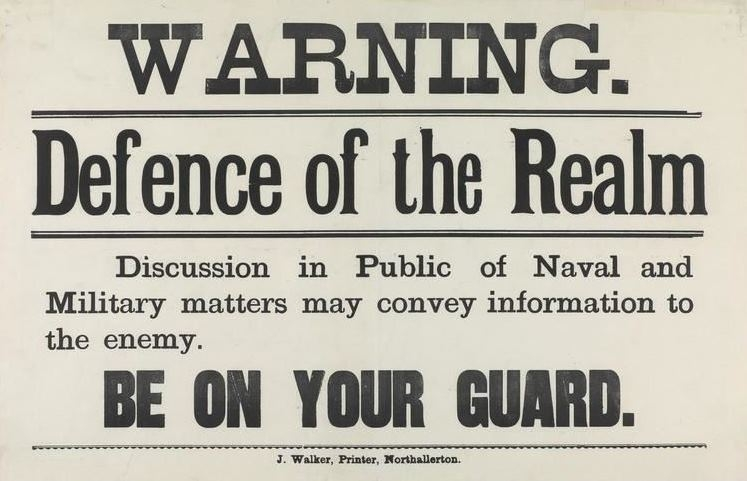
Defence of the Realm Act poster
The government also disallowed its citizens to do the following:
- Talk about military matters in public and spread rumours about it
- Light bonfires
- Feed bread to chickens or horses
- Use invisible ink when writing
- Melt silver or gold
Note
Initially, the public agreed to the measures employed by the government. However, as the war progressed, objections emerged as people thought that DORA undermined their freedom.
Additional measures under DORA
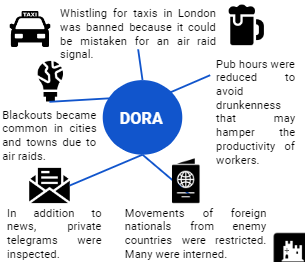
Note
Through the Neutral Press Committee and the Foreign Office, British propagandists sent special telegraphs to agencies in Bucharest, Amsterdam and Bilbao to spread information in other European countries. In London, the Illustrated London News published pictorial propaganda against the Germans. Issues were translated into Spanish, Portuguese, Greek and Chinese.
In 1915, Wellington House, also known as Britain's War Propaganda Bureau, began its film propaganda. Films were particularly produced and distributed by a Cinema Committee to Allied countries.
These motion pictures specifically promoted ideas of British determination and bravery in the war.
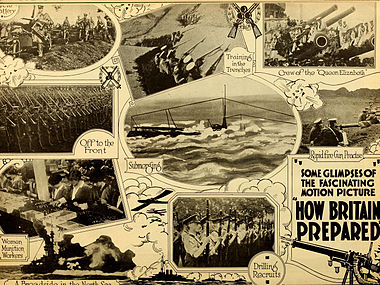
Poster of Britain Prepared, 1915
Note
In December 1915, Britain Prepared became the first prominent war film distributed worldwide. In August 1916, the film Battle of the Somme was released.
In 1914, James Clarke's The Great Sacrifice depicting a dead soldier beneath a vision of Christ on the Cross was reproduced and hung up in churches, schools and mission halls. The original painting was acquired by King George V's wife, Queen Mary. In December 1914, Clark painted The Bombardment of the Hartlepools.
Note
The most common form of domestic propaganda was recruitment posters. Aside from urging the people to volunteer, posters included atrocity stories about a German invasion. Such stories were rooted in the German invasion of Belgium.
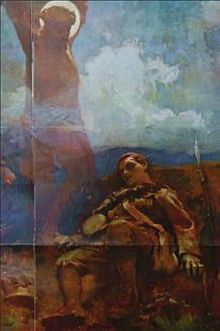
James Clarke's The Great Sacrifice