Women’s responses to the demands of the war (OCR GCSE History B (Schools History Project)): Revision Notes
📚Revision Notes
Women's responses to the demands of the war
Note
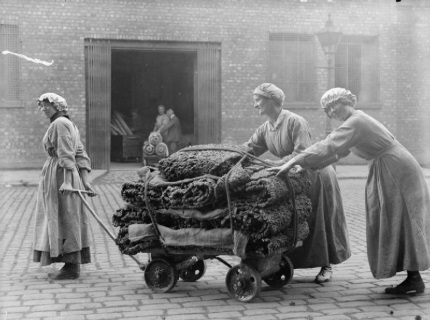
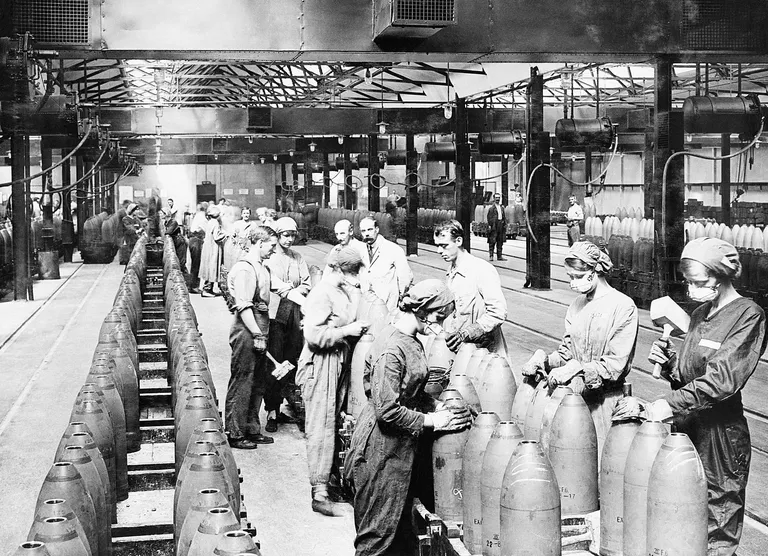
Because of the introduction of conscription in 1916, the government launched campaigns and recruitment drives, as female workers were really needed. Large numbers of women took jobs left by men who had gone to fight in the war.
- New jobs were created as part of the war effort. For example, many women worked in munitions factories. In fact, it was one of the largest sources of employment in 1918.
- Women began to work 'men jobs' such as railway guards and ticket collectors, buses and tram conductors, postal workers, police officers, firefighters, bank tellers and clerks.
- Some women worked on precision machinery in engineering, others led cart horses on farms or worked in the civil service and factories.
- Their wages were lower than men's.
Women on the Home Front WWI
In 1917, as the Army was running out of men, the War Office decided that women could do some front line jobs that did not involve fighting. The Women's Army Auxiliary Corps (WAAC) was organised into four units: cookery, mechanical, clerical and miscellaneous. Women could do work such as answering telephones and passing messages to soldiers, cooking for men in camps and hospitals, repairing broken down vehicles, etc...
The Women's Army Auxiliary Corps became Queen Mary's Army Auxiliary Corps (QMAAC) in 1918.
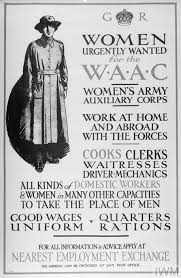
Ministry of Labour poster for the Women's Army Auxiliary Corps
More than 57,000 women served between January 1917 and November 1918.
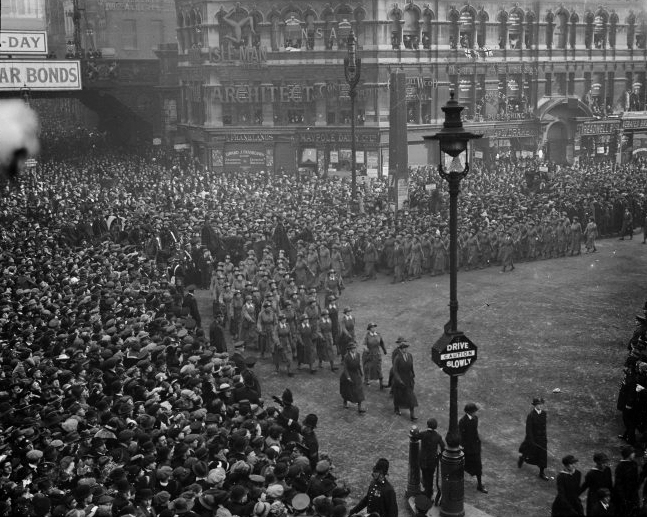
The WAACs marching in London at the end of World War I, 1918
Development in the suffrage campaign
Note
Come 1861, there was significant interest in women's rights, given the 1.25 million unmarried women and 750,000 widows requiring support. The Ladies of Langham Place realised the vote was the only way to create change. They petitioned Parliament in 1866 to amend the Reform Act, but this only served to forbid the female vote. This led to the formation of the NUWSS.
The National Union of Women's Suffrage Societies (NUWSS) was founded by Millicent Fawcett in 1897. It consolidated many smaller suffrage organisations. The NUWSS took a moderate line, was non-confrontational and constitutional. Born June 11, 1847, in England, Millicent Fawcett served as the leader of the suffragists movement in England for 50 years. Fawcett argued that women should be given the right to take part in the process of lawmaking (through voting) as women obey laws.
- Women pay taxes like men
- Women held responsible posts such as on school boards
- Wealthy women employed labourers who could vote
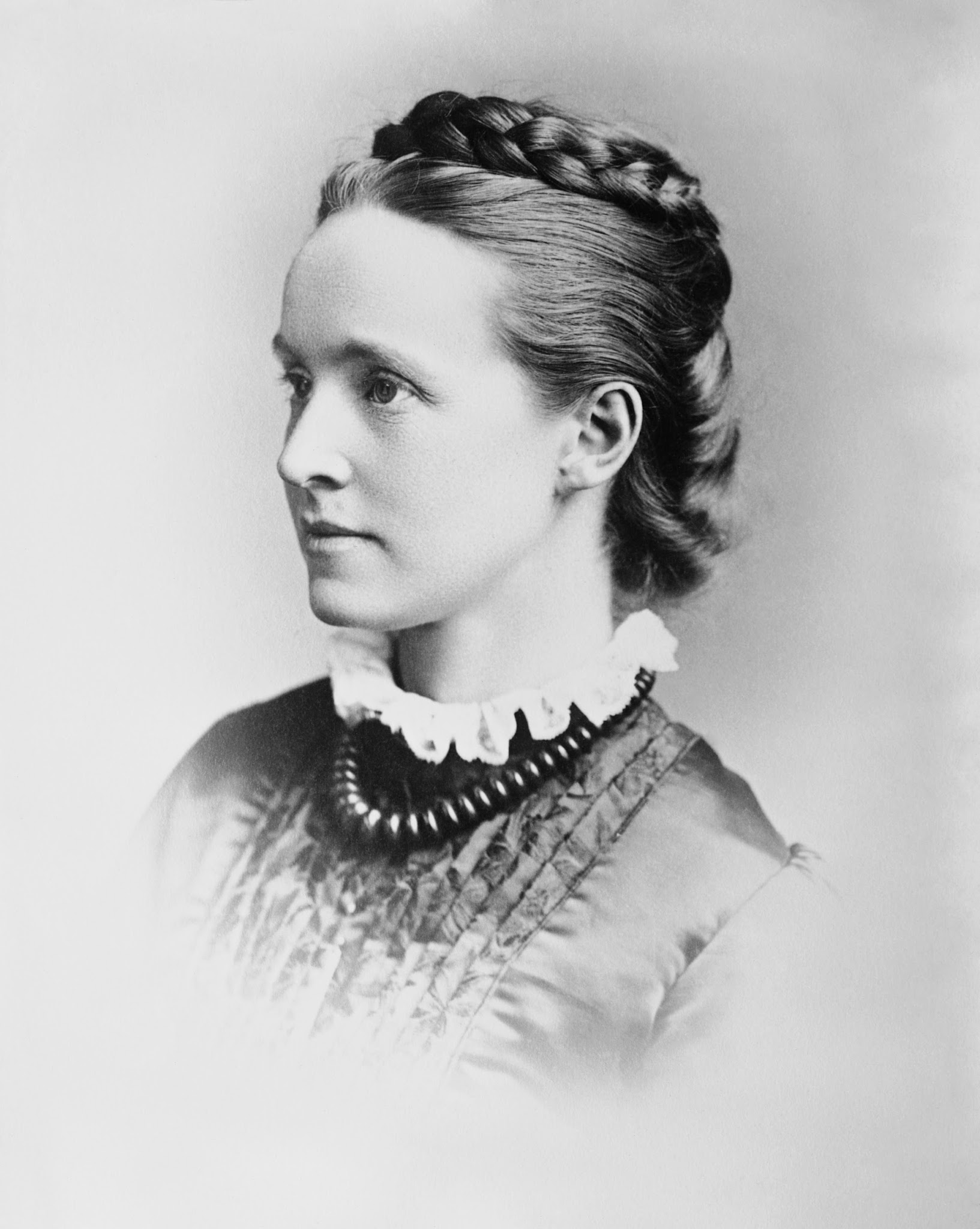
Millicent Fawcett (1847-1929)
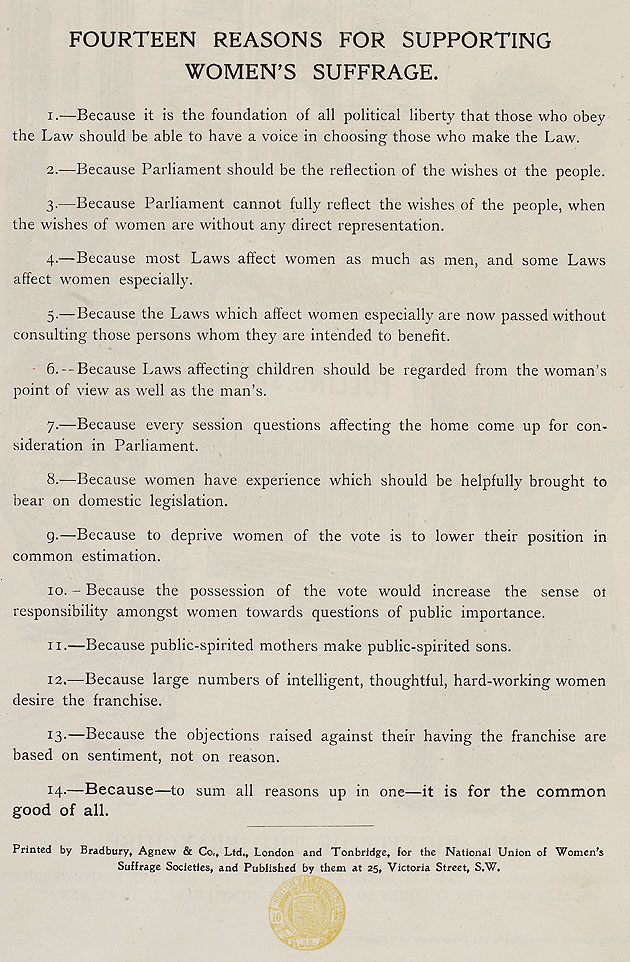
The NUWSS manifesto of 14 reasons for women's suffrage
Some of the 14 points were:
- Parliament should reflect the wishes of all the people
- Laws affect women too
- Women can bring useful experience to the table
- Granting women the vote would increase their sense of responsibility
- Reasons for denying women the vote are not rational
- "Public-spirited mothers make for public-spirited sons".
What were the tactics used by the Suffragists?
The tactics initially used were similar to that of the Anti-Corn Law League - speakers toured the country to spread the word, leaflets and pamphlets were distributed, newspapers printed adverts and opinion pieces, and sympathetic MPs brought the issue of suffrage to Parliament.
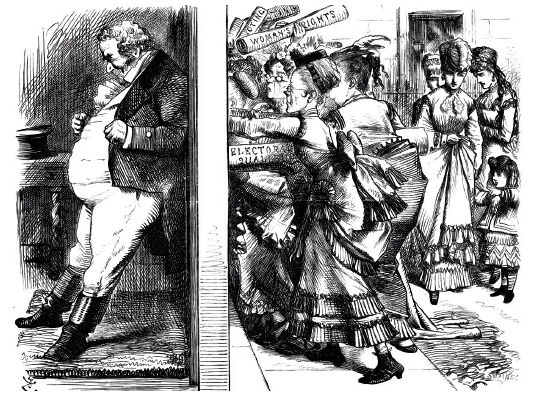
A political cartoon from Punch magazine depicting John Bull resisting women's suffrage
- To get their voices heard, activists would interrupt political meetings with polite questions and ask the speaker his opinion on women's suffrage.
- Activists were typically non-party political, but that limited their influence as neither conservatives nor liberals could determine if women's suffrage would be to their benefit.
- Women's suffrage did not enjoy the same level of support from all levels of society compared with the abolition of slavery and the Anti-Corn Law League.
Note
Female opponents of women's suffrage included Queen Victoria, Florence Nightingale, Octavia Hill and poor working women.
Note
Amidst Fawcett's effort in convincing the Parliament, her peaceful process was slow. As a result, women expressed anger, which gave way to leftist suffragettes.
Women's Franchise League
In 1889, suffragette Emmeline Pankhurst founded the Women's Franchise League (WFL), which advocated for suffrage for married and unmarried women. After the WFL broke apart, she founded the Women's Social and Political Union (WSPU) in 1903. Like the Anti-Corn Law League, the suffragettes placed a lot of their efforts into influencing by-elections and their extreme acts kept them and their cause in the spotlight.
This alienated more people than it enamoured, which significantly increased numbers for the moderate NUWSS. But it also made things difficult in Parliament - by 1912, it was clear neither the Liberals nor the Conservatives would give the vote and so attention turned to the new, still small, Labour Party.
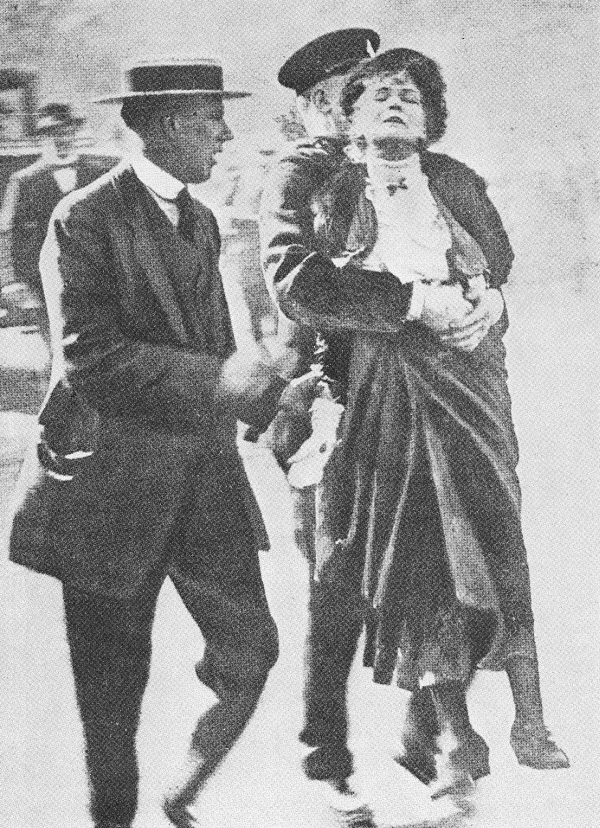
Emmeline Pankhurst being arrested outside Buckingham Palace, May 1914
Daughter of Emmeline, Christabel was exposed to politics at a very young age. She obtained a law degree from the University of Manchester and became one of the backbones of WSPU's speeches and pamphlets. After disrupting the speeches of Winston Churchill and Sir Edward Grey in Manchester, Christabel along with Annie Kenney were imprisoned, which sparked the tactic of civil disobedience.
Emily Davison
Their campaign escalated from pamphlets to arson and attacks on public galleries during the outbreak of WWI. Between 1912 and 1914, Christabel was appointed organising secretary of the WSPU. Even in exile in Paris, she was able to organise militant actions in London. When the war broke out, she returned to London and was arrested again.
Note
In prison, like other Suffragettes, Davison attempted to starve herself. She was then force-fed by a prison guard. Upon her release, she sued the wardens and was granted 40 shillings.
On June 4, 1913, Davison took the extreme action of throwing herself in front of King George V's horse at the Epsom Derby. Four days later she died of her injuries and became the first Suffragette martyr.
In 1909, after throwing rocks at the carriage of Chancellor Lloyd George, Davison was arrested and sentenced to hard labour for a month. In 1912, Davison was once again gaoled for setting fire to London post boxes. She was sentenced to prison for 10 months. As before, she went on hunger-strike.
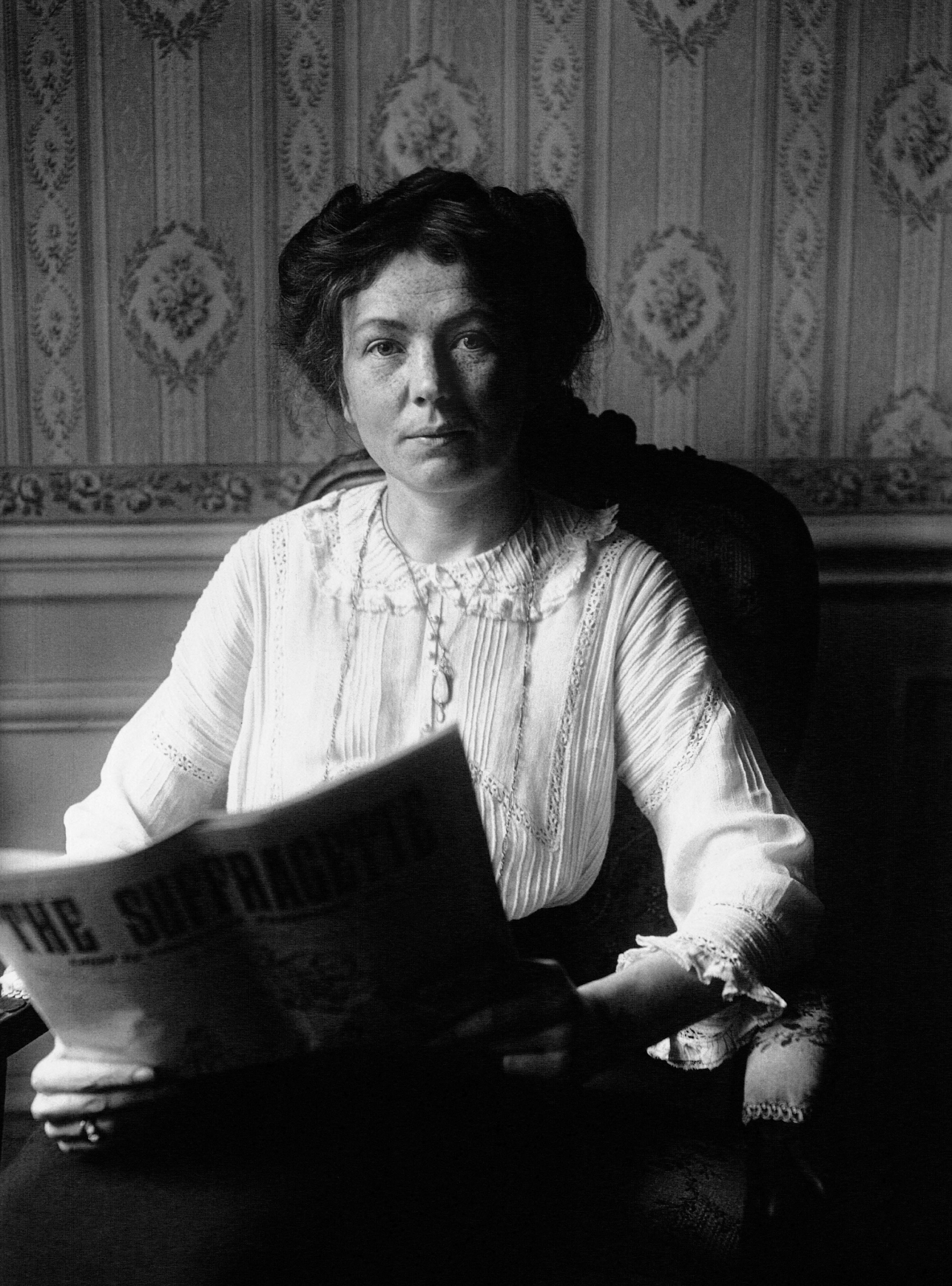
Christabel Pankhurst
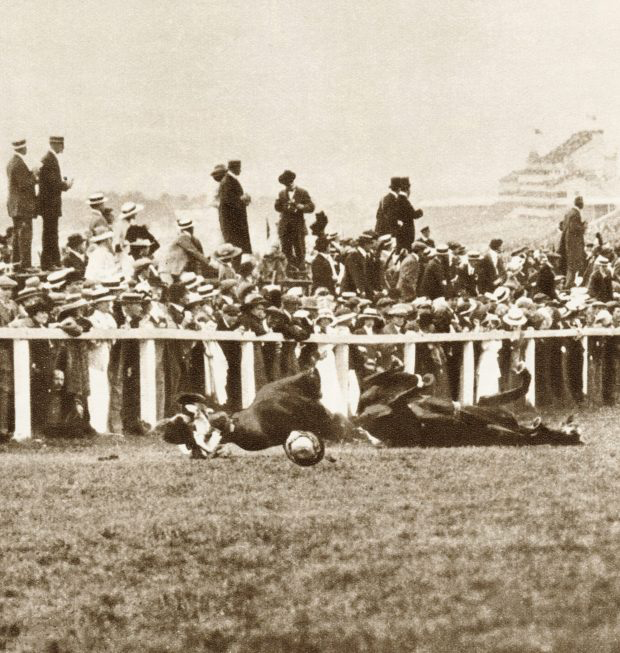
Image of Emily Davison as she threw herself in front of King George V's horse
Note
Because of this, the authorities realised that women were willing to give up their life in the name of the cause. In response, the Prisoners' temporary Discharge for Health Act was introduced. This act stated that prisoners who went on hunger strike would be released but arrested again once they regain perfect health.
Tactics used
One of the defining differences between the suffragists and the suffragettes was their methods or tactics in pursuing voting rights for women. Suffragists employed peaceful and constitutional campaign methods, while the suffragettes engaged in more militant and direct actions.
In order to be heard, the Suffragettes engaged in a series of actions, including the following:
- Churches were burned down, as the church of England opposed the idea of granting women the right to vote.
- They broke down windows and vandalised Oxford Street. The Suffragettes attacked golf courses and houses of politicians.
- Some chained themselves to Buckingham Palace to show the Royal Family their cause.
- Women embraced going to prison. From there, they went on hunger strikes. In response, prison governors ordered force-feeding to prevent women from dying in prison. This act was used by Suffragettes to gain public attention as they were mostly educated women. In 1909, Suffragettes began attacking politicians. Selina Martin and Lesley Hall disguised themselves and attacked Prime Minister Asquith's car in Liverpool with catapult.
In 1913, about 20 telegraphs were cut by suffragettes in Dumbarton. In Ilford, fire alarm wires were also destroyed. In Saunderton, the railway station was ransacked and was left with a placard entitled "Burning for the Vote".
Note
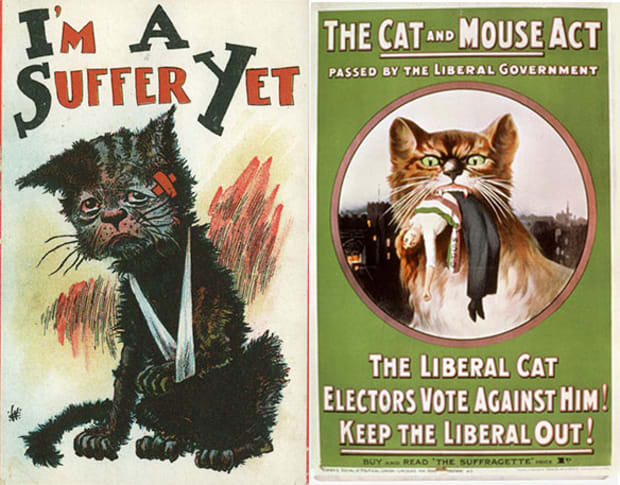
In order to avoid force-feeding Suffragettes in prison, the government of Asquith passed the Cat and Mouse Act. This act let Suffragettes go on hunger strikes. They were released from prison as they became weak.
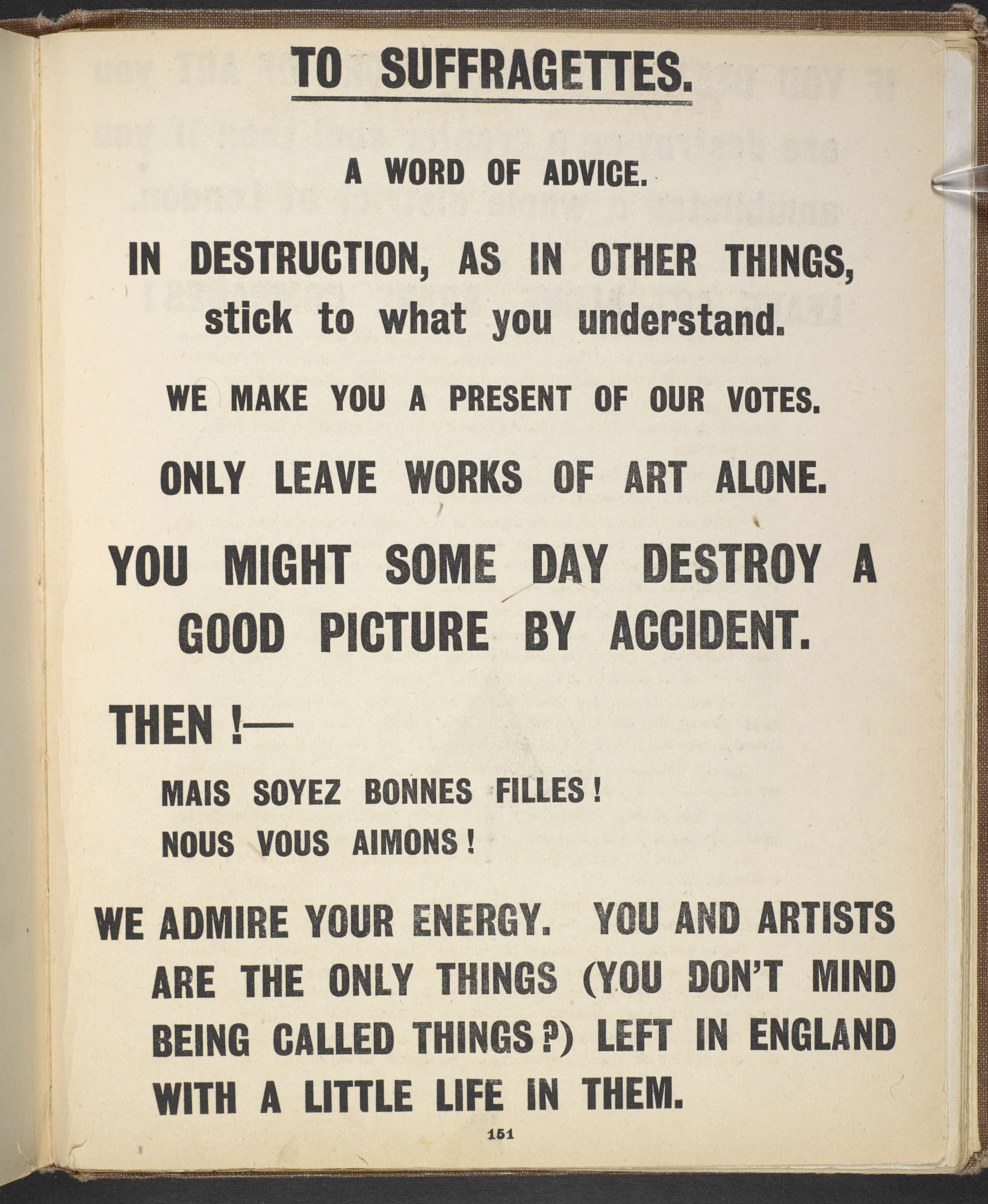
Blast, London, 20 June 1914
The Act of 1918
Note
When WWI broke out, political activism was deferred in order to support the war effort. In fact, job opportunities improved for women even if their wages were still half that of men. As a result of the contribution of women in the war, in 1918 the Representation of the People Act was passed, which granted votes to all men over the age of 21 and women over the age of 30 - who were either owners of property or married to an owner of property.
An important step towards equality had been achieved with the Representation of the People Act, however, there was a still a long road to equality. Women were still expected to give up their jobs to returning WWI soldiers, for example. The Act was amended in 1928 to include all women over the age of 21.
With the vote 385 to 55 in favour, the Representation of the People Bill was passed in the House of Commons in June 1917. Through the Royal Assent on 6 February 1918, this act became a law, tripling the size of the electorate.
From 7.7 million to 21.4 registered voters
About 9.2 million new female voters and an additional 4.5 million new male voters
In addition to their right to vote, women were also allowed to sit in the House of Commons. In December 1918, Irish republican Countess Constance Markievicz became the first woman to be elected to the Commons. However, she did not take her seat due to being a member of Sinn Féin. In the following year, Lady Nancy Astor, elected as MP for Plymouth Sutton became the first woman to hold the position.
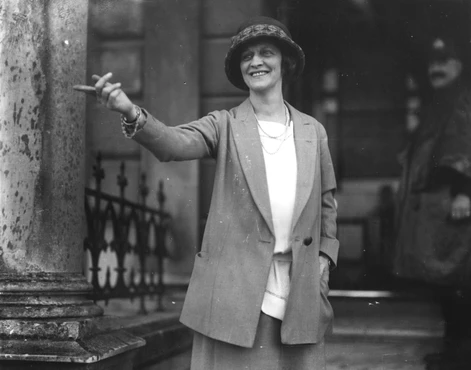
Astor Image of a woman casting her vote, 1922
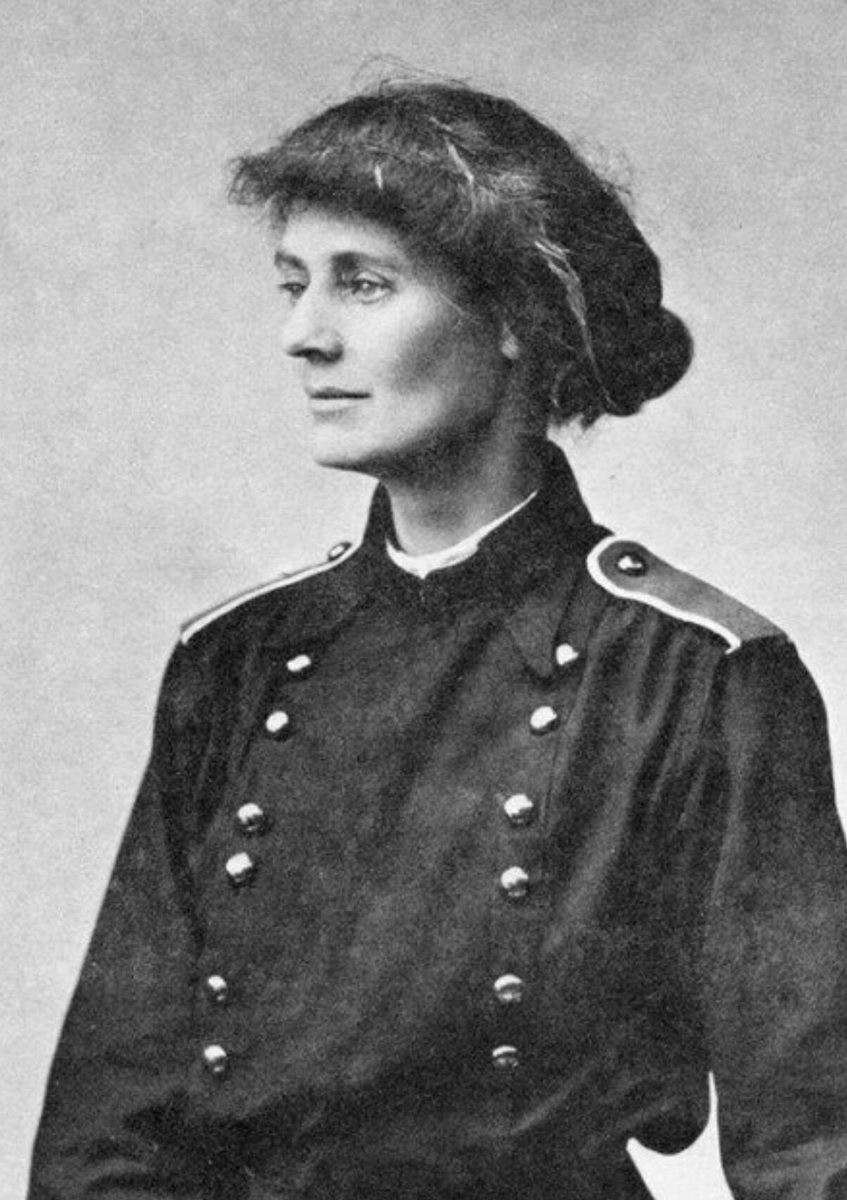
Markievicz
Note
Social historian Jane Robinson believed that the First World War proved that women were responsible and intelligent enough to be given new political responsibilities. Due to a shortage of men, women's role in Britain's war efforts became a significant rallying point to seek the right to suffrage.
Britain was not the first nation to grant women the right to vote. In 1893, New Zealand became the first, followed by Australia in 1902. In 1906 and 1913, Finland and Norway also allowed women to vote
Glossary of Terms
DORA
The Defence of the Realm Act which extended wartime emergency powers of the British government
CONSCRIPTION
The compulsory active service in the military used in Britain during WWI.
SUFFRAGETTE
A woman who actively campaigned for the right of women to vote. Suffragettes are more militant than suffragists.
CONSCIENTIOUS OBJECTORS
People who refuse to serve in the Army because fighting is against their conscience.
PROPAGANDA
A deliberate form of manipulating the public using information dissemination.
PALS BATTALIONS
Men who worked or lived in the same community and enlisted as volunteers in the British army. They were promised to be trained and eventually fight together.
Exam Practise
Task 1
Note
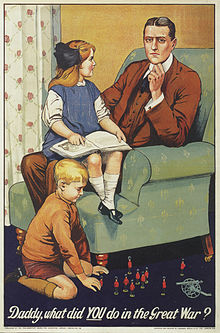
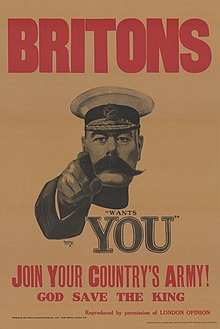
Compare and contrast both sources. Moreover, discuss the differing impact of this propaganda on British recruitment to the army during the First World War. In your perspective, which is more effective? Substantiate your answer
Source A
Source B
Task 2
Note
Read and examine the source to answer the questions which follow.
- What is the purpose of the source?
- What is the context of 'revolution' in the statement?
- How would you characterise the Suffragettes?
'If men use explosives and bombs for their own purpose they call it war… and the throwing of a bomb that destroys other people is then described as a glorious and heroic deed. Why should a woman not make use of the same weapons as men. It is not only war we have declared. We are fighting for a revolution!'
- Christabel Pankhurst, 1913
Task 3
Note
Critically examine the source and answer the questions provided. 4. What is the purpose of the source? 5. How did it view the Suffragette Movement? 6. To further substantiate your answer, do some research on the Cat and Mouse Act and relate it to the source.
Source C
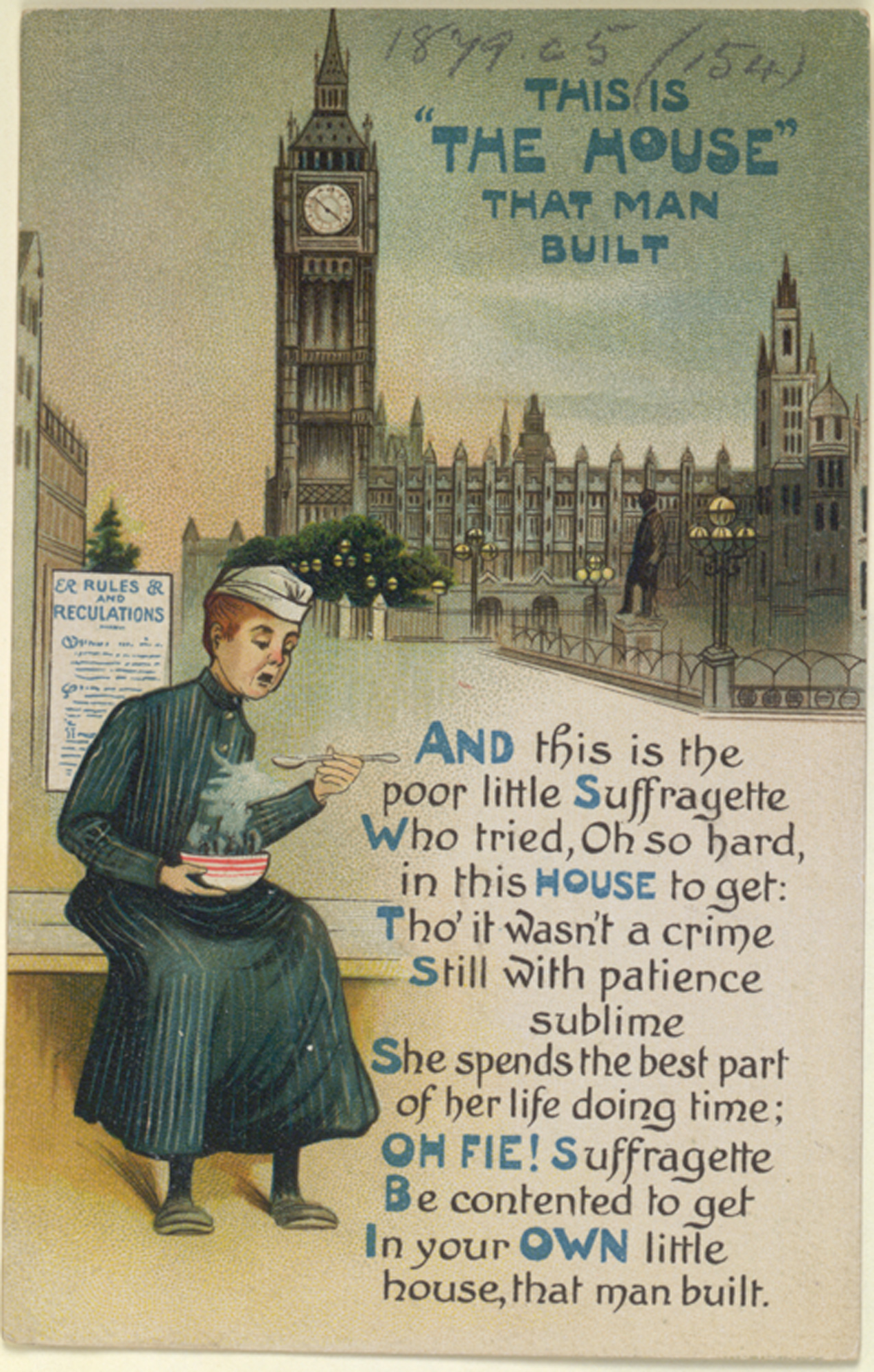
Source D