Opposition to Nazi rule including the Left, church leaders and youth groups (OCR GCSE History B (Schools History Project)): Revision Notes
📚Revision Notes
Opposition to Nazi rule including the Left, church leaders and youth groups
Note
Prompted by fear of the Nazi police state, oppositions to Hitler and the party were kept secret. Anti-Nazi sentimenents arose when political parties were disbanded in mid 1933. Most were former members of trade unions.
Note
The Left
The largest source of resistance was the SPD or Social Democratic Party. In May 1933, the SPD was declared illegal. Many members were sent to exile in Prague. Others remained in Germany and formed the Roter Stosstrupp or the Red Strike Troops. The secret group grew with 3,000 members in late 1933. They published anti-Nazi newspapers detailing abusive actions.
The underground group was immediately suppressed by the Gestapo. Another source of resistance was the German Communist Party or KPD. After the Reichstag Fire, members and leaders of the KPD were arrested. Their properties were destroyed and many were detained in concentration camps. Despite the suppression, the KPD newspaper Die Rote Fahne, or The Red Flag, continued to published anti-Nazi sentiments and mistreatment of workers.
Some workers who were not affiliated to any political parties showed resistance by not performing Nazi salutes. Others sabotaged factory machineries.
Nazi and the Church
Note
Despite being brought up Roman Catholic, Hitler rejected Christian beliefs. He particularly wrote in his Mein Kampf why Christianity should be rejected as a belief system. Thus, when the Nazis came to power in Germany, he established the Reich Church.

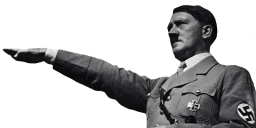
In his Mein Kampf, Hitler argued that Christianity had the following effects:
- The belief protected the weak and the low.
- It was of Jewish origin and Germany would not bend and crawl to the cross of a foreign God.
- The tenets of forgiving sins, resurrection and salvation were nonsense.
- He rejected the idea of equality that protected the racially inferior, the ill and the crippled.
- The idea of mercy was not German. Amidst his rejection of Christianity, Hitler signed a concordat with the Catholic Church in Germany on 30 July, 1933, in which he guaranteed the protection of the Church provided that it didn't interfere in politics. The concordat did not last long.
Note
The Catholic Church and other religious denominations did not escape Hitler and Goebbels' Nazi propaganda.
Priests were accused of immorality. Moreover, nuns and monks were charged with smuggling gold out of Germany. In response, Pope Pius XI questioned the acts of Hitler and his Nazi government's actions against the Church, which was a direct violation of the concordat.
Martin Niemoeller, a German Protestant leader, was arrested and charged with sedition for disobeying the Reich Bishop of the Reich Church. In addition, Dr. Karl Barth, a known German theologian, was dismissed from teaching at Bonn University because he refused to say "Heil Hitler" at the beginning of
his class.
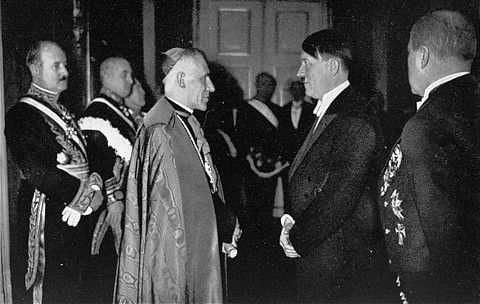
Adolf Hitler converses with the Papal Nuncio in Berlin, in 1935
Youth Groups
Note
By 1933, the Hitler Youth was able to control all youth movements in Germany. They were tasked with staying loyal to Hitler, overseeing youth activities outside the classroom, and training young boys as soldiers and young girls to become wives and mothers. At the same time, rival youth groups that opposed the Nazi regime emerged.
Edelweiss Pirates
They were groups of youths who opposed the Hitler Youth movement and how it changed the lives of German youths. Unlike the members of the Hitler Youth, the pirates were free to express their thoughts. Most of them were based in western Germany and were known as nonconformist. Members usually went hiking and took camping trips to discuss topics which were forbidden in the city.
In November 1944, six members of the Edelweiss Pirates were hanged in Cologne along with seven other youths. Before the war broke out, the Nazis saw them as plain irritants.
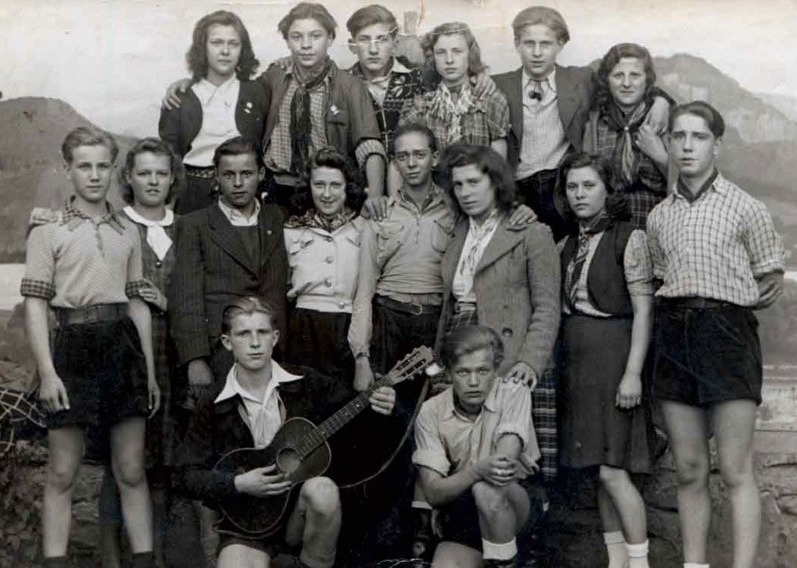
Some members of the Edelweiss Pirates
However, they became a threat when WWII broke out, and members collected British anti-Nazi propaganda leaflets dropped by bomber command. Most of its members ranged from 12 to 17 years old and were known for proliferating anti-war graffiti in pedestrian subways. In January 1942, Himmler ordered a crackdown of all disloyal youths, including the pirates.
White Rose Group
Note
In 1942, a number of students and a philosophy professor at Munich University formed a resistance group condemning Hitler's government. They were known as the White Rose group who distributed leaflets urging people to oppose the Nazi rule. Aside from leaflets, they also executed anti-Nazi graffiti campaigns, which lasted until 1943. The group produced and distributed six leaflets before their arrest and the execution of six of its members.
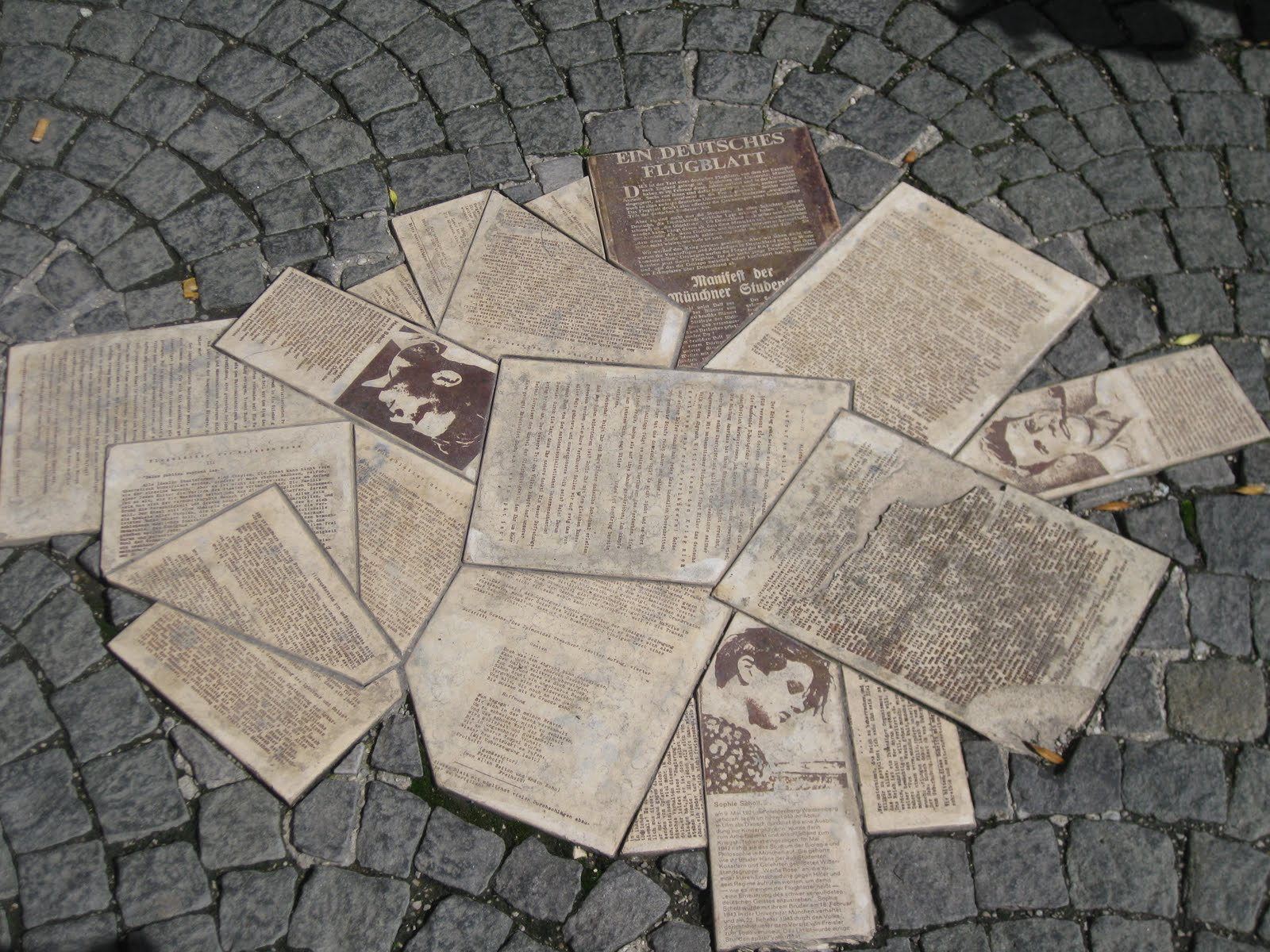
White Rose Group leaflets
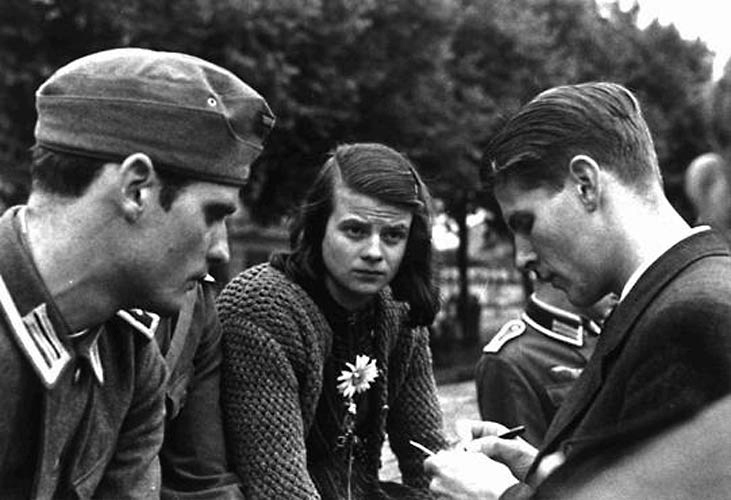
The White Rose member Sophie Scholl, centre
Swing Youth
Also known as Swingjugend, the Swing Youth was one of a few nonconformist groups during the Nazi regime. It was a group of teenage jazz lovers based in Berlin and Hamburg who tried to imitate British and American culture as part of their political statement. In August 1941, about 300 of their members were arrested and sent to concentration camps. Some were sent back to school and closely monitored.
Exam Practise
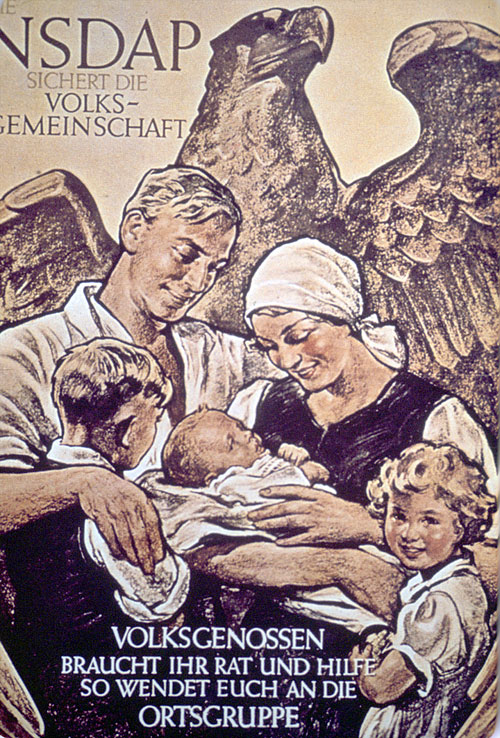
The text reads: "The NSDAP protects the people. Your fellow comrades need your advice and help, so join the local party organisation."
Note
Based on your understanding of the historical context, make an inference on the source. Substantiate your essay with the following points:
- Depiction of a family under the Nazi regime.
- Significance of propaganda in instilling Nazi ideologies.
- To what extent do you agree with the message of the source?
Task 3: Analysis
Note
Read and analyse both sources to answer the questions which follow.
-
What are the main points of both interpretations?
-
Establish a link between the two using a cause and effect diagram.
-
How did these groups respond to the Nazi regime?
"He never said the word 'resistance', he just said that the war was dreadful, with the battles and so many people dying, and that Hitler was a megalomaniac, and so they had to do something."
- Liselotte Furst-Ramdohr, member of the White Rose group
- 'Hitler's Germany' by Jane Jenkins Source A
"There the youth should first be given thrashings and then put through the severest drill and set to work. It must be made clear that they will never be allowed to go back to their studies. We must investigate how much encouragement they have had from their parents. If they have encouraged them, then they should also be put into a concentration camp and (have) their property confiscated."
Source B