Dictatorship (OCR GCSE History B (Schools History Project)): Revision Notes
📚Revision Notes
Achieving total power, July 1933 to August 1934
Night of the Long Knives
Note
Despite Röhm's connection to the Nazis and Hitler, he believed in socialism. In February 1934, Röhm insisted that the SA be incorporated into the German Army, which was met by a strong reaction from senior army leaders. In order to keep the loyalty of senior army leaders, Hitler rejected Röhm's idea and reduced the power of the SA while increasing Himmler's SS.
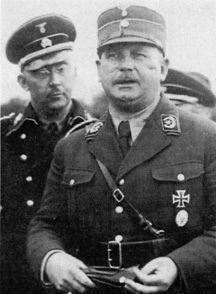
Ernst Röhm (right) and Himmler (left)
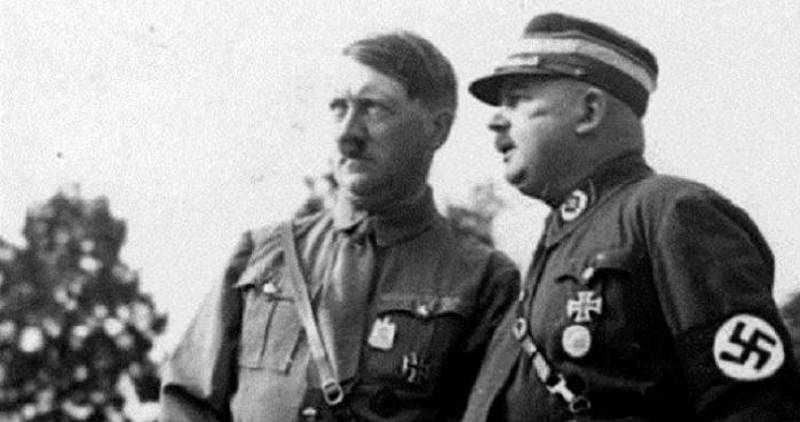
Ernst Röhm (right) and Hitler (left)
Röhm gained enemies in the form of Goering, Goebbels, Himmler and Heydrich. They convinced Hitler that the former SA leader was a threat and was planning a coup.
Ernst Röhm was the leader of Hitler's SA or brownshirts until July 1934. He was once a loyal member of the Nazi Party who led campaigns to protect Nazi meetings in its early years. By 1933, Röhm's SA grew to 3 million and became a rival of Himmler's smaller SS.
Beginning on the night of 30 June, 1934, Hitler ordered his military to purge all Nazi political opponents and right-wing extremist party supporters. The event became known as the Night of the Long Knives.
In addition to eliminating left-wing parties such as the Social Democrats and the Communists, Hitler also made sure to annihilate the party's paramilitary wing, the SA under the leadership of Röhm.
Along with Röhm, hundreds of SA leaders were arrested and accused of plotting treason. The next day, Röhm and von Schleicher (former chancellor) were shot along with over 200 SA.
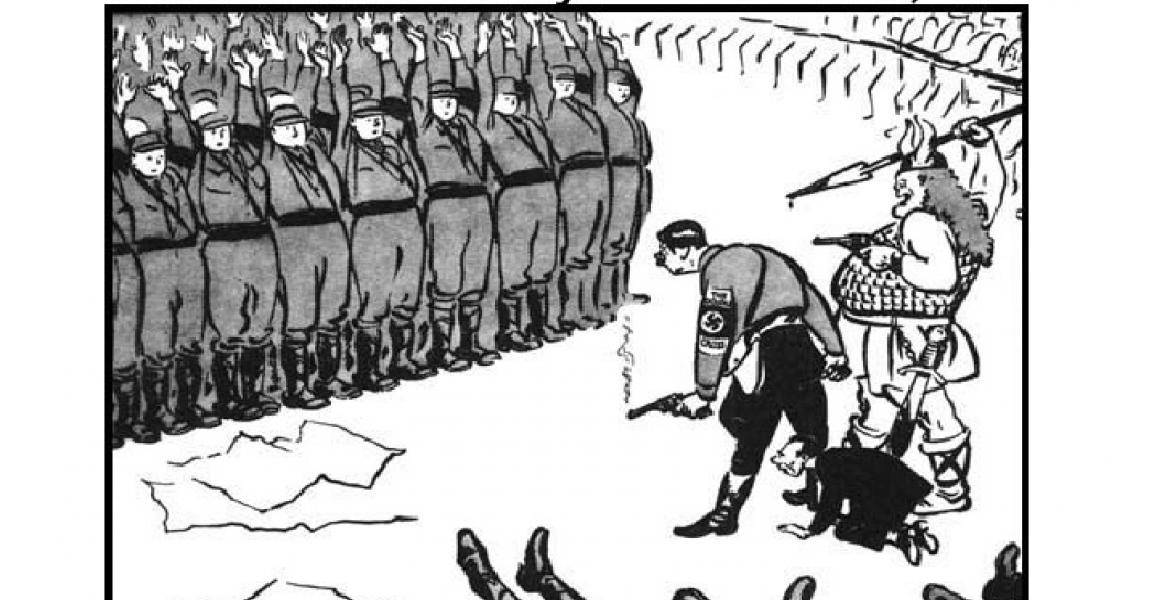
David Low cartoon illustrating the Night of the Long Knives, 1934
Note
As a result, Hitler gained the trust and support of the German Army. Furthermore, it enhanced the power of Himmler and his SS.
Note
When President Hindenburg died on 2 August, 1934, Hitler declared himself the Führer, president, chancellor, and head of the German Army.
Hitler as Führer
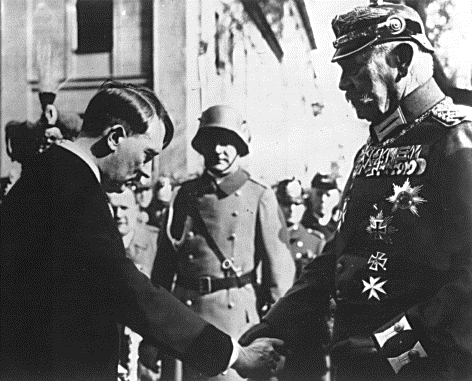
Image of Adolf Hitler and German President
Paul von Hindenburg
Instead of succeeding Hindenburg as president, Hitler made himself the Führer and was officially hailed as the Reich Chancellor of Germany.
The German Army took a personal oath of allegiance not to Germany but to Hitler. He neutralised any sources of opposition within the military.
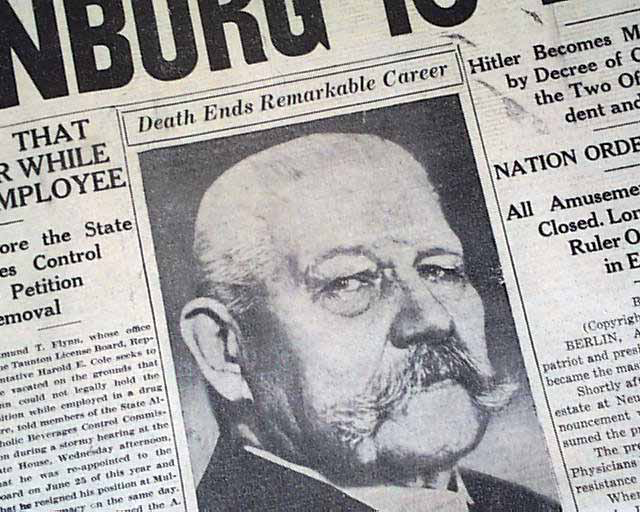
Newspaper with the death of Hindenburg as its headline
As the Führer, he set up the Third Reich and promised the German people relief from their struggles.
The cult of Führer worship continued to grow because of Hitler's propagandist Goebbels. Hitler gained absolute power over Germany.
The Reich Government has enacted the following law, which is hereby promulgated.
Section 1. The office of Reich President will be combined with that of Reich Chancellor. The existing authority of the Reich President will consequently be transferred to the Führer and Reich Chancellor, Adolf Hitler. He will select his deputy.
Section 2. This law is effective as of the time of the death of Reich President von Hindenburg.
Exam Practise
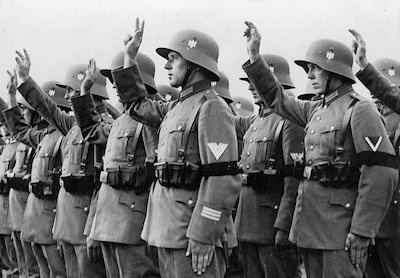
Members of the regular German Army swear the oath of allegiance to the Führer Adolf Hitler.
Task 1: Source Analysis
Note
Read the source carefully. Using the source as your reference point, what were the reasons behind the growth in support for the Nazis? Use your contextual knowledge to substantiate your essay.
"When I realised that there were six million workless in the same position as myself the responsibility of getting a job seemed completely hopeless. Depression and panic were in the air… The Government was always changing and couldn't do anything, and the police didn't seem to care…"
- Fritz Muehlebach writing about his reasons for joining the SA in 1932
Task 2: Source Analysis
Note
Critically read the source and make an inference on what the oath implied. Did the oath serve the German people or Hitler? What do you think was the implication of this for the newly established Third Reich?
I swear by God this sacred oath: I will render unconditional obedience to Adolf Hitler, the Führer of the German Reich and people, Supreme Commander of the Armed Forces, and will be ready as a brave soldier to risk my life at any time for this oath.
- German army oath of allegiance as Hitler becomes the Führer
Task 3: Essay
Note
Given your understanding of the historical context, write an essay about the Nazi consolidation of power and Hitler's dictatorship. Use the guide questions provided to outline your essay.
QUESTIONS
- How did the Great Depression affect Nazi influence over the German people, particularly the working class?
- From being the leader of the Nazi Party, how did Hitler became Germany's chancellor and Führer? What were the key events that led to his dictatorship?
- What role did Hindenburg play in Hitler's rise to power?