The move to a war economy and its impact on the German people, 1939–1942 (OCR GCSE History B (Schools History Project)): Revision Notes
📚Revision Notes
The move to a war economy and its impact on the German people, 1939–1942
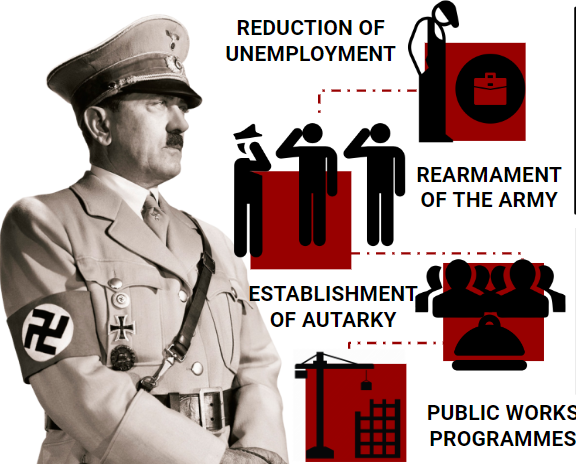
In 1935, unemployment in Germany went down to 1 million from 6 million in 1933. This was achieved through the construction of the Autobahnen as organised by RAD of the National Labour Service. The agenda for rearmament also created additional jobs for Germans.
Note
After creating jobs, the Nazis ensured that wages were kept low and abolished all trade unions. Rather, their own union, the German Labour Front (DAF), led by Dr. Ley, was formed.
Note
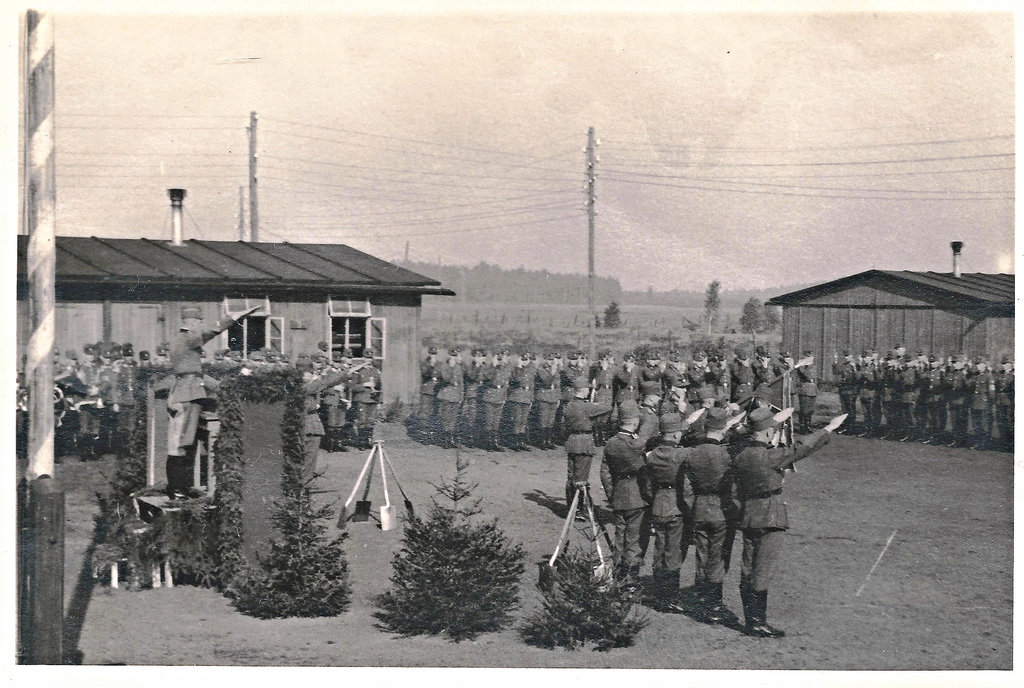
One of Hitler's major points of appeal was his promise to revive the German economy by eliminating unemployment. In June 1933, just months after becoming the Führer, Hitler passed the Unemployment Relief Act, which established the National Labour Service or Reichsarbeitsdienst (RAD).
Salute ceremony of RAD members

Along with reducing the effects of unemployment, RAD aimed to indoctrinate the German workforce into Nazi ideology and militarise it. At first, it was voluntary but by 1935 participation was compulsory.
RAD Requirements
- All men aged 18 to 25
- Complex training for six months
- Use of military uniform
- Receipt of pocket money but not wages
- Live-in camps
- Exposure to military and physical exercises
Note
In order to deliver employment to Germans, Hitler initiated a huge programme of public works. It included the building of schools, public establishments and hospitals. Over 80,000 men were given jobs for the construction of the autobahns. The autobahn is a federal-controlled highway system in Germany.
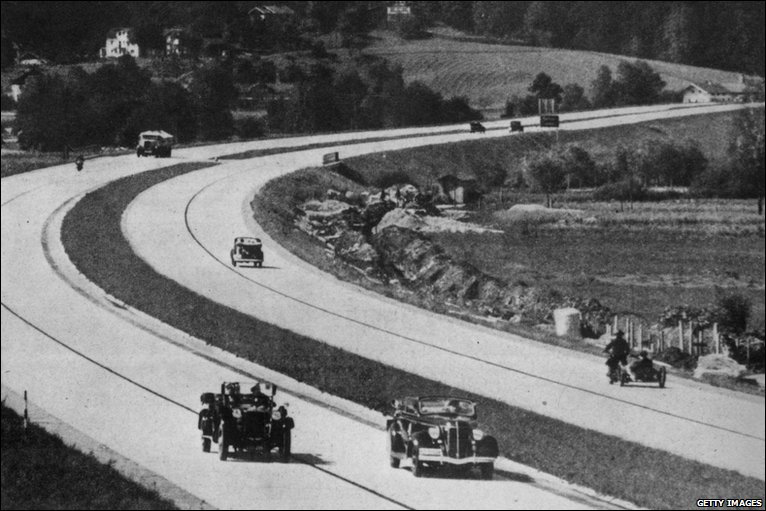
Nazi Germany's autobahn system was a four-lane divided highway without intersections
Image of Nazi rearmament
By 1939, Hitler declared full employment of German workers but the statistics did not reflect Jews who were forced to give up their jobs to non-Jews and women's jobs that were given to men. Another mechanism for job creation initiated by Hitler was rearmament, which created millions of jobs for the Germans. About 26 billion marks were spent by the Nazi government to produce battle tanks, aircraft and ships between 1933 and 1939. Moreover, this industry tripled the use of oil, steel and iron.
Note
Between 1936 and 1939, Hermann Göring took charge of the Nazi Party's Four-Year Plan. In order to achieve Hitler's aims of autarky and rearmament, Göring employed forced labour.
Note
Despite tighter import and production policies, Germany was still importing ⅕ of its food and ⅓ of its raw materials at the outbreak of World War II.
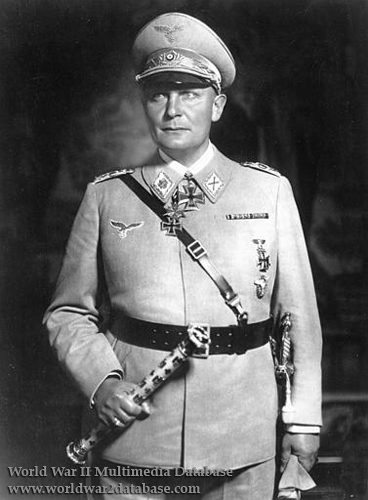
Image of Hermann Göring
The four-year plan
Aims:
Readiness of the German armed forces and economy for war.
To increase agricultural production through government subsidies.
German self-sufficiency (autarky) of major raw materials along with control of imports and exports.
The Impact of Economic Politics
From 1933-39, industrial and weapons companies gained 50% more income. In addition, the Nazis controlled 70% of all German production.
Farmers benefitted greatly from Nazi policies due to an increase in agricultural prices and wages. Moreover, the Hereditary Farm Law passed in 1933 ensured land to farming families.
Note
The Nazis implemented tighter rules on opening small businesses, resulting in 20% of them closing.