The contrasting nature of Nazi rule in eastern and western Europe (OCR GCSE History B (Schools History Project)): Revision Notes
📚Revision Notes
The contrasting nature of Nazi rule in eastern and western Europe
Note
With the rise of the Nazis and dictatorship of Hitler, Germany materialised the idea of Lebensraum or expansion of Aryan living space by invading Poland in 1939, and Denmark, Norway, the Netherlands, Belgium, Luxembourg and France in 1940. Hitler attempted to build an empire in Eastern Europe, but this plan was halted by Britain and its allies.
On 3 September, 1939, WWII broke out when Britain and France reacted to the German invasion of Poland. In around a month, Poland was completely under Nazi control, while Hitler publicly made amends with the Allies. However, Hitler was secretly planning the invasion of France.
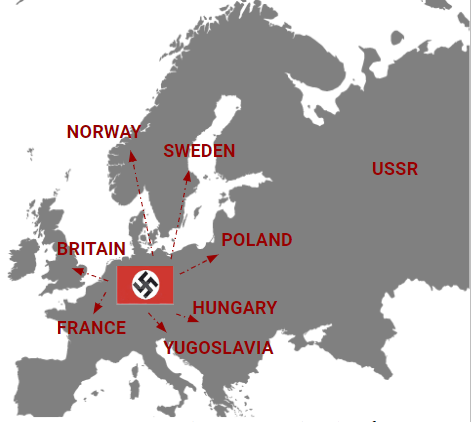
Map showing the German invasion of Europe between 1939-1942
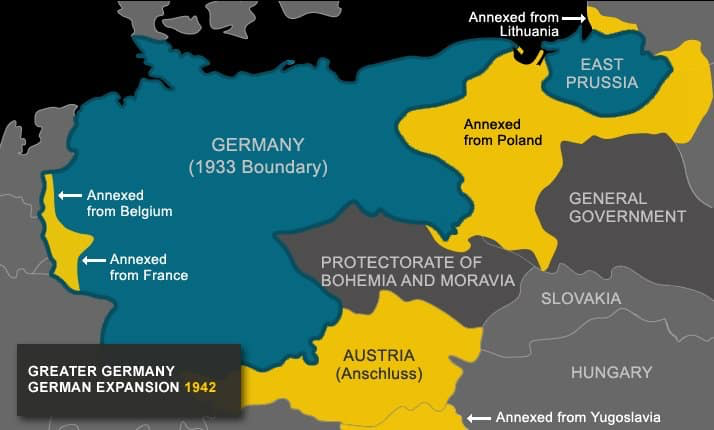
Map showing German expansionism during WWII GERMAN CONTROL, 1942
Analyse the map using the guide questions below:
-
What did you notice about German expansionism?
-
To what extent did Hitler control Europe?
-
How significant are territories with the Nazi ideology of Lebensraum.
Beliefs in Aryan Superiority
In addition to Lebensraum, the Nazi invasion of eastern Europe was driven by their belief of Aryan superiority over Poles and Slavs. On the contrary, western invasion, such as of Denmark and Norway, was strategic in nature. The Nazis did not view western Europeans as an inferior race, but people with territories of great resource. Moreover, Germany wanted western Europe to rely on them politically. Run by puppet governments, German treatment of western Europe was less brutal than eastern Europe.
To be more specfic, Nazi rule in eastern European territories such as Ukraine, Poland and the Baltic states used displacement of local population and forced labour. In 1940, Polish intelligentsias were wiped out to avoid resistance, while common Poles were starved to death. By the end of the war, about 6 million Poles were killed.
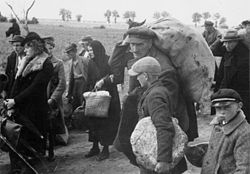
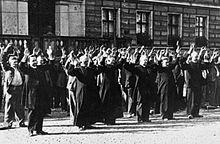
Image showing the expulsion of Poles from central Poland (left) and the public execution of Polish priests (right)
Note
In April 1940, neutral Norway was invaded by the Nazis. About 50,000 Norwegian women were believed to have had intimate relationships with Nazi soldiers. SS leader Himmler particularly encouraged German soldiers to have children with Norwegian women. Unlike women in eastern Europe, the Nazis favoured women in western Europe for the promotion of Aryan superiority.
In 1941, most Norwegian-German children were born in Lebensborn maternity facilities. Norwegian women who had children with Nazi soldiers became known as 'German Girls', while their children were labelled as 'children of shame' after the war.

Heinrich Himmler believed that racially superior children would be the product of breeding Norwegians and Germans. Norwegians have blue eyes and blond hair which was then considered by the Nazis as Aryan and pure.
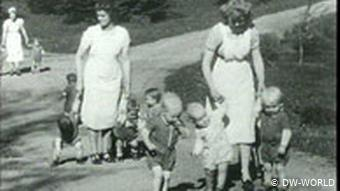
Image of Norwegian-German children
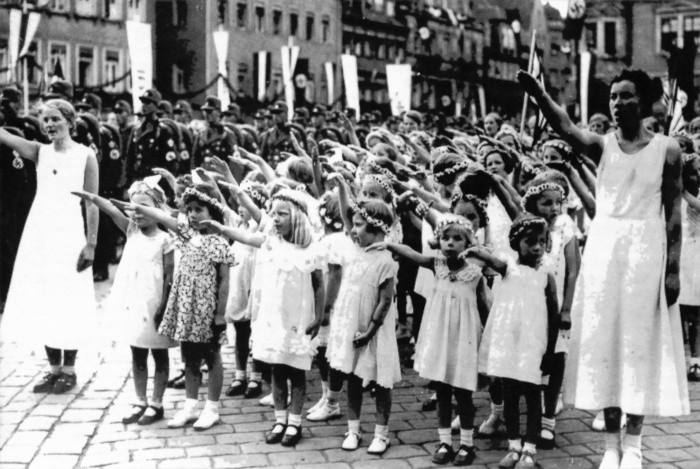
Image of Norwegian-German children
Lebensborn Institutions
Note
The idea of Lebensborn was to ensure Germany's racial purification.
During the war, Himmler established 20 Lebensborn institutions across Norway, Belgium, France and Luxembourg. As a result of Lebensborn, about 12,000 children were fathered by German soldiers between 1940 and 1945. These children were treated with special nutrition and education the Nazi way. However, these children and their mothers were ostracised after the war. In Norway, they were labelled as traitors and stripped of their civil rights. Lebensborn children were sent to orphanages and asylums.