Commonwealth migrants since the Second World War (OCR GCSE History B (Schools History Project)): Revision Notes
📚Revision Notes
Commonwealth migrants since the Second World War
Note
With WWII over, India and Pakistan had won their independence (1947-48). This meant that a new relationship needed to be developed between Britain and its former colonies.
THE BRITISH NATIONALITY ACT, 1948
Note
The short version of all six pages is:
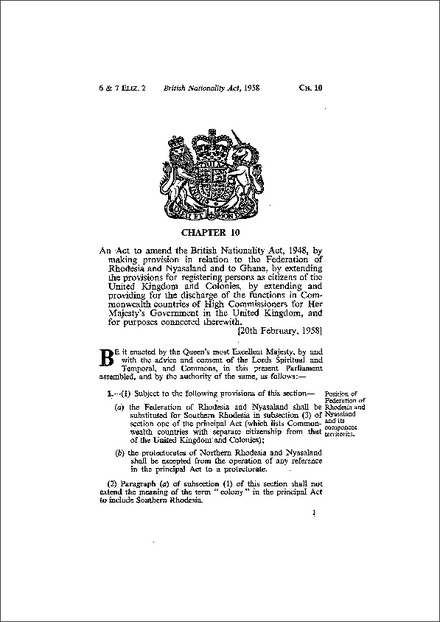
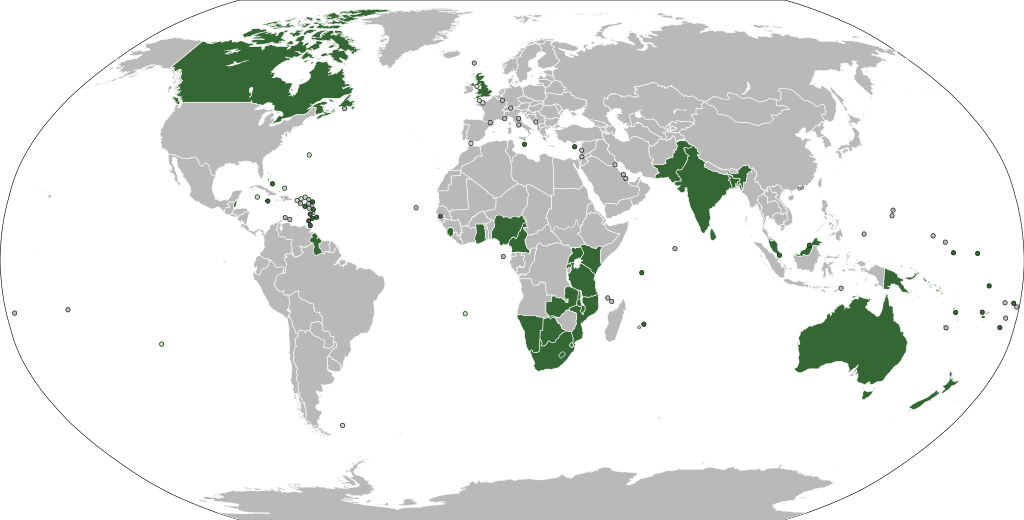
The Commonwealth consists of 53 member states, almost all of which were former colonies of the British Empire.
Note
The First World War shook the world and the British Empire. Come the Second World War, the bankrupt empire could not sustain itself and began to collapse. Migrants from colonies began to seek work in the 'mother country'.
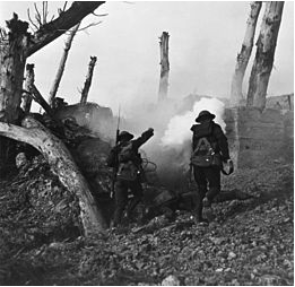
Two American soldiers run towards a bunker in a WWI battlefield
- It was incredibly expensive to maintain a global empire, especially when military force was required to keep hold of control.
- Between WWI and WWII, Britain managed to keep its empire through a number of political concessions and military repression.
Note
WW1 £36 Billion (cost at the time)

Note
WW2 £92 Billion (cost at the time)

WORLD WAR I
Note
During WWI, the British Empire drew hundreds of thousands of troops from its colony of India to fight against the Ottoman Empire.
-
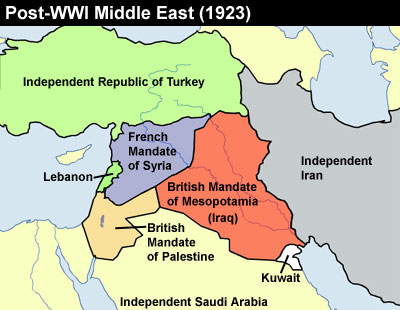
With the defeat of the Ottoman Empire, the territory was divided between France and Britain.
-
The League of Nations was set up as well as the Mandate System. The Mandate System was a system of control after WWI, which gave the Allies responsibility for the defeated countries' colonies.
- Lebanon and Syria were given to the French.
- Palestine and the newly formed Iraq went to the British.
WORLD WAR II
Note
World War II had corrosive effects on empires when the French and British empires declared war on Germany in 1939. Neither France nor Britain wanted a war as they were recovering from the Great Depression of the 1930s and with more territory after WWI, their resources were stretched.
- Germany had exacted a heavy toll on France in its offensive in May 1940, which meant Britain was fighting Germany, Italy and Japan.
- Britain became more reliant on America for war material → Arms, munition and transport needed for war.
- Supplying Britain suited America because they had an interest in defeating Nazi Germany but they also wanted British colonies to gain independence so they could trade more with America.
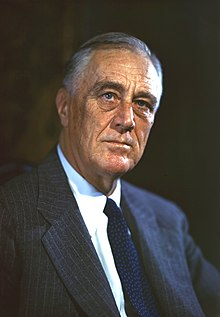
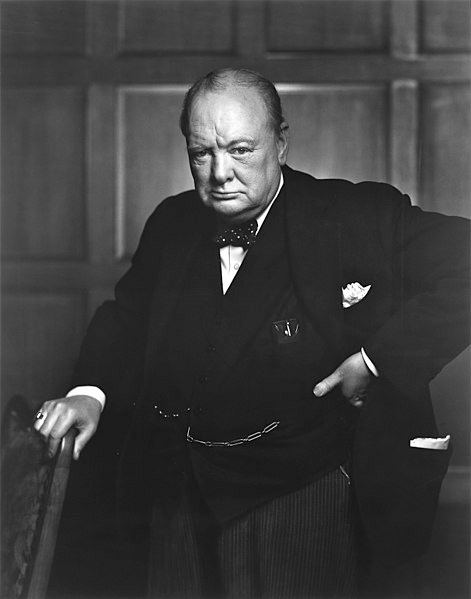
- Britain and America signed the Atlantic Charter in 1941. It stated that all nations had the right to be independent states able to determine their own future. In public, this applied to states controlled by the Nazis, but Roosevelt made it clear to Churchill that it also applied to the British Empire.
FACTORS:
→ Better living conditions in the UK in terms of education and healthcare
→ Unemployment in home countries
→ The 1952 McCarran–Walter Act restricted migration to the U.S.
→ Shortage of labour in the UK and high numbers of immigrants
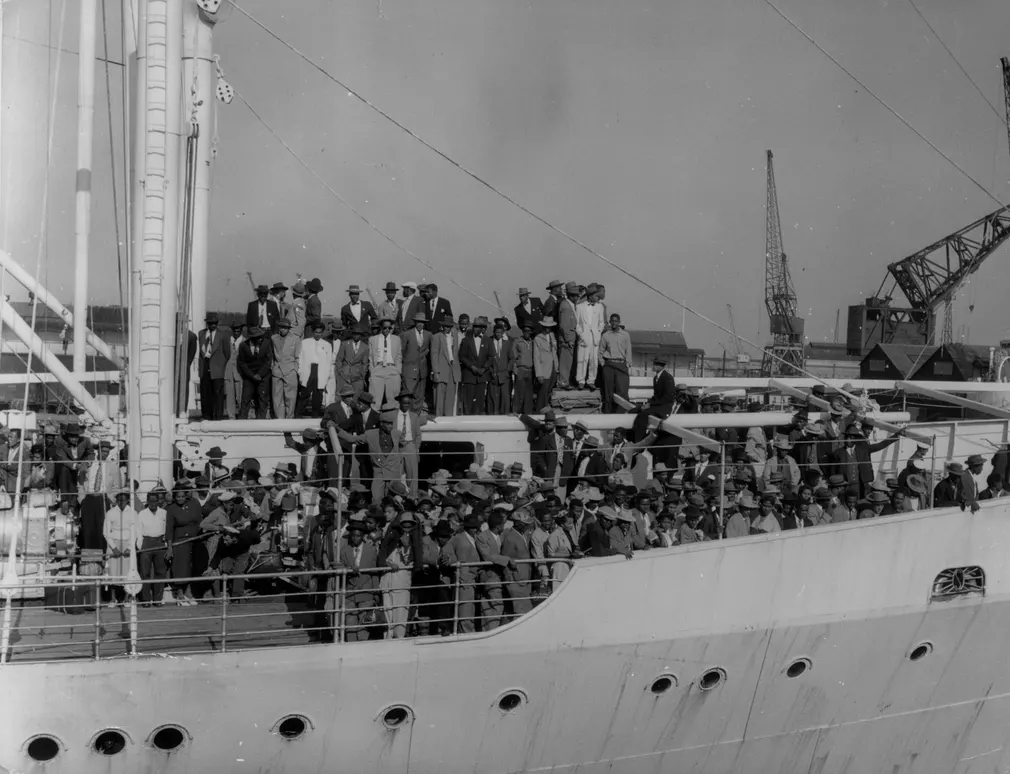
People from the West Indies arriving in Southampton, 1956
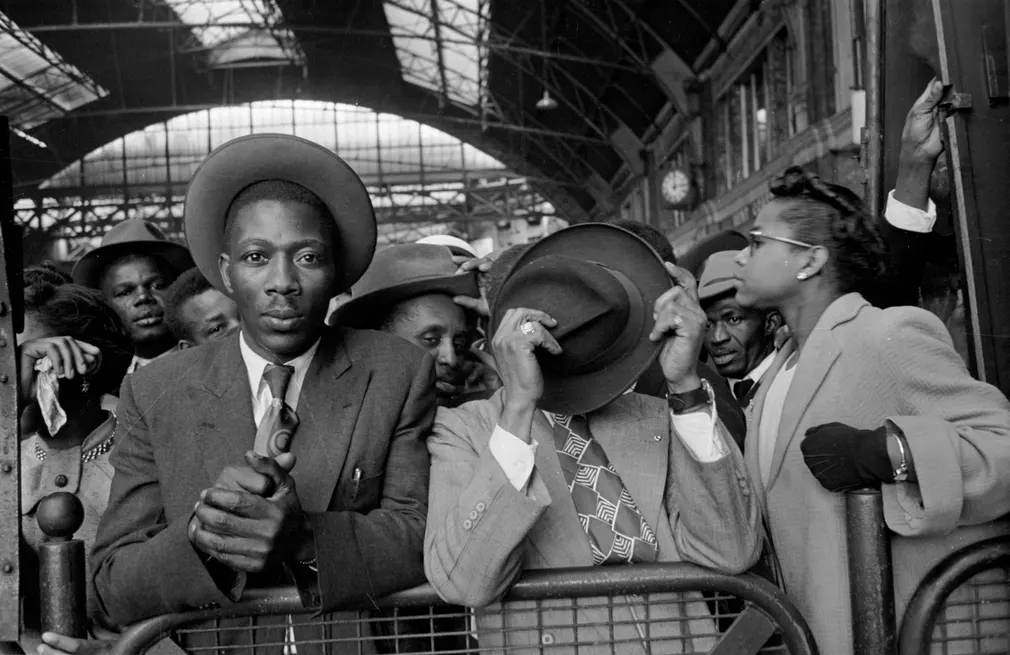
West Indian people at Victoria station as they arrived from Southampton docks, 1956
The passage of the 1948 British Nationality Act saw a large-scale migration of members of the Commonwealth to the UK. Mass immigration, specifically from Asia and West India, affected the nation politically and economically. While some people supported it, there were those who strongly opposed it. This was evident in the British Nationality Acts created between 1948 and 1965, race riots, the formation of right-wing groups, and race relations acts.
British Nationality Act of 1948
This act, ratified on 30 July 1948 but only taking effect on 1 January 1949, created the status of "Citizen of the United Kingdom and Colonies" (CUKC) as a national citizenship of the United Kingdom and its colonies.
This act, together with a tough new U.S. immigration law introduced in 1952 that restricted entry, encouraged the immigration of diverse races and cultures to the UK.
The Conservatives opposed the act, stating that people from the Commonwealth were not entitled to be British citizens but rather subjects. The Labour government wanted this as a solution, however, in order to prevent more members of the Commonwealth from seeking independence such as India in 1947.
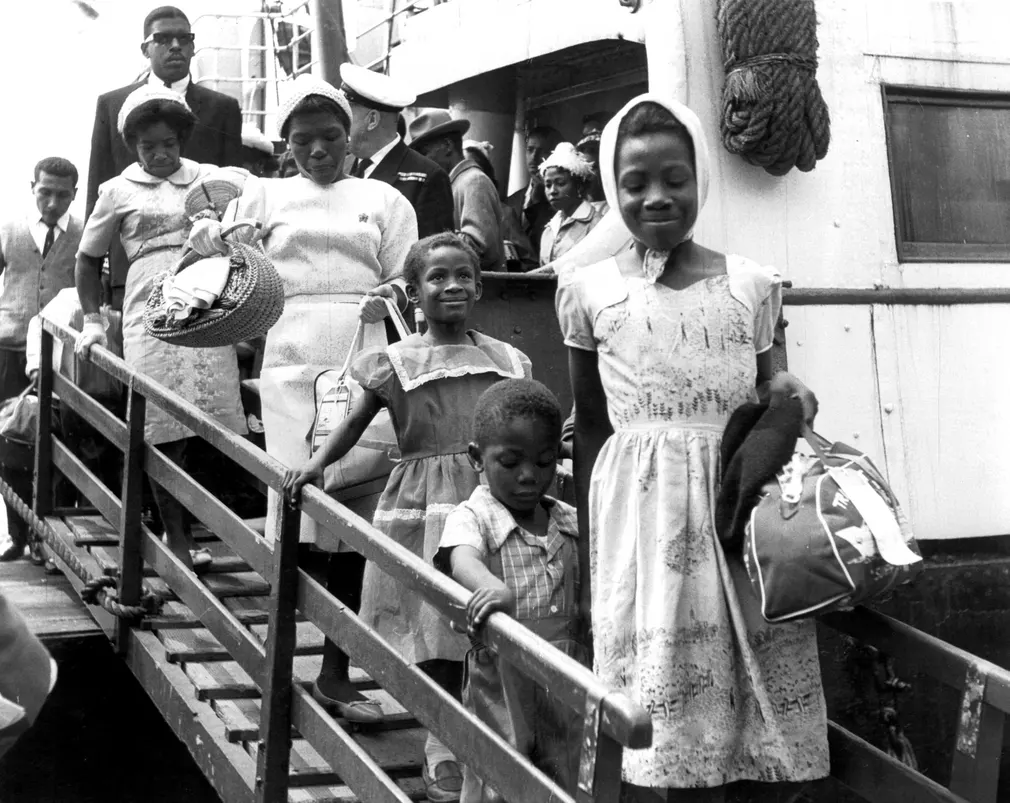
A family from the West Indies, 1956
Note
The migration of black people from Africa and the Caribbean was not new to Britain. Over the centuries, black people had settled in port cities like Liverpool and Cardiff.
In the aftermath of WWII, however, thousands of migrants arrived in Britain
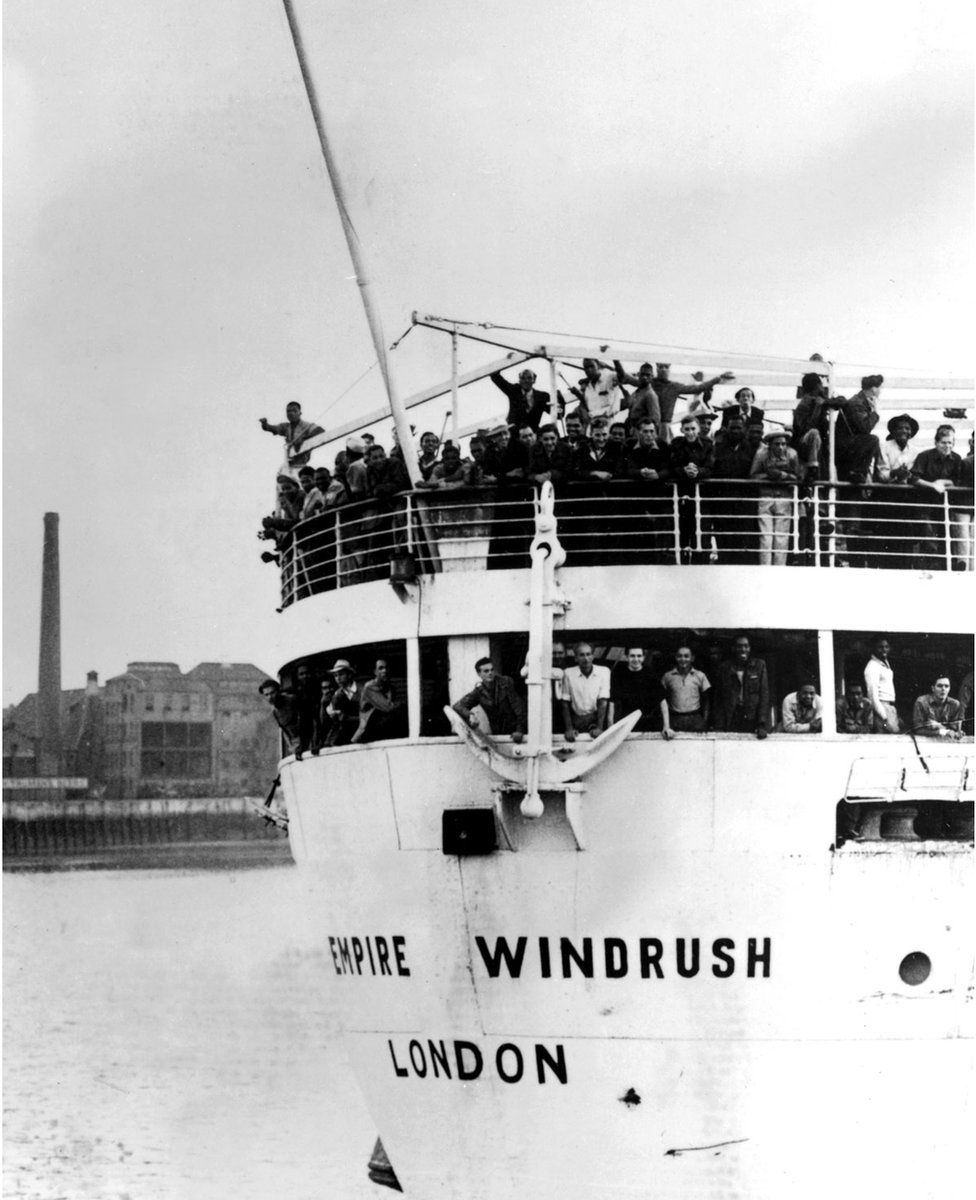
HMT Empire Windrush arriving at Tilbury Docks, Essex, 22 June 1948, carrying 482 Jamaicans emigrating to Britain
Number of people migrating from the WEST INDIES → UK
Note
In 1951= 15,000

Note
In 1961= 172,000

Caribbean Immigration - Windrush
On 22 June 1948, SS Empire Windrush docked in Tilbury Dock in London with almost 500 Jamaican migrants on board to meet Britain's desperate labour shortage after the war. This marked the symbolic start of mass immigration not from Europe but from members of the Commonwealth.
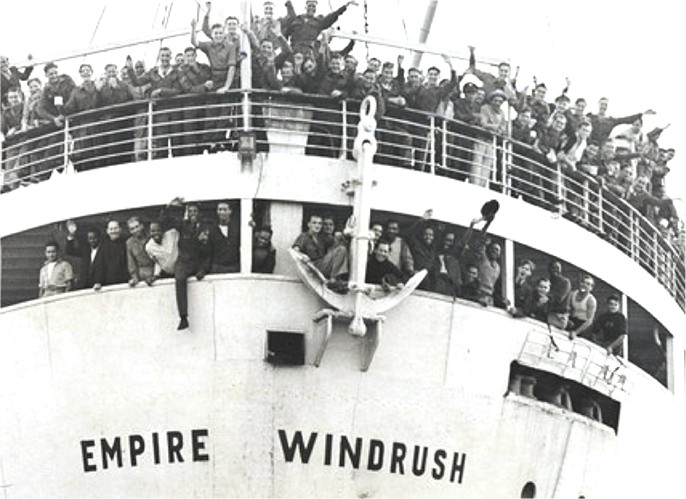
SS Empire Windrush, 1948
During the Second World War, thousands of men and women from the Caribbean served in the armed forces. These people were collected by the ship in Kingston, Jamaica. The Daily Gleaner newspaper published the journey and arrival of the ship. At a cost of £28 and 10 shillings (more than £1,000 today), hundreds of people boarded the ship.
The human resources required for WWII were immense and men and women from colonies all over the world served Britain.
Many of the service people of the Caribbean returned to their homes after the war, though some believed a better life could be had in England.
Britain was also desperately in need of labour.
Note
HMT Empire Windrush arrived in Tilbury Dock in London on 22 June 1948 carrying about 500 Jamaican immigrants. Many planned to work in London and eventually return to the West Indies. A few weeks after the arrival of Windrush, the government passed the 1948 Nationality Act, which created a category citizenship with full rights of entry and settlement in the UK.
Commonwealth Immigration Acts
The Conservatives argued that the influx of migrants from the West Indies would become problematic and cause growing resentment from the British. An increasing number of lawmakers and citizens sought restrictions on immigration.
Note
The 1962 Commonwealth Immigrants Act
Under Harold Macmillan's Conservative government, Parliament restricted immigration by issuing employment vouchers under the 1962 Commonwealth Immigrants Act ratified on 18 April 1962. For a migrant to be granted a voucher, they had to have one of the following: specialised skills, a job offer, appropriate educational background, living relatives in the UK. Immigrants were mainly from the West Indies, India, Pakistan and Hong Kong.
Note
The 1968 Commonwealth Immigrants Act
The 1968 Commonwealth Immigrants Act, assented on 1 March 1968, amended the 1962 act. Under this act, a provision was added whereby the government restricted automatic entry to the UK. Only those who were born in the UK or had one parent or grandparent born in the country could migrate. The act was passed amidst the 'Africanisation' policy in Kenya wherein around 200,000 Kenyan Asians fled to the UK to escape persecution. The government allowed entry of 1,500 Kenyan Asians a year and around 7,000 Kenyans waited for their papers to be processed.
As a colony of Britain, East Africa had a sizeable Indian community through projects such as railway construction. In Kenya, Indian people had the right to reside and conduct business in the capital city Nairobi, but Africans did not.
Both Uganda and Kenya gained their independence in the 1960s. Resentment towards white settlers and Indians led to feelings that they were holding Africans back and discriminatory restrictions on Indians were introduced.
Because many Indians kept their British passports after independence, they chose to migrate to Britain to escape discrimination.
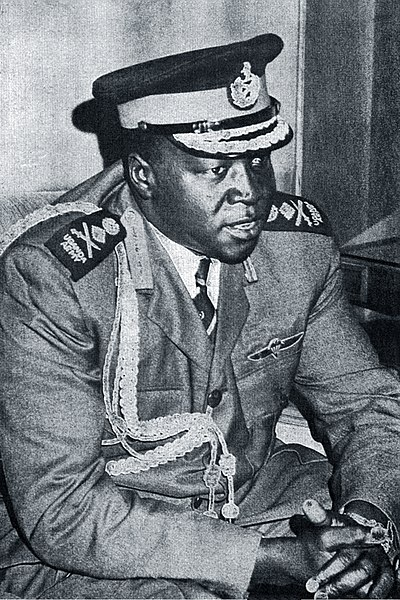
Idi Amin, 1925-2003

The response was to pass the Commonwealth Immigrants Act of 1962, which effectively ended the automatic right of Commonwealth passport holders to live and work in Britain. Only those who had a father or grandfather born in Britain were eligible.
What was the effect?
The influx of Commonwealth immigrants had a significant effect on Britain. People came from the Caribbean, India, Pakistan and Africa seeking work which included rubber factories in Southall, textile mills in West Yorkshire and Lancashire, as well as in London.
The influx of non-white immigrants, particularly from Africa, unsettled many British politicians, who began to regret the British Nationality Act of 1948. > > >
There was an influx of immigrants who wanted to get to Britain before the law was passed. Numbers shot up from 58,000 in 1960 to 136,000 in 1961.

Migrant workers in Britain who had originally intended to work for a few years before returning to their home countries now decided to stay permanently.

Where migrants had typically been men, immigrant women and children quickly rose in number. In 1961, around 15% of immigrants were women and children. By 1971, 75% were women and children.

To further stem the arrival of British-Indian immigrants from East Africa, legislation was changed with the 1971 Immigration Act.
Here, work permits were introduced in which immigrants were given specific time periods in which they could work in Britain. This had the fundamental impact of making immigrants' stays in Britain temporary.
Note
Was it racist? Decide for yourself… The act did not apply to those who had British-born parents and grandparents, or patrials (e.g. Australians, New Zealanders and Canadians), but most non-white people did not qualify.
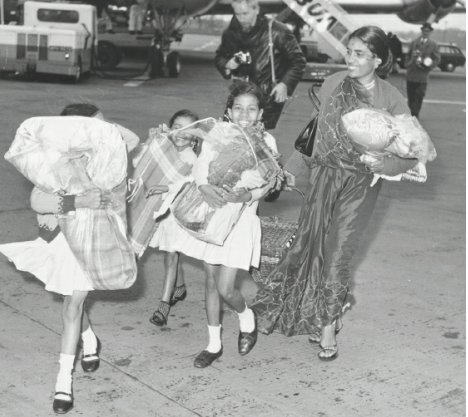
A Ugandan family arriving in Britain, 1972
RIGHT-WING GROUPS
Even before the Second World War, right-wing groups had formed in the UK. Right-wing groups are people who believe in the preservation of the status quo. They are often associated with nationalist conservative groups.
The most prominent among the right-wing groups in the UK was the British Union of Fascists (BUF). They believed in British supremacy and some of them were imprisoned during the war for being sympathetic to right-wing Nazi Germany. After the war, these people were released and new organisations were created to spread their ideas. These groups' main objective was to oppose mass immigration of West Indians and Asians.

Note
The Notting Hill Race Riots took place in Notting Hill, England, between 30 August and 5 September 1958.
During the latter part of the 1950s, North Kensington, including Notting Hill, was an area in London marred by high crime rates and housing shortages. On 30 August 1958, a group of white youths, the Teddy Boys, attacked the houses of new Afro-Caribbean residents. The group used iron bars, milk bottles and petrol bombs. Witnesses heard them shouting "Let's lynch the niggers! Let's burn their homes." The Afro-Caribbean residents counter-attacked and the riots lasted until 5 September 1958.
The Metropolitan Police Service arrested more than 140 people during the riots, mostly white youths. Prior to this, a similar incident took place in the St. Ann's district of Nottingham in which the Teddy Boys also attacked the houses of the Afro-Caribbean residents.
Claudia Jones, a journalist and an immigrant from Trinidad, launched the Notting Hill Carnival on 30 January 1959 in response to the racially motivated riots. Its objective was to introduce British people to Caribbean culture and celebrate it.
Note
In the face of anti-immigration sentiment, the government saw the importance of passing acts that protected immigrants from racism and discrimination and help them assimilate.
- 1965: The Race Relations Act made racism in public places illegal and created a new offence of 'incitement to racial hatred'.
- 1968: The Race Relations Act made discrimination in housing and employment illegal.
- 1976: The Race Relations Act established the Commission for Racial Equality to promote racial equality.
- 1998: The Crime and Disorder Act introduced more severe punishments for hate crimes based on religion and race.
In 1981, immigration law changed again with the enactment of the 1981 British Nationality Act. This replaced earlier acts and sought to reclassify United Kingdom and Colonies citizenship (CUKC).
Three new categories were created:
- British citizenship
- British Dependent Territories citizenship (BDTC)
- British Overseas citizenship
WHY THE CHANGE?
Simply put, it came down to the issue of right of abode in Britain. The new act aimed to ensure that only those with a close connection to the United Kingdom, e.g. partial or part of crown dependencies such as the Isle of Man and the Channel Islands, could claim the right of abode.
13% of a 63 million population in 2011 = 8.19 million immigrants
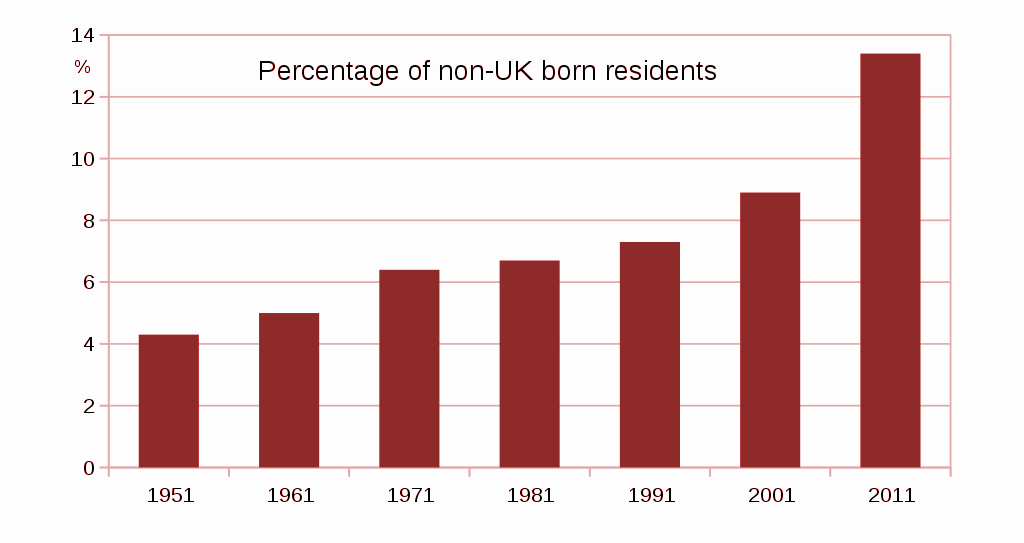
A graph depicting modern immigration to the UK