Early African and Indian migrants to Britain (OCR GCSE History B (Schools History Project)): Revision Notes
📚Revision Notes
Early African and Indian migrants to Britain
Note
The growth of trade in Europe saw increasing mobility of people, particularly labourers and merchants. The following are just a snapshot of some of the people travelling to England in the early modern period.
AFRICANS
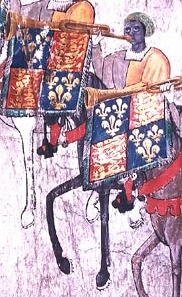
Image of John Blanke, a trumpeter of Henry VIII
Who were they?
From 1538, Henry VIII ordered parish registers be kept. They showed 15 people described as 'blackamoor', meaning they were from Africa. Their occupations included trumpeter, silk weaver and basket maker.
"[Africans] were to be found in every kind of household… They performed a wide range of skilled roles and were paid in the same mix of wage, reward and gifts in kind as others. They were accepted into society… inter-married with the local population and had children." — Historian Miranda Kauffman
Were they liked in England?
By the time of Elizabeth I's reign, things took a turn for the worse when the hugely profitable transatlantic slave trade began to emerge.
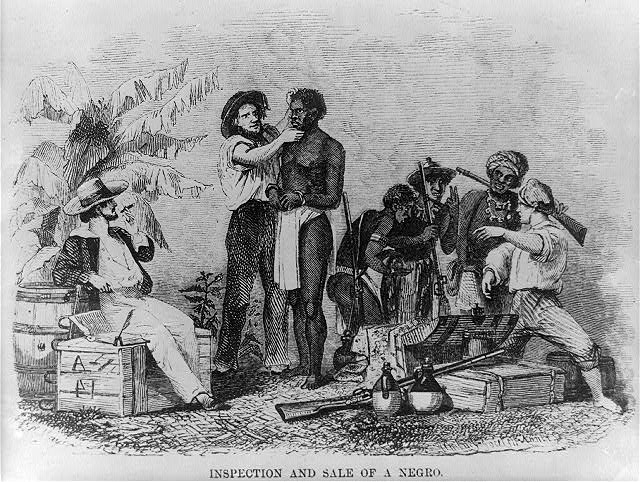
Etching depicting the sale of a slave, c.1854
Privateers would make fortunes smuggling slaves from Africa to the Spanish Caribbean. Though slavery was not the main source of John Hawkins' success and wealth, he is regarded by historians as England's first major slave trader and a pioneer of the Triangular Slave Trade.
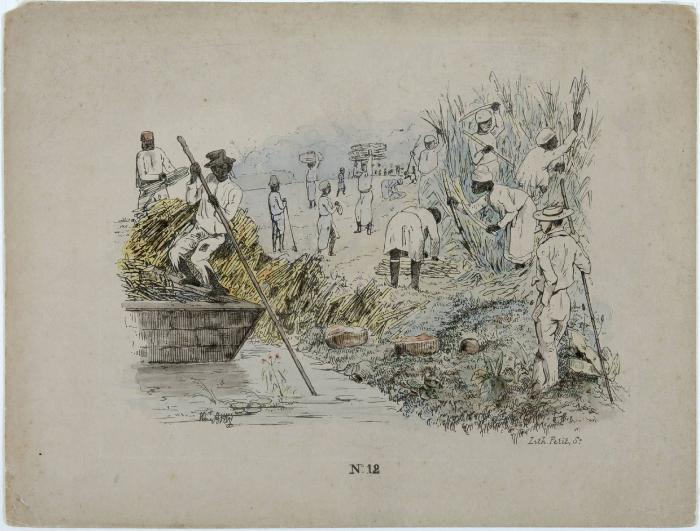
A 19th-century lithograph of slaves on a sugar cane plantation
John Hawkins was influential in encouraging others, including Francis Drake, to break Spain's monopoly of trade in the Caribbean.
"[I] got into my own possession, partly by the sword and partly by other means, to the number of three hundred negroes at the least, as well as other merchandise…" — Hawkins describing his raid of Portuguese merchant ships in 1562
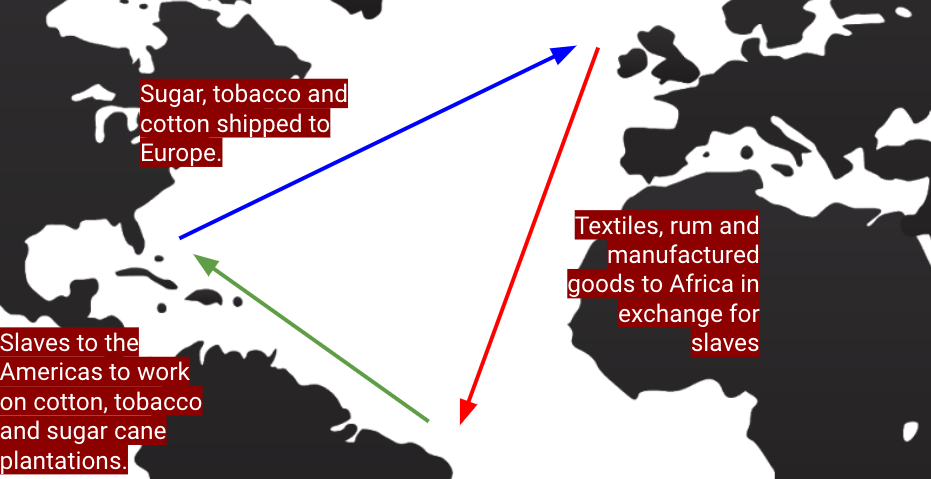
THE TRIANGULAR TRADE
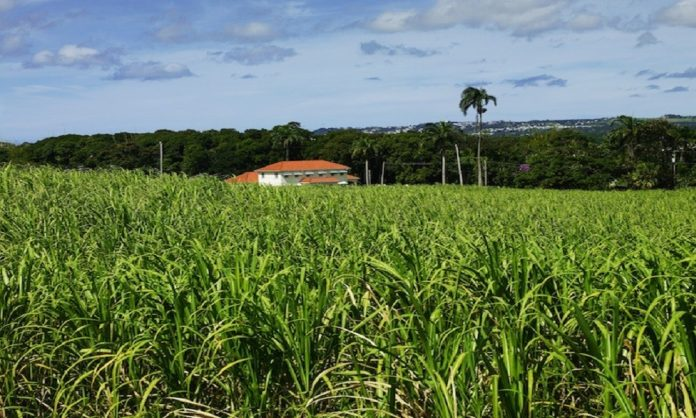
ENGLAND, SUGAR AND BARBADOS
SUGAR ISLAND By the late 1660s, 80% of Barbados was sugar plantations (350km²). Demand for sugar had grown dramatically in Britain for adding to tea, coffee and chocolate (all imports from colonies).
INDENTURED SERVANTS TO SLAVES Because of the demand for sugar back in Europe, there were insufficient indentured slaves to meet the labour demand. Therefore, slaves were used instead. Conditions were harsh and life expectancy was low.
SLAVES AND CONDITIONS Slaves endured long hours in harsh conditions with little personal protection. Many died from exhaustion, accidents and injuries in the sugar-making process.
In 1645, around 5,500 slaves worked on plantations in Barbados. This number grew to 42,000 in 1698. By 1710, 80% of the population on the island were slaves.
Note
With the exponential growth of the slave trade, many more Africans arrived in Britain. Those who arrived in the century following 1640 were servants forming part of the working poor. Those who were brought back from the plantations worked in their master's household.
In much the same way as having tea, using spices and owning exotic things like silk, amber and rare birds were status symbols, having African servants in wealthy households became trendy and a display of wealth.
Treatment of some African servants in England during this time was incredibly poor...
- Property of their master
- Could be sent back to plantations as punishment
- Runaways were advertised for return.
"Run away from Thomas Sherwin a black named Johanne, aged about 26, with two rings burnt in his forehead almost wore out. Whoever secures him shall be rewarded." — London Gazette, January 1694
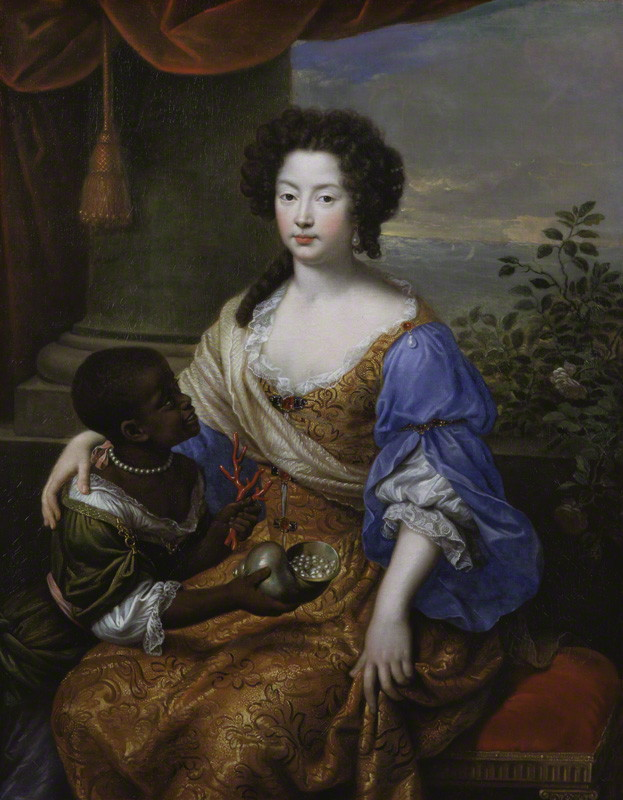
Duchess of Portsmouth with her African servant, 1682
ASIAN SERVANTS
Like African people, Indian migrants often worked as servants. It was considered fashionable and a status symbol to have one and they were treated as property. Their numbers were limited in Britain until the middle of the 1700s. Their treatment was considered much the same as African servants.
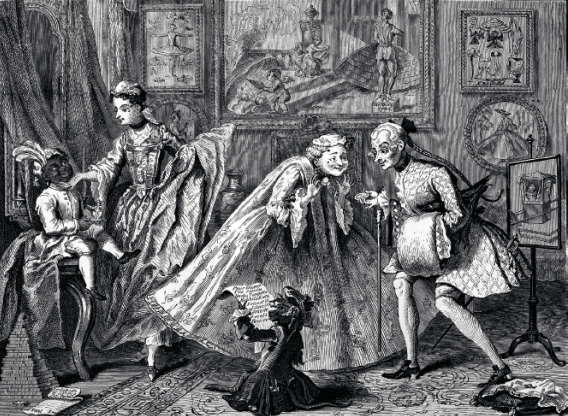
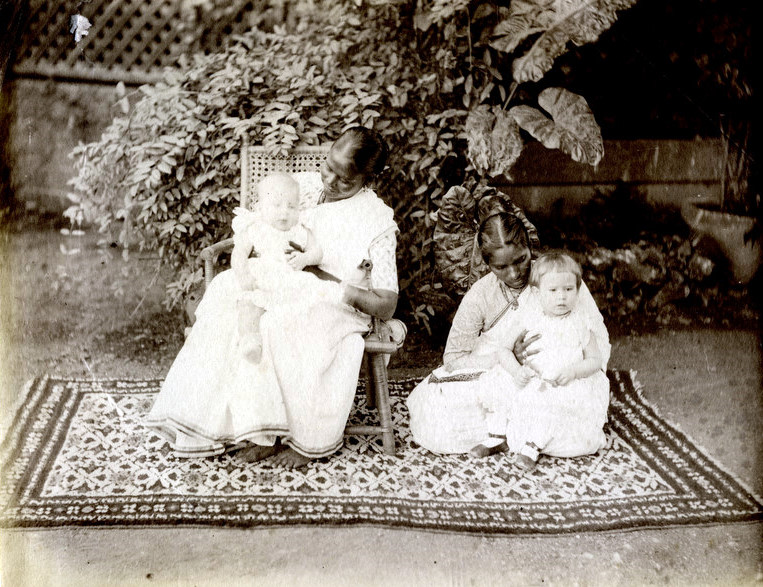
Above: An etching depicting an Indian child servant by William Hogarth, 1742 Right: 19th-century ayah with their masters' children
AYAHS
Indian nannies that looked after children of their masters in India. Many were treated well but there were also cases of some being abandoned upon arrival in England.
Note
Glossary of key terms:
European Reformation
Major movement in 16th-century Europe which challenged papal authority and the Catholic Church
Huguenots
Protestants living in Catholic France in the 17th century.
Palatines
Poor German Protestants who fled to England in the early 1700s
Hansa Merchants
German-speaking merchants belonging to the Hanseatic League.
Jews
People of the Jewish faith and heritage.
Gypsies
Pedlars, pot-menders, animal dealers and herbalists who descended from nomadic tribes in India.
Note
Assessment #1 Using what you've learned about migration through history, create a mindmap in which you identify groups of people who came to England between 1500 and 1900. Include the following:
- Who were they, where did they come from and when, and why did they migrate?
- What was their occupation in England?
- How were they received by English monarchs?
- How were they received by the English people?
- Any notable events of legislation surrounding them.
Note
Assessment #2 SOURCE A:

Sugar, tobacco and cotton shipped to Europe.
Textiles, rum and manufactured goods to Africa in exchange for slaves
Slaves to the Americas to work on cotton, tobacco and sugarcane plantations.
Using your knowledge of history, write an essay in which you discuss the Triangular Slave Trade. Discuss the economics of the trade citing particular examples of its impact in Britain, the West Coast of Africa and the West Indies. Then, form your own opinion about the impact of the Triangular Slave Trade.