The events of June and the defeat of Kerbogha (OCR GCSE History B (Schools History Project)): Revision Notes
📚Revision Notes
The events of June and the defeat of Kerbogha
The Crusaders controlled most of the city by the end of 3 June 1098, with the exception of the citadel which remained with Shams ad-Daulah (Yaghi-Siyan's son). Papal legate, Adhemar of Le Puy, wished to keep good relations with the Byzantines especially since Bohemond was planning to take over the city; thus, Adhemar reinstated John the Oxite as patriarch.
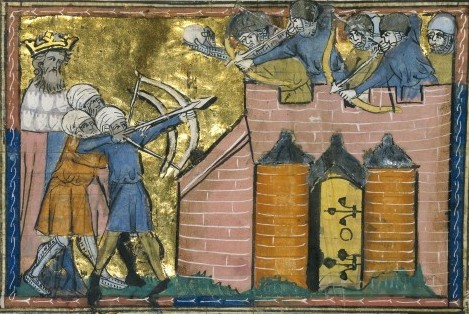
An illustration of Kerbogha besieging Antioch
Note
Unfortunately, the city was short on food with Kerbogha's army only arriving 2 days later. On 7 June, he tried and failed to take over the city. By 9 June, he established his own siege around the city.
Note
Before Kerbogha arrived, many Crusaders had already deserted to join Stephen of Blois in Tarsus. When Stephen saw Kerbogha's army encamped near Antioch, he assumed they had already lost.
On their way back to Constantinople, they met Alexios who was on his way to assist the Crusaders, not knowing that they were now under siege themselves. Stephen convinced him that the rest of the Crusaders were now dead. Thus, he decided to return to Constantinople rather than risk battle.
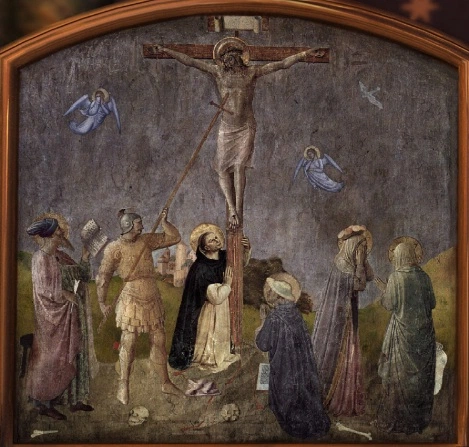
The Holy Lance that pierced Jesus
The events of June
10 June
Note
In Antioch, a priest named Peter Bartholomew claimed to have had visions of St. Andrew telling him that the Holy Lance was inside the city. The Holy Lance was known to be the legendary spear that was used to pierce the side of Jesus as he was crucified.
15 June
Note
At the cathedral of Saint Peter, others began to dig in search of the Holy Lance, which Peter brought up as he reached down the pit. Raymond took this as a divine sign to survive so he prepared his army to fight rather than surrender.
Holy Lance
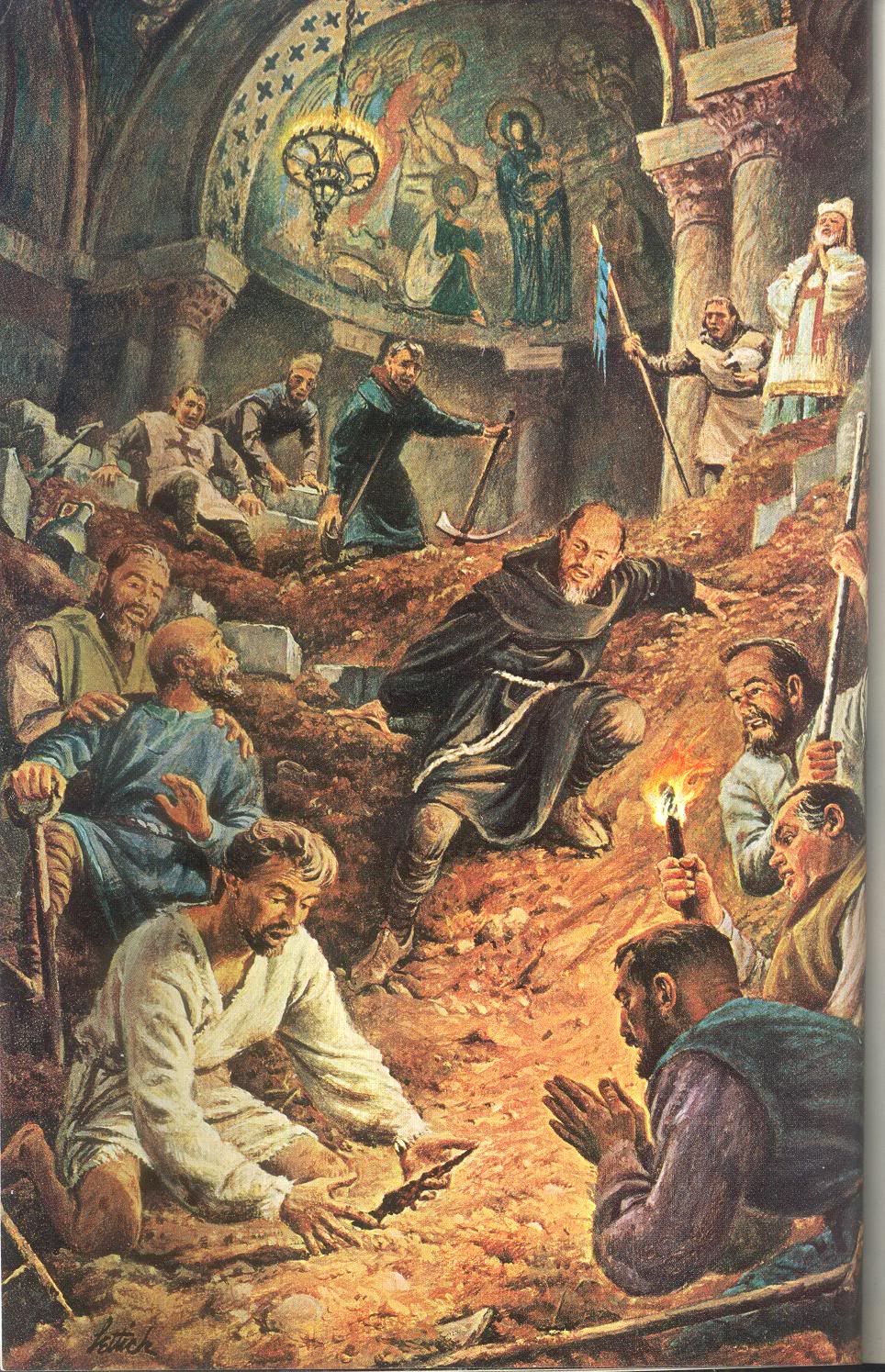
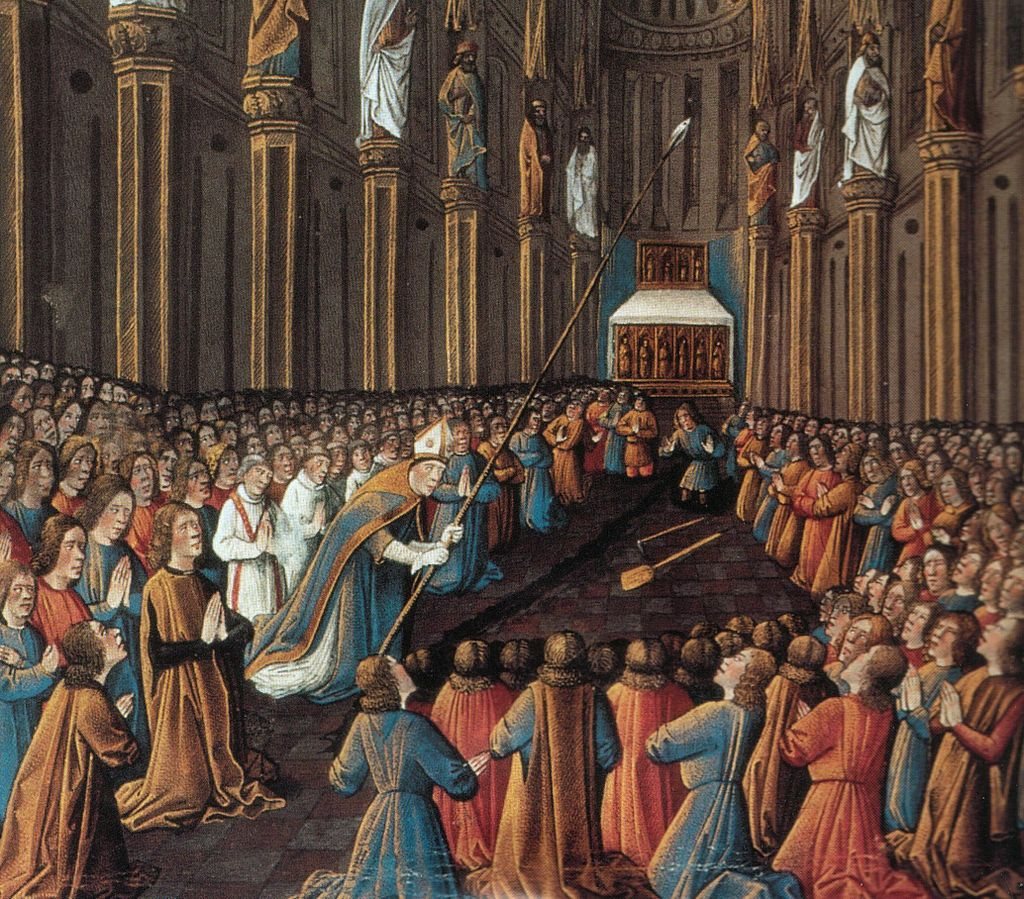
Pictures showing Peter Bartholomew's discovery of the Holy Lance
27 June
Note
Though Bohemond was sceptical of the Holy Lance, he knew that its discovery increased the morale of the crusaders. He sent Peter the Hermit to negotiate with Kerbogha but failed to reach a compromise. Thus, Bohemond drew up six divisions.
The six divisions were led by:
- Bohemond
- Godfrey
- Robert of Normandy
- Tancred and Gaston IV of Béarn
- Hugh of Vermandois and Robert of Flanders
- Adhemar
28 June
Note
Crusaders emerged from the city gate with Raymond of Aguilers carrying the Holy Lance before them. The Battle of Antioch took place with both sides strategising their way to victory. Though the Turks inflicted many casualties, this did not deter the crusaders. Defeated Turkish troops panicked and retreated, including Duqaq that reduced the numerical advantage the Muslim army had over its Christian opponents.
29 June
Note
The events resulted in a brief and disastrous fight for the Turks. Forces on the citadel under the command of Ahmed ibn Merwan surrendered the next day. Afterwards, the siege was broken and Antioch was now back in Christian hands.
Exam Practise
Task 1
Note
Study the source and then answer the question that follows. Using Source A and your own understanding of the historical context, how would you associate the role of the Byzantium in the success of the First Crusade?
Source A
"Antioch is so well fortified that it need not fear attack by machinery nor the assault of man, even if all mankind came together against it."
- Raymond IV, Count of Toulouse
Task 2
Note
From your understanding of source B and the module, explain the significance of the siege of Antioch and its contribution to the later years.
Source B
The story of the siege of Antioch quickly captured the mediaeval imagination with its trials and tribulations, defeats, privations, miracles, and final victory, as the historian C. Tyerman summarises:
"The siege…provided the twelfth century with its Trojan War, famed in verse, song and prose, commemorated in stone and glass, the central episode of trial and heroism in epic and romantic recounting of the First Crusade."
- Mark Cartwright
Assessment #3
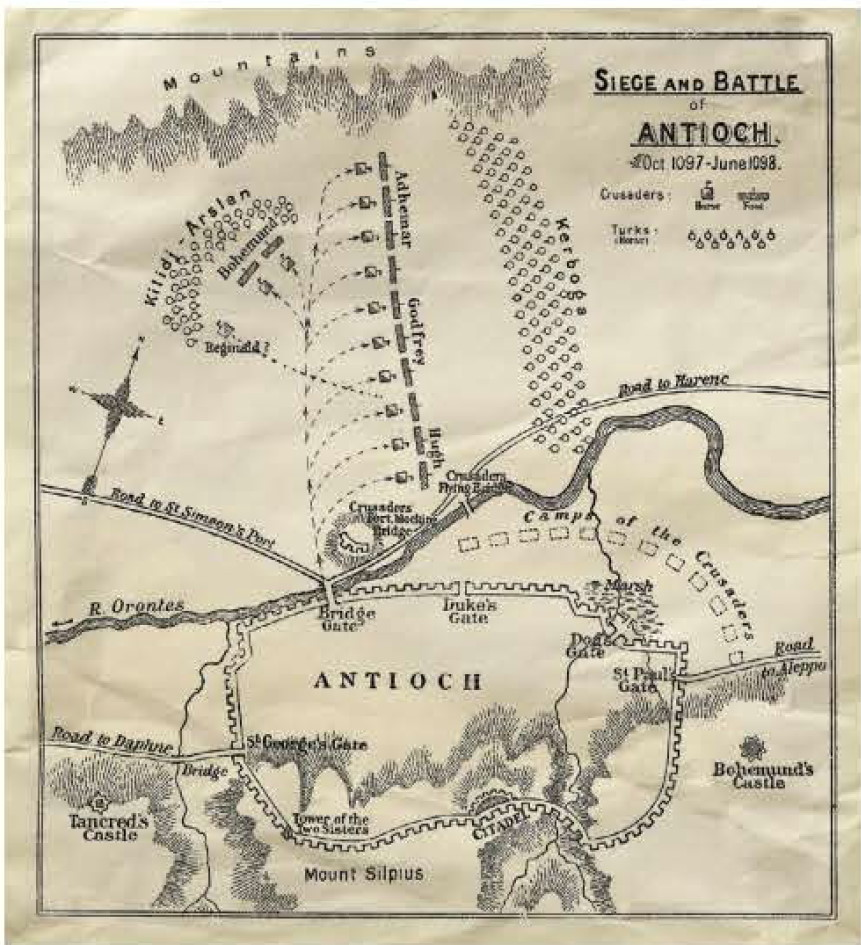
SOURCE C
Note
Analyse the source. Use the map to write a detailed account of the events during the siege of Antioch.

Homework Time!
Prepare for the next module by completing the task below at home.
Note
Research the events leading to the crusaders' capture of Jerusalem. From that, write a short essay explaining why the journey from Antioch to Jerusalem was challenging.