Akbar and the extension of the Mughal Empire during his reign, 1556–1605 (OCR GCSE History B (Schools History Project)): Revision Notes
📚Revision Notes
Akbar and the extension of the Mughal Empire during his reign, 1556–1605.

Note
Note
Known as Akbar the Great, the successor of Humayun ruled India from 1556 to 1605 AD. Jalal-ud-din Muhammad Akbar was born in 1542, while his father, Humayun was in exile. In his youth, Akbar showed interest in warfare techniques over reading and writing. At the age of 13, he was conferred with the title of Shehanshah Akbar under the guidance of the most capable military general.
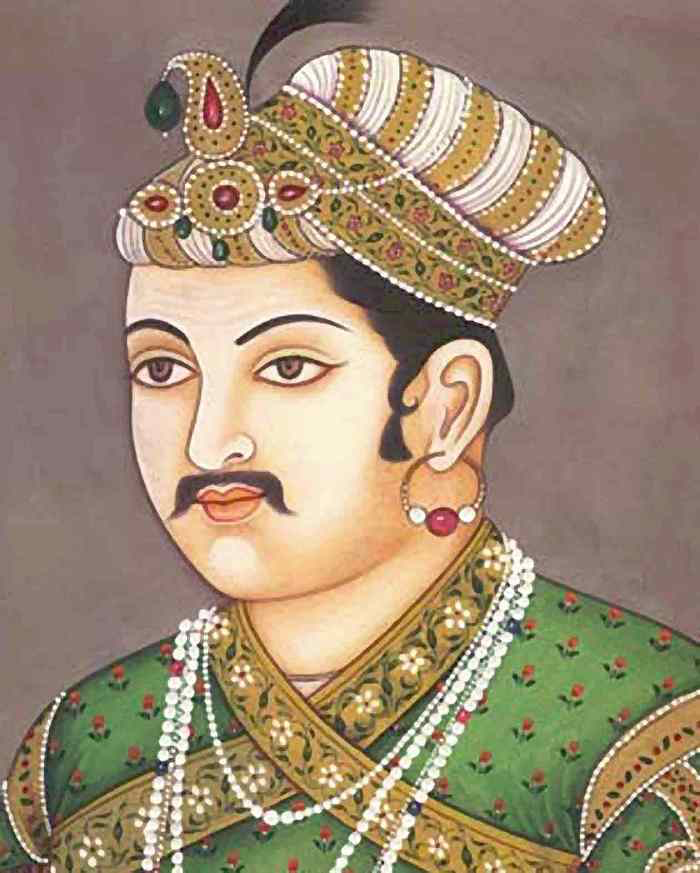
Image depicting the Third Mughal Emperor, Akbar
When he was 14, Akbar inherited the throne. Under the regency of Bairam Khan, the kingdom regained control of most northern India from the Afghans. They won the Second Battle of Panipat and achieved relative stability. In 1560, when Akbar came of age to rule, he dismissed Bairam Khan and took full control of the empire.
The expansion of the Mughal Empire
Throughout his reign, Akbar expanded the empire's territory into Afghanistan in the north, Sindh in the west, Godavari River in the south, and Bengal in the east.
Akbar became successful in expanding the Mughal Empire through making an alliance with Rajput rulers. Akbar was able to earn the loyalty of his conquered people. Moreover, he was known for rewarding people who showed loyalty, intellect, and talent. Instead of imposing high tribute tax for revenue, Akbar created a central government in which conquered territories were left unsupervised.
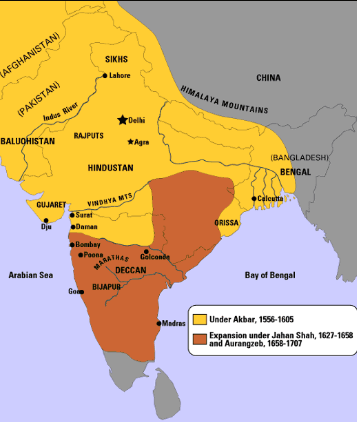
Map of the Mughal Empire under Akbar
Imperialist Policies
Some of the important imperialist policies of Akbar, which brought the submission of Rajasthan, included the following:
- Rajasthan ports should be captured.
- Services of Rajput rulers who surrendered were accepted. Moreover, states were returned to them to rule, while others formed matrimonial alliance with Akbar himself.
- Those who refused to surrender were conquered aggressively. At the end of Akbar's expansion, all Rajput rulers, except that of Mewar, submitted to him voluntarily. Huge parts of Mewar was conquered forcefully.
Note
In 1591 AD, Akbar attempted to seize south India, specifically Khandesh and Ahmadnagar. Ali Khan, leader of Khandesh, accepted the offer of Akbar and agreed to pay an annual contribution or tribute. Other states who refused to peacefully submit were conquered in the years that followed.