Shah Jahan, 1627–1658 (OCR GCSE History B (Schools History Project)): Revision Notes
📚Revision Notes
Shah Jahan's wars to extend the empire and the war of succession between Dara and Aurangzeb
Note
In attempts to reduce independent kingdoms of the Deccan, Shah Jahan led the conquest of Ahmadnagar in 1632, Golkonda in 1635, and Bijapur in 1636. However, his armies failed to annexe Balkh and Badakhshan, Babur's former possessions. In the end, his costly expeditions to recover Kandahar brought his court to the verge of bankruptcy.
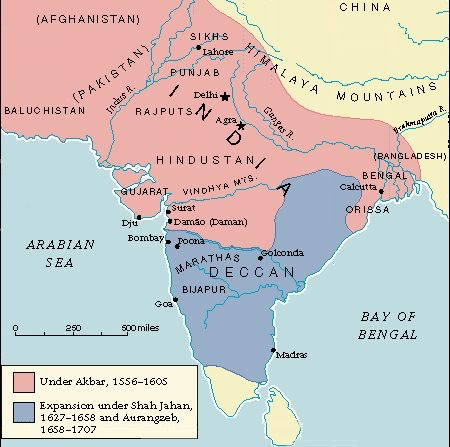
As Prince Khurram, his military prowess was manifested during the Mughal campaign against the Rajput state of Mewar during Akbar's reign. In 1617, he secured the empire's southern borders in the Deccan.
Weakened by the death of their ruler and the ascension of the young heir, Golkonda (a Shia community) became subjected to an annual tribute in 1636.
Note
In September 1658, Shah Jahan fell ill. While still recovering, Dara Shikoh, one of his sons, assumed the throne. Meanwhile, Aurangzeb formed an army and defeated his brother. Before proclaiming himself as emperor, Aurangzeb eliminated all possible threats to the throne.
Reasons behind the war of succession during Shah Jahan's reign:
Note
In September 1657, when Shah Jahan fell ill, many assumed that he wouldn't recover. Rumour of his death spread, which created internal disruption and disturbance.
Note
As his eldest son, Shah Jahan appointed Dara as his successor. However, many members of the nobility disliked Dara due to his liberal religious views.
Note
While Shah Jahan was still recovering, all four princes who were governors of various territories desired the throne. The four princes were Daa of Punjab, Shujah of Bengal and Orissa, Aurangzeb of Deccan and Murad of Gujarat.
Note
Aside from the significance of kingship, the lack of definite laws of succession caused the dispute.
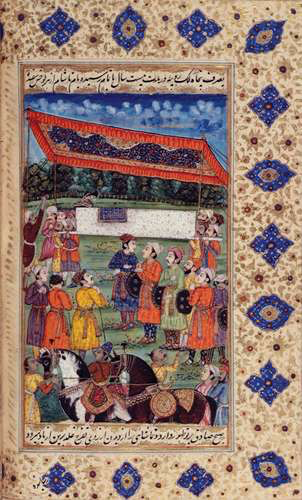
Miniature painting of Shah Jahan's funeral
Key Events in the War of Succession Between Dara Shikoh, Aurangzeb, and Murad
Note
After the declaration of Dara as emperor, Aurangzeb made an alliance with Murad by promising the provinces of Punjab, Sindh, Kabul, and Kashmir.
Note
At the Battle of Bahadarpur, Shah Shuja and his army were defeated by the warriors of Dara.
Note
During the Battle of Dharmat, Dara's army was defeated by the alliance between Aurangzeb and Murad.
Note
The combined army of Aurangzeb and Murad besieged the fort.
Note
When Shah Jahan recovered from his illness, Aurangzeb sent him to prison and declared him unfit to rule. After eight years of exile, on February 1, 1666, at the age of 74, Shah Jahan died in prison. His daughter, Princess Jahanara Begum, requested that her father be carried in a funeral procession all over Agra, but Aurangzeb refused. Instead, Shah Jahan's body was placed in a coffin made of sandalwood and taken to the Taj Mahal.
In April 1659, the last battle between Aurangzeb and Dara took place in the valley of Devarai near Ajmer. Upon his defeat, Dara was sentenced to death by a court of judges. Dara's body was brought to the streets of Delhi before finally being delivered to Humayun's Tomb.
Murad was murdered at Gwalior fort, while Shah Shuja ran away from India.
Behind the success of Aurangzeb
- Compared to his brother, Aurangzeb was a more able commander.
- Dara's army lacked unity. In the last battle against Aurangzeb, Dara's most notable commander did not join.
- Enhanced by several European commanders, Aurangzeb's army became superior over others.
- Shah Jahan failed to stop the rumour of his death.

Glossary of Terms
Shah Jahan
Third son of Jahangir, Prince Khurram became the 5th Mughal emperor. His title Shah Jahan meant King of the World in Persia.
Mumtaz Mahal
Shah Jahan's second wife and mother of 14 of his 16 children.
Red Fort
A walled city built in the new capital of Delhi.
Taj Mahal
One of the wonders of the world, a magnificent mausoleum built by Shah Jahan in memory of his wife, Mumtaz Mahal.
War of Succession
A war caused by a dispute between individuals claim over a throne. It is sometimes referred to as civil war among the royals.
Peacock Throne
A jewelled seat commissioned by Shah Jahan placed in the Diwan-i-Khas or Hall of Private Audiences.

Exam Practise
Note
Given your knowledge of the Mughal Empire's territorial expansion since the conquest of Babur up to the reign of Shah Jahan, discuss the geographical and political changes that happened. Moreover, describe the significance of Shah Jahan's campaigns.
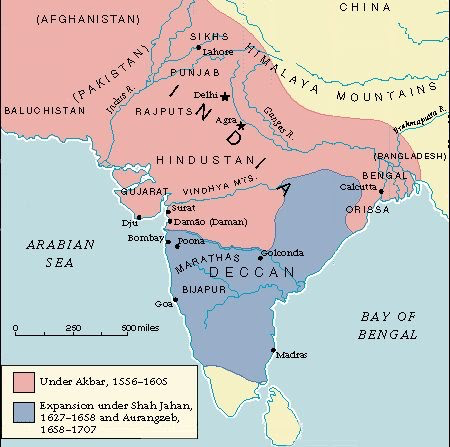
Mughal expansion under Akbar
Expansion under Shah Jahan and Aurangzeb
Note
When Shah Jahan fell ill, his sons went to war over the succession. Historically, Mughal emperors did not follow the law of primogeniture, thus, resulting in forced ascensions in many cases. In your own perspective, why did the Mughal royals experience such violence in inheriting power. Suggest ways on how monarchs should transfer power.