The distribution and design of Norman castles in England to 1087 (OCR GCSE History B (Schools History Project)): Revision Notes
📚Revision Notes
The distribution and design of Norman castles in England to 1087
Note
One of William's first actions upon arriving in England was constructing a large number of castles. Norman fortifications differed, however, as they became private fortified residences.
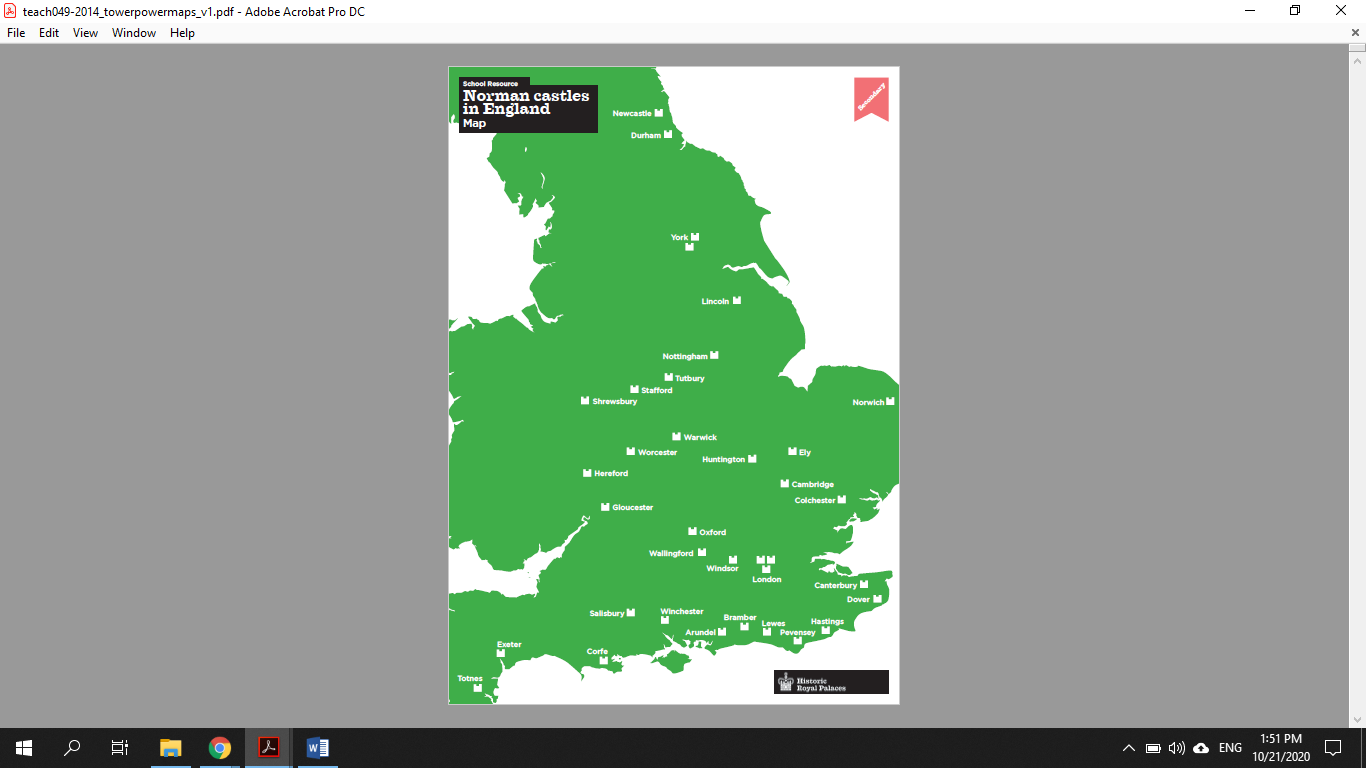
Map of England showing castles built by William the Conqueror
Motte and bailey castles were initially built in locations where rebellions could start. The Normans established fortifications inside or near existing towns, where there was high ground or a good water supply. In order to build the castles where they wanted, the Normans knocked down housing, clearing whatever was in the way. When their position became more secure, they bought land or swapped areas when needed instead.
A large number of castles were concentrated on the Welsh borders and in the south of England to keep control of the Welsh neighbours and to keep a watchful eye in the south.
Design of Norman castles in England
Unlike the Anglo-Saxon burhs that were formed mainly for the defence and safety of towns and villages, the Norman motte and bailey castles were designed to intimidate the conquered Anglo-Saxons and remind them of Norman rule and power.
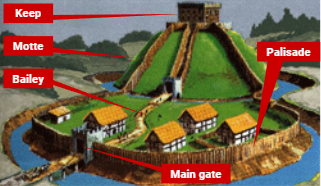
Strengths of motte and bailey castle
- Easy to put up and repair
- Large enough for soldiers to live in
- The Normans could see the English people due to its great height
Weaknesses of motte and bailey castle
- Since the keep was made from wood, it was susceptible to rot and fire
- Motte could collapse with the castle's weight if it was not big enough to hold bigger troop sizes Hundreds of wooden motte and bailey castles were established by the Normans but because of the weakness of the main material used in these castles, William went on and built castles that could last centuries - stone was used instead of wood. These castles were known as square keep or stone castles.
Stone castles were:
- Made to last centuries
- Stronger against catapults and siege engines
- Larger and could hold more soldiers
- Grander and taller
- Harder to attack
Weaknesses of stone castles:
- Time consuming to build and extremely expensive
- Nothing could be done except remain in the castle when surrounded by enemies
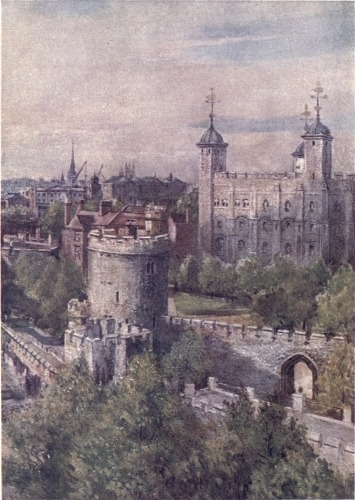
The White Tower at the Tower of London is the most famous example of stone castle.
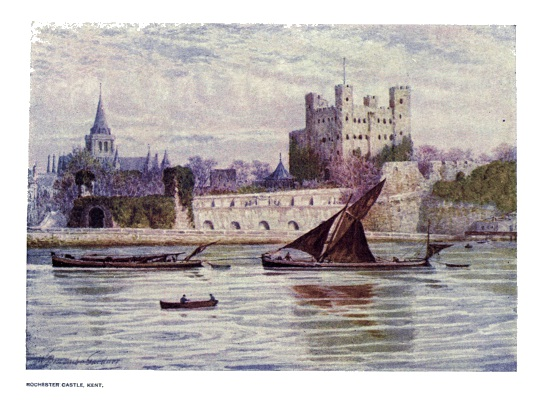
Rochester Castle in Kent is an example of a Norman square keep castle.
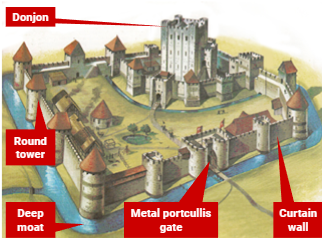
Motte and bailey castles were converted to stone castles: hard chalk, flint, limestone, and sandstone were used.
Note
Since stone castles also had weaknesses, concentric castles, which could withstand sieges, were developed in the 12th century