Domesday Book, its creation and purpose (OCR GCSE History B (Schools History Project)): Revision Notes
📚Revision Notes
Domesday Book, its creation and purpose
Note
William the Conqueror commissioned the creation of the Domesday Book in 1085. It was completed in 1086, and offers a complete written record of property ownership across England.
Why was it created?
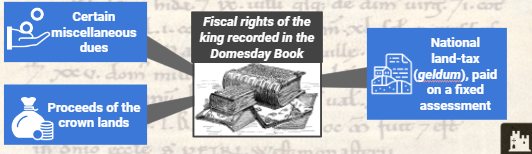
The king wanted a thorough assessment of the potential amount of tax he could raise from his subjects and their assets.
Why was it called the Domesday Book?
It was compared to the the Last Judgement, or Doomsday, described in the Bible, when the deeds of Christians were to be placed before God for judgement because of the survey's grand and comprehensive scale. However, the survey was initially referred to as the Winchester book and was not called Domesday until the late 12th Century.
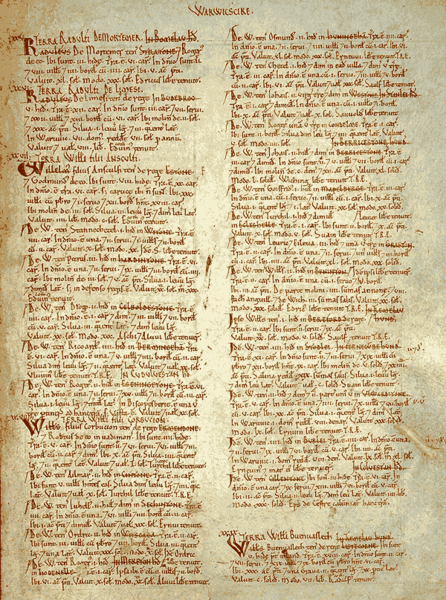
A page in the Domesday Book
What information was in the book?
The book detailed extensive records of landholders, their tenants, the amount of land they owned, how many people occupied the land, the amounts of woodland, meadow, animals, fish and ploughs on the land and other resources, any buildings present and most importantly, the value of the land and its assets, before the Norman Conquest, after it, and at the time of Domesday. It covered all of England in 1086, a small part of Wales and Cumbria but failed to include Northumbria and major towns such as Winchester and London.
How was the information collected?
The country was split up into 7 regions, each was assigned with 3 or 4 royal commissioners. They brought with them a set of questions and put these to a jury of representatives - made up of barons and villagers alike - from each county. They merged the collected information with earlier records from both before and after the Conquest.
What was the significance of the survey?
William wanted to find ways to get more land revenues from the tenants.
Land disputes were solved through the help of the survey.
The survey may have helped with tallying how many soldiers the tenant could provide in preparation for an invasion threat.