The social structure of Norman England (OCR GCSE History B (Schools History Project)): Revision Notes
📚Revision Notes
The social structure of Norman England
The Feudal Hierarchy
Note
The feudal hierarchy of Norman England was a means to organise people into categories with specific responsibilities.
The king: The monarch ruled and protected the country through laws and taxation. All land belonged to the king.
Tenants-in-chief: These were barons, lords and bishops who were given large tracts of land to govern on behalf of the king. They never owned the land, however, which served as a mechanism for securing loyalty.
Under-tenants: These were knights, who were given land and were required to give their military service to their feudal lord or to the king directly.
The peasants: These people had no land rights and were responsible for all the manual and farm labour.
Note
All people were required to pay homage, which was a promise of loyalty to the rank above them.
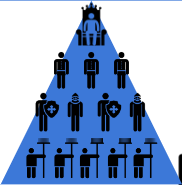
Why were the tenants-in-chief and knights significant?
- Also known as vassals-in-chief, tenants-in-chief were those who held land within the feudal system under tenure. Occupation of this land was conditional.
- It was a great honour to be responsible for the land, but should the tenant refuse to give homage, or to pay scutage, it could easily be taken away.
- The tenant-in-chief was generally responsible for providing knights and soldiers for the king's army and for protecting the territory he was granted.
- A knighthood was an honorary title granted by the king or a baron to a man in exchange for providing their lord with military services.
- They also acted as elite fighters, bodyguards, even as mercenaries.
- Knights were below barons in the feudal hierarchy and were granted smaller holdings of land.
- They were often skilled in battle on horseback and in the sport of jousting. A fief or fiefdom was a central element of the feudal system. Property granted by a feudal overlord could be inherited in exchange for fealty. Failure to meet responsibilities could result in forfeiture.
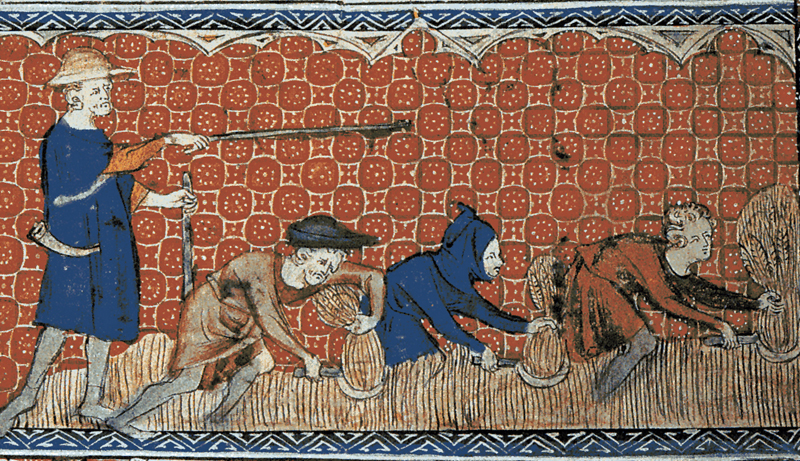
The Nature of feudalism
Landholding: A new system was introduced, in which the heir of the landholder had to pay a relief to the king to be able to use the land. Low reliefs could be rewarded to William's followers whilst high reliefs could be charged to difficult landholders.
Homage: A ceremony of homage had to be carried out by landholders. Similarly, tenants-in-chief had ceremonies with their under-tenants.
Knight service: Aside from providing up to 40 days' knight service when needed, the knights had to protect their lord's property. They replaced the thegns in Anglo-Saxon society and dealt with minor court cases in manorial courts.
Labour service: The peasants had to work for the under-tenants in return for land use.
Changes in land ownership from Anglo-Saxon to Norman
The rebellions against the Norman rule proved that William could not trust the Anglo-Saxon nobles. Therefore, the king replaced the English landholders with loyal Normans.
How did land ownership change?
Note
From 1071, William owned all the land and people only had tenure from the king. Taxes were paid to the king and the king appointed tenants-in-chief to oversee the landholding.
William made new earldoms and appointed his followers.
The land ownership of Anglo-Saxons was forfeited. William gave the land to the Normans.
The land was either seized or taken through corrupt dealings by the Normans. Norman sheriffs were known for doing this.
Since the land ownership had changed, less than 5% of the land remained under the ownership of Anglo-Saxon nobles by 1087.
Note
Before 1071, Anglo-Saxons had two types of landholding, in which tax was paid: bookland and leases.
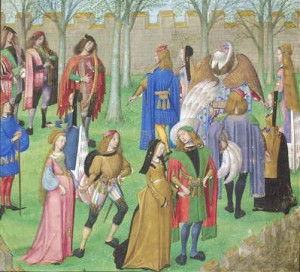
The Elite
The Norman elite displayed their power, wealth and superiority over the Anglo-Saxons.
- The Norman aristocrats built huge cathedrals, churches and castles.
- The shaving of the back of head by male aristocrats was considered a display of luxury.
- Hunting was the favourite leisure activity of the nobles.
- The culture of chivalry was introduced by them.
- The Norman nobles were religious and believed in penance.
- They introduced the use of family names based on where they lived.
| Percentage of land owned by the elite | |
|---|---|
| King and royal family | 17% |
| Bishops and abbots | 26% |
| Tenants-in-chief | 54% |
Data based on the Domesday Book, 1086