The Vikings in Scandinavia: landscape, society and everyday life (OCR GCSE History B (Schools History Project)): Revision Notes
📚Revision Notes
The Vikings in Scandinavia: landscape, society and everyday life
Note
Etymology The Vikings came from Scandinavia. The term 'vik' in Old Norse means bay or creek and is often associated with 'vikinger' meaning pirates. Historically, they were defined as brave explorers, smart traders, and strategic warriors.
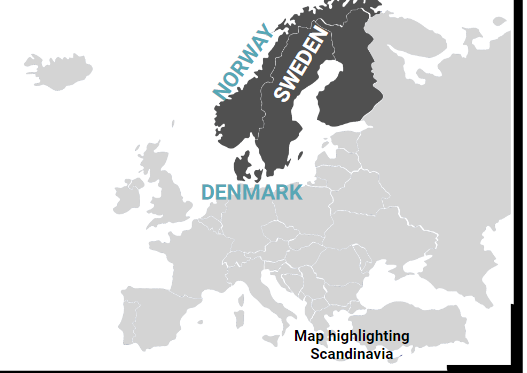
Prior to the unification of countries, the Vikings originated from present-day Denmark, Norway, and Sweden. With almost no towns, these lands in Scandinavia were rural.
Geographically, parts of Norway and Sweden are very mountainous, which pushed the Vikings to look for better farmland. On the other hand, the landscape also provided them with abundant wood.
Note
Prior to the 7th and 8th centuries, they heavily relied on agriculture and fishing along the coast. By the time advancements in shipping emerged, they sailed the seas using overlapping planks to build sturdy longships. Such boats could navigate coastal and inland waters. When they began to traverse the seas, the Vikings became known as fearless explorers who reached North America, which made them the very first Europeans to discover America.
During the summer months, meat and fish were smoked, dried and salted for the winter.
The Vikings usually hunted reindeer, lynx, wolverines, lemmings, elk, bears, and seals. They also domesticated animals like cattle, goats, pigs, chickens, and sheep. Animals were also raised for their wool and leather for clothing.
They farmed fields of oats, rye, wheat, and barley. Farms were protected from wild animals by stone walls. Within the same vicinity as the farm, each Viking family lived in a longhouse, known as the main building. Usually, longhouses were built from wood - stone was rarely used for building houses.
Note
Winters in northern and eastern Scandinavia were long and very cold. Despite having more land area, most Vikings lived in the smaller Denmark than in Norway. While many travelled by sea, common people traversed routes by foot, horseback, or waggon. Many Vikings also lived in northern Scotland and eastern England.
Prior to being known as raiders, the Vikings relied on farming and herding animals. They developed various ways to trap wild animals for food and fur.
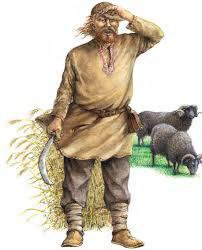
Depiction of a Viking farmer
How the Vikings lived?
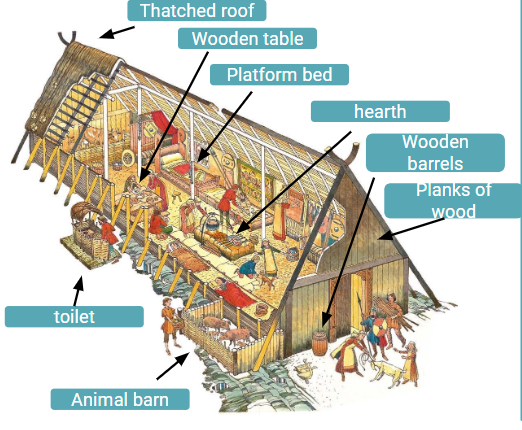
Viking longhouses were usually built near the coastline or rivers for convenient loading and unloading of ships. Longhouses were designed as rectangular buildings with rounded ends. They were typically 15 to 25 metres long and 5 metres wide. Aside from doors, the only opening was a tiny hole in the roof. They had no windows.
Viking men were in charge of raiding and trading. Women were left at home to attend to common household and farm chores, which made them highly independent. Unlike other mediaeval societies, Viking women had the right to choose their husbands and divorce as they wished. They could also buy and own land. During the Viking Age, there were no schools. Young boys were taught the necessary skills for taking part in raids and shipbuilding by their fathers, while young girls learned their skills from their mothers.
The Vikings in Scandinavia:
landscape, society and everyday life
How the Viking society worked
Note
Amidst being categorised into classes, the Viking society was less rigid compared to other mediaeval societies in Europe.

JARLS
Viking nobles, were usually heads of wealthy and influential families. They generally wore fine clothing and jewellery, and lived in lavish longhouses.
KARLS
Consisted of farmers, craftsmen (usually silversmiths and shipbuilders) and merchants. They dominated Viking communities in terms of number. Karls were free people, often associated with raids.
THRALLS
Consisting of slaves, criminals, and prisoners, this class was the poorest of the poor who did hard labour. Despite being unrecognised by any law, most were treated well.
The Vikings in Scandinavia:
landscape, society and everyday life
Note
The Vikings were skilled craftsmen. They produced farming tools, jewellery and weapons, such as swords. Other metal workers made armour and helmets for battle. Wealthy jarls or nobles wore helmets, while the lower class used leather caps or hats lined with fur.
The wealthy class was usually adorned with gold and silver, while the lower class used bronze or pewter jewellery.
Note
In contrast to common notions about the Vikings as barbaric warriors, they had a system of laws. In early Viking settlements, they were ruled by tribal communities headed by a thing, or political assembly. The main purpose of the Things (held annually) was to make, change, or judge if laws were broken. Things were only participated in by Viking who owned land.
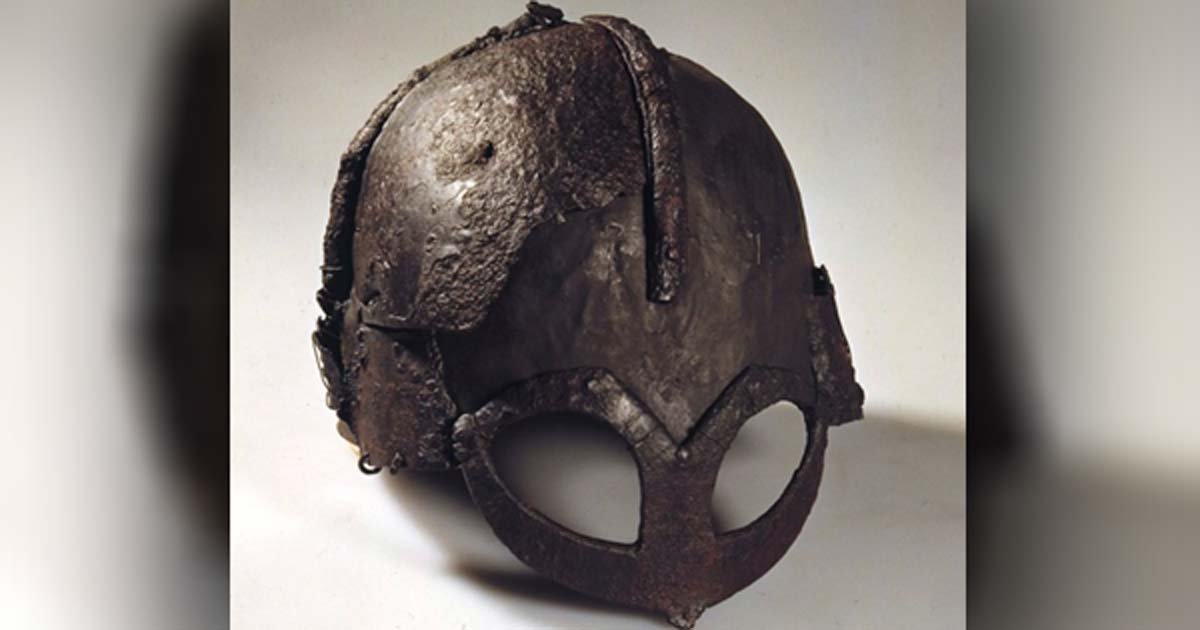
Viking helmet excavated in Haugsbygd in Ringerike, Eastern Norway
In popular culture, Viking were often depicted wearing helmets with horns.

Laws were preserved in the memory of a law speaker and were not written down until the 12th century. Vikings respected the law because harsh punishment, like death and exile for life, was sentenced to those who broke a law. This included failure to pay a fine to a person harmed. Usual activities at things were:
- The law speaker recited the existing laws
- After discussion of a general agreement, laws were changed
- Disputes were resolved
- Social proceedings like marriages and divorces were conducted
