Viking ships, seafaring and trade c.750 (OCR GCSE History B (Schools History Project)): Revision Notes
📚Revision Notes
Viking ships, seafaring and trade c.750

Viking ships, seafaring and trade c. 750
Note
Initially, Viking boats were powered by sails as well as oars. Over time, 'clinker-built' or overlapping planks were added to vessels. In 1903, Norwegian archaeologists discovered the Oseberg ship, which showed the great skill of the Vikings as shipbuilders. With the use of ships like this, they were able to travel long distances over the seas.
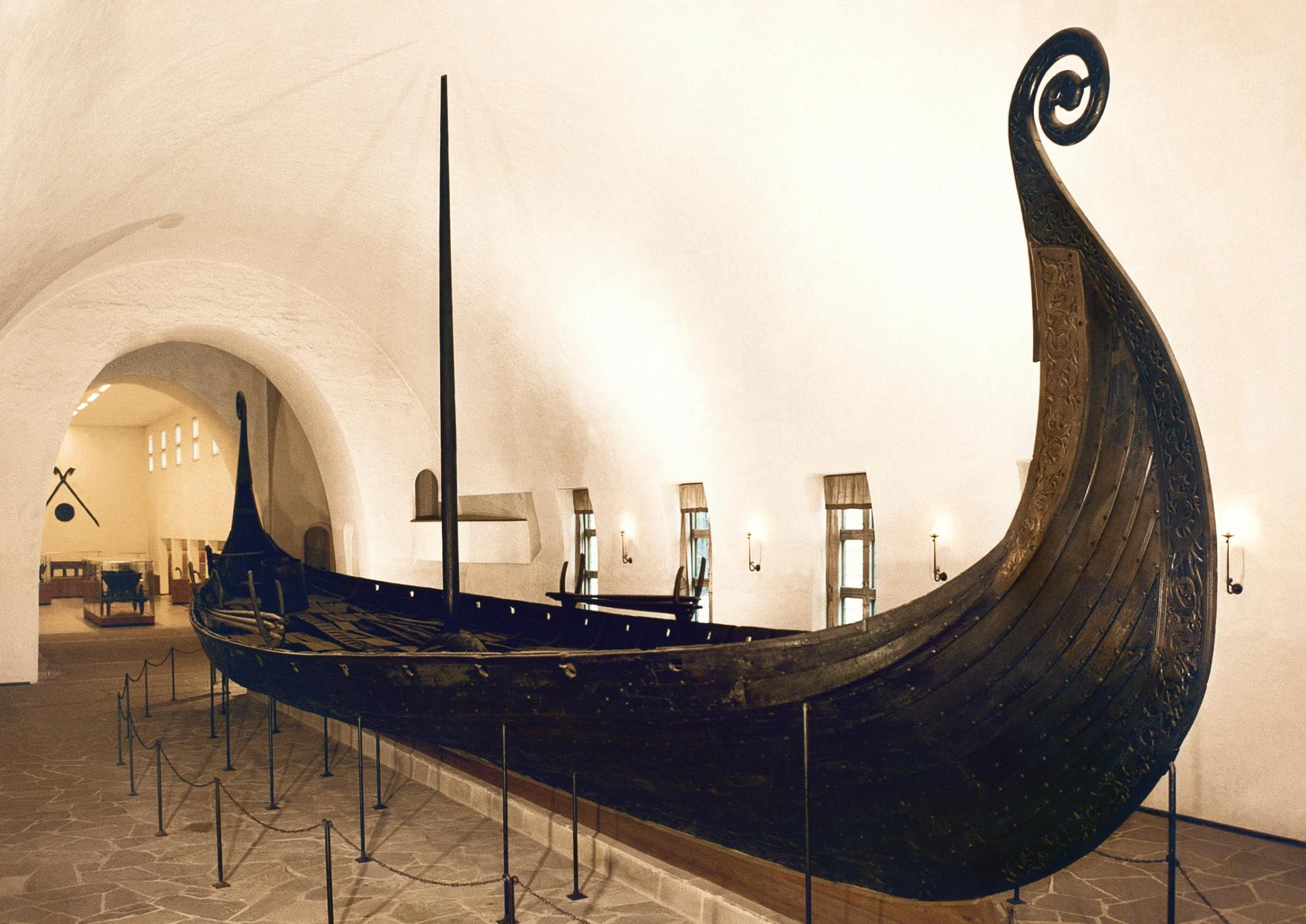
Oseberg Viking ship discovered in Norway in 1903
As Viking society grew larger, many found land cultivation difficult in mountainous terrain. As a result, seafaring technology developed and trade helped them sustain their growing population.
Across seas and rivers, Viking merchants traded in ships. Archaeological evidence reveals their trade activity in parts of present-day Russia and Central Asia. The Vikings traded their timber, leather items, smoked fish and meat, fur, amber, jewellery, walrus tusks, and slaves, in exchange for wheat, iron, wine, spices, silk, salt, glassware, and weapons. Goods were traded using the barter system.

Viking ships, seafaring and trade c. 750
The process of bartering involves the exchange of goods of similar value.
By the early 8th century, the Vikings became known as traders, explorers, and warriors. Between 1957 and 1962, five Viking vessels were excavated in Denmark, which opened the world to the variety of vessels used by the Vikings, from cargo ships to longships. Archaeological discoveries showed that the following types of Viking vessels were:
Note
Viking trading networks were proven by burial mounds excavated in Birka, Sweden, which showed fragments of Chinese silk. Moreover, painted ship burials in Norway contained pigments, which are believed to have originated from India and the Middle East. In Denmark, Russia, and Norway, silver coins called dirhams, most probably made in Baghdad, were found.

- Ocean-going cargo ships called knarr, which were used in narrow channels for trading.
- Knarrwas were merchant vessels for heavy cargo.
- Longships were fast and flat boats built for stormy seas and shallow rivers. High-ranking Vikings used burial ships along with grave goods and animal, sacrifices.

Viking ships, seafaring and trade c. 750
What does a Viking longship look like?
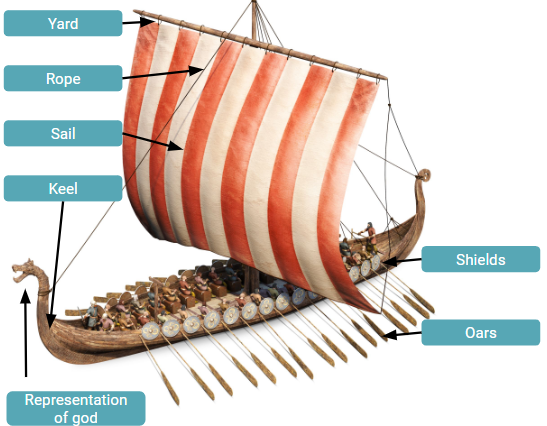
A Viking ship was typically made of planks of timber, usually oak, ash, elm, pine, and larch, which were nailed together. Space in between planks were filled with tarred wool.
With oars or sails, Viking ships were flexible in rough waters and strong winds. A ship was generally decorated with an elaborate animal headpiece, such as a dragon or snake.
The Vikings did not use maps for navigation. Instead, they relied on the position of the sun, patterns of the stars, flow of the wind, colour of the sea and sighting of landmarks.
Throughout the 8th until the 11th centuries, the Vikings traded with the Byzantine Empire, Newfoundland, Greenland, the Far East, the Baltic, and the Middle East.