Harald Bluetooth, Jelling and the conversion of the Vikings to Christianity (OCR GCSE History B (Schools History Project)): Revision Notes
📚Revision Notes
Harald Bluetooth, Jelling and the conversion of the Vikings to Christianity
King Harald, King of Denmark

Note
In 958, after his father King Gorm the Old passed away, Harald was crowned King of Denmark. Born in 910 AD, Harald Blatand was known to be the central figure in the unification of North Jutland and the conversion of the Danes and Norwegians to Christianity. He also conquered Norway in subsequent years.
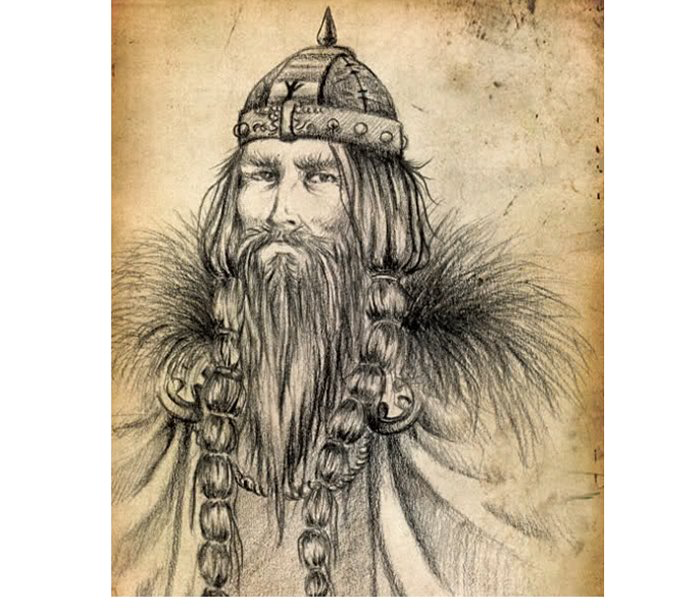
Artistic depiction of Harald Bluetooth
In 960, after his baptism, Harald turned the tomb of his pagan father into a Christian place of worship. The tomb was replaced with a church between two great mounds. During his reign, Harald continued his father's work of unifying Denmark and, in order to defend it, he ordered the building of fortifications. Moreover, Harald supported the toleration of Christians by allowing bishops and monks to preach in Jutland.
Thyra, Harald's mother, was inclined towards Christianity, while his father was a follower of the Norse gods.
Despite his refusal to be baptised by Bishop Unni of Bremen, he supported the spread of Christianity among the Danes.
In 954, Harald aided his nephews in reclaiming the territories in Norway from King Hakon.
When King Erik Bloodaxe was killed in the battle in Northumberland, Hakon claimed Norway.
Note
By the time Hakon was killed, Harald II Greycloak (Harald the Bluetooth's eldest nephew) took control of Norway. Amongst his policies was the expulsion of pagan faith. As a result, internal unrest disrupted unification efforts. When Greycloak was assassinated, Bluetooth took control of Norway. Under Papal authority, Christianity spread in Jutland. According to a source, the Holy Roman Emperor Otto the Great ordered the founding of several dioceses in Jutland.
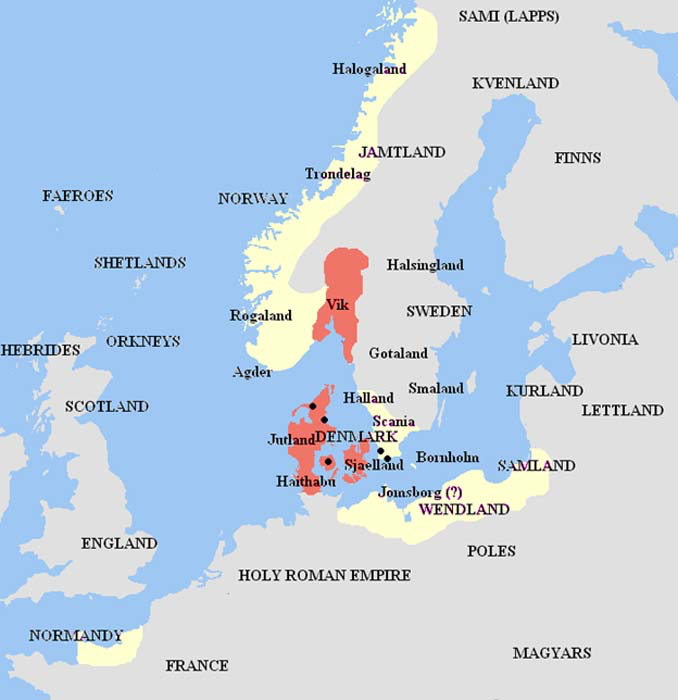
Map highlighting Jutland
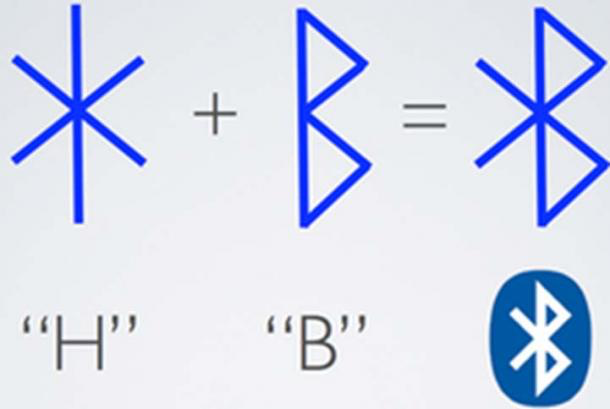
Harald's initials in runes and his bluetooth nickname
As a devout Christian, Harald cast off pagan traditions in Denmark and Norway under his rule.
Jelling Stones
Note
Harald Bluetooth was also known for runic inscriptions discovered in Jutland. Jelling stones built in the 10th century were found in royal gravestones. The stones were a memorial honouring Queen Thyre, Harald's mother, as commissioned by King Gorm the Old, the last known pagan king of Denmark. The other stone was commissioned by Harald to honour his parents.
Image of the Jelling stone
Haraldr konungr bað gǫrva kumbl þausi aft Gorm faður sinn auk aft Þórví móður sína. Sá Haraldr es sér vann Danmǫrk alla auk Norveg auk dani gærði kristna.
- Inscription in Old Norse
Aside from honouring his parents, King Gorm the Old and Queen Thyra, a runic stone was commissioned by King Harald indicating that the Danes converted to Christianity. Danish art historian, Rudolf Broby-Johansen called the rune stones 'Denmark's baptismal certificate' upon mentioning the terms 'tanmaurk' and 'tanmarkar', both referring to Denmark.
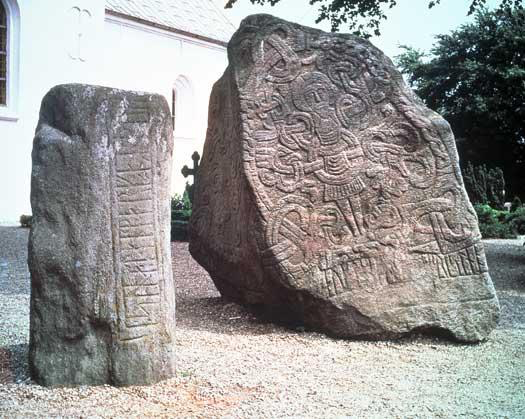
Jelling stones near the Jelling church in Denmark
Haralds' promotion of Christianity
Note
"we may be confident that the conversion of Scandinavia was gradual, piecemeal, muddled and undisciplined." Historian Richard Fletcher
With Harald's support and promotion of Christianity, Denmark officially became a Christian land by 965 AD, thus, making him the first Christian King of Denmark. Meanwhile, most chieftains in Norway were Christianised from the 960s onward.
Looking Back
During the early years of Viking raids, most of them maintained their pagan beliefs. However, in 878, under the Treaty of Wedmore, Viking leader Guthrum accepted Christianity. In return, Alfred of Wessex recognised him as the ruler of East Anglia. This act enabled the Vikings to have more peaceful relations with Christians.
When the Vikings began to settle in the British Isles, they co-existed with neighbouring Christians, while intermarriage gradually resulted in the complete conversion of the Vikings.
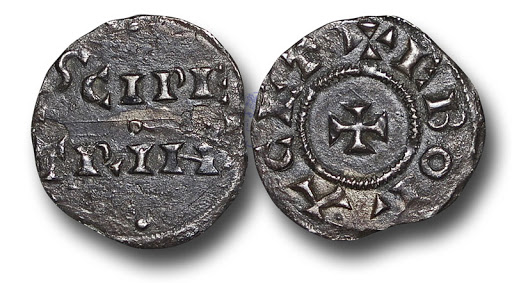
St. Peter of York Coinage, between 905 and 927)
The coinage of Viking York proved the peaceful co-existence of pagans and Christians during the raiders' settlement in England. The coin carried the name of St. Peter in the form of Thor's hammer.