The nature and extent of Viking settlement across the Atlantic (OCR GCSE History B (Schools History Project)): Revision Notes
📚Revision Notes
The nature and extent of Viking settlement across the Atlantic

Note
It is believed that Leif Ericson, a Viking, was the first European explorer to discover North America, 500 years prior to Christopher Columbus. In 1964, Leif Ericson Day was declared on October 9 by the US President in recognition of his landing in Greenland and Canada.
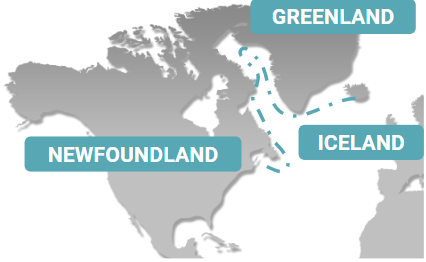
Map showing the voyage of Leif Ericson
Who was Leif Ericson?
Born between the 970s and 980s in Iceland, Leif Ericson was the second son of the Viking explorer Erik the Red. At the age of 12, Leif and his family set out on a boat heading west after his father was banished from Iceland.
Based on Icelandic sagas, by 1000 AD, Leif sailed from Greenland to Norway. Upon his arrival in Norway, he was converted to Christianity by King Olaf I Tryggvason. As per the king's request, Leif returned to Greenland with the intention of spreading Christianity.
On his way to Greenland, Leif was blown off course, ending up on the coast of Canada, specifically Newfoundland.
Note
Erik the Red established the Viking settlement in Greenland after being expelled from Iceland for killing a man.
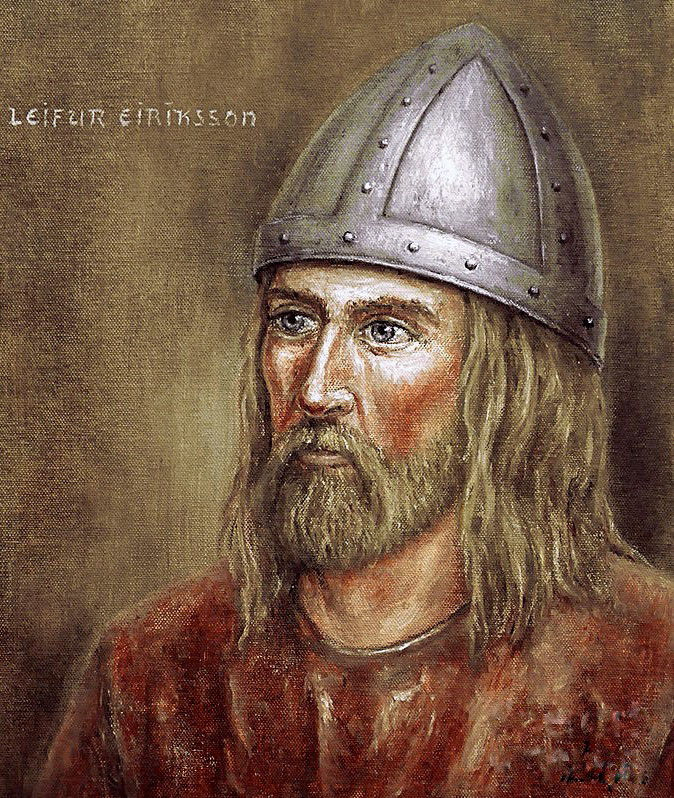
Artistic depiction of Leif Ericson
While the debate on Leif's voyage was ongoing, archaeologists discovered remains of a Viking settlement in 1963. The place is now called L'Anse aux Meadows in Newfoundland.
Note
It is believed that Ingolfur Arnarson and his wife were the first Viking settlers in Iceland based on the Landnamabok, a record written centuries after the settlement.
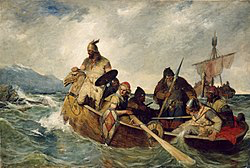
Painting by Oscar Wergeland in 1909 depicting the Norsemen landing in Iceland
Viking expansion in Iceland
Based on archaeological evidence, Iceland was inhabited by Vikings from Norway, Ireland, and Scotland a couple of decades towards the end of 9th century. Sagas suggested that Norse chieftains were accompanied by Irish and Scottish slaves.
Mediaeval literature suggested that the Vikings from Norway fled the land due to the harsh rule of King Harald Fairhair. Moreover, the Vikings were also expelled from England during this period.
There were more than 320 pagan burials and 20 settlement sites distinctly Norse.
Viking expansion in Greenland
Note
Unlike in Iceland, archaeological evidence of Viking expansion in Greenland was scarce. From Iceland, Greenland was settled by the Vikings in the 10th century. The Viking settlement was concentrated into two regions: the Eastern, Eystribyggo, near the southern tip, and the Western settlement, Vestribyggo, near Nuuk.
Historians suggest that the main reason behind the abandonment of Norse settlements in Greenland was the onset of the Ice Age or beginning of colder weather. However, other explanations include the constant clashes of the Vikings and the Inuits, soil erosion due to overgrazing, and the Black Death.
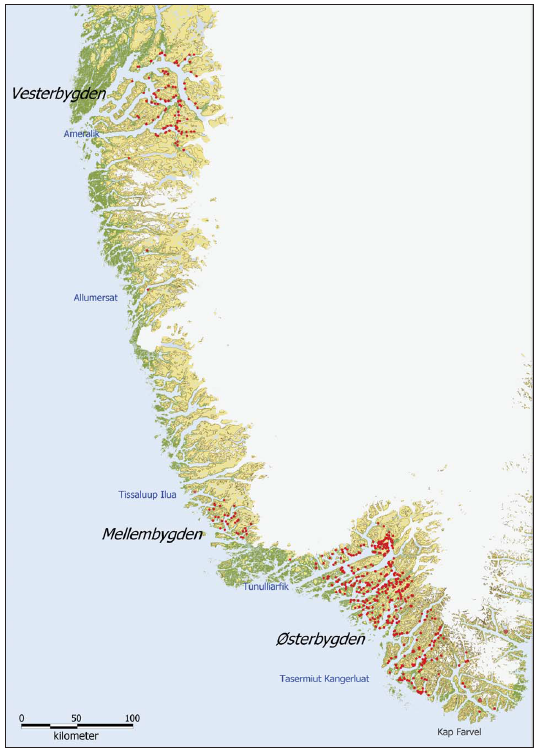
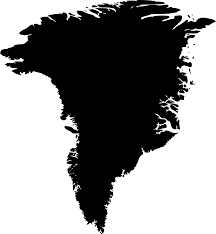
Map showing the Norse settlements in Greenland
In recent years, a smaller settlement, Miobygo or Middle settlement, was discovered by archaeologist, however, written records were lacking.
Note
In 2012, human and animal bones were discovered in Greenland, which suggested that the Norse switched from eating seal meat. Theories of the Norse population being wiped out by epidemics was also ruled out as their bones showed little signs of diseases compared to those in Scandinavia.
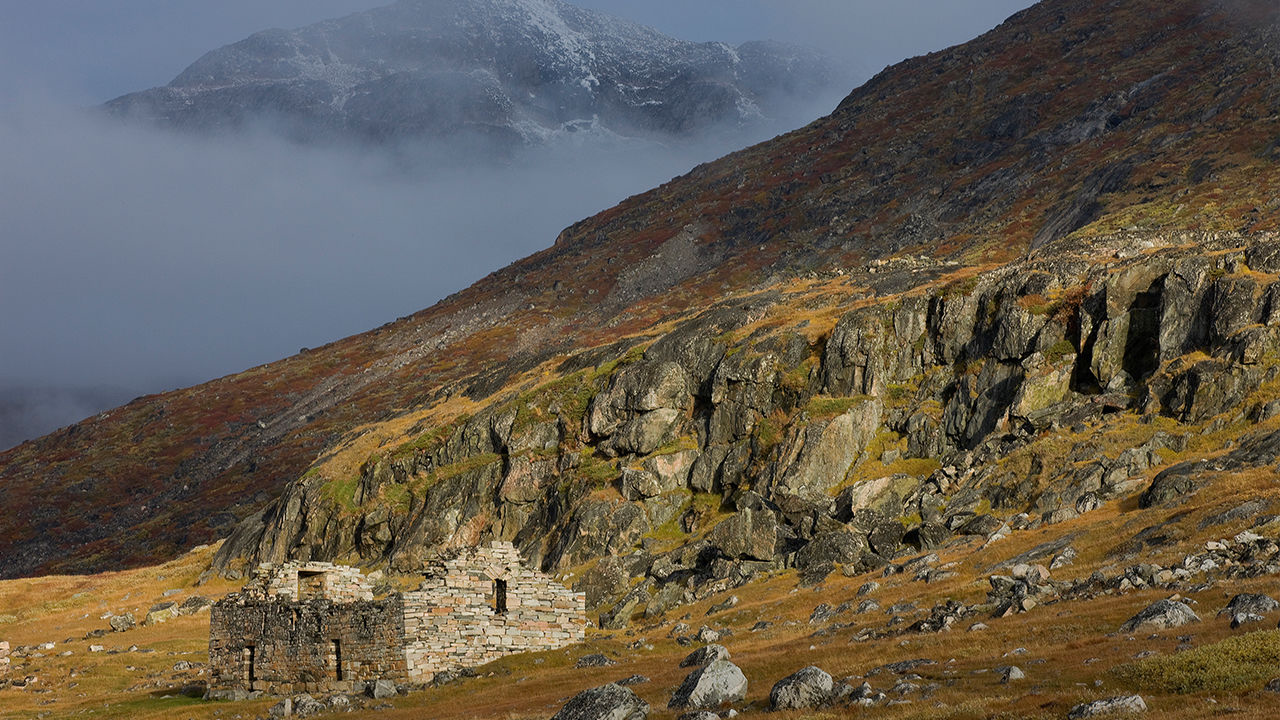
Image of stone ruins of Norse Vikings on Greenland
The conditions in Greenland
With a climate below 10 degrees Celsius, Greenland was not an ideal place to cultivate grain and trees. In order to survive the conditions, the Vikings combined farming and grazing livestock with hunting seals, caribou, narwhals, and walrus.
An estimated 1,400 people settled in Greenland around 1200 CE. With them were cattle, sheep and goats that provided them with milk, cheese and wool.
In addition to farming and hunting, the Norse Greenlandic economy was sustained through trading skins, fur and ivory.
Note
Norse settlements in Greenland were Christianised due to zero evidence of pagan grave. Based on the Saga of Erik the Red, it was Leif Erikson under the influence of Norwegian King Olaf Tryggvason who brought Christianity to Greenland. Similar to Iceland, churches and burial grounds were connected to family farms. A multitude of small churches were excavated near farmlands, while larger ones were concentrated around elite farms.
Viking expansion in Canada
Note
In 1960, archaeologists proved that Viking settlements existed in L'Anse aux Meadows located in the northernmost tip of Newfoundland in Canada. In about 1001 AD, Leif with the Bjarni set sail from Greenland and reached the coast of Baffin Island. After three more days, they reached Cape Porcupine on the coast of Labrador and called it the Land of Woods. After two further days of sailing, they found wild grapes and called the territory Vinland.
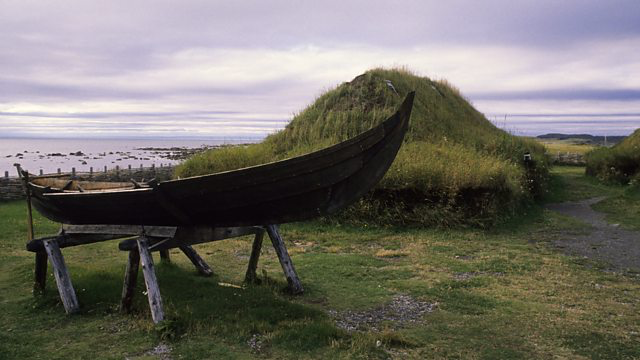
Image showing Viking evidence in North America
Note
Scholars suggest that the Vikings were unable to permanently settle in Newfoundland due to climate change and possible resistance from American Indians.
From setting up simple camps, Vinland, which is modern-day L'anse aux Meadows, became the first Viking settlement in Newfoundland. As mentioned in their sagas, hóp or Viking settlements were founded at Prince Edward Island, New Brunswick, Nova Scotia, Maine, New England and New York. However, the settlement at L'Anse aux Meadows was the first to be proven with archaeological evidence.
At the excavation site at L'Anse aux Meadows, the presence of white ash, beech, eastern hemlock and white elm were found. Same elements were found in New Brunswick.

Glossary of Terms
JORVIK
The fortress was built by Romans, which later became the capital of Viking settlement in England. It was also known as the Kingdom of York.
LANDNAMABOK
A written record in the form of sagas detailing the Vikings in Iceland.
SETTLEMENT
A place, usually uninhabited, where people establish a community.
NEWFOUNDLAND
An island in present-day Canada separated from the mainland by the Strait of Belle Isle.
NORMANDY
A region in France along the English Channel, which was invaded by the Scandinavians in the 10th century.
DANEGELD
A form of payment made by Anglo-Saxon kings to the Vikings for peace.
Exam Practise
Note
Given your knowledge of the nature and extent of Viking settlements in the British Isles and France, answer the questions which follow:
- How did the Vikings settle in the British Isles and France? What were their motives?
- To what extent did the Vikings establish settlements?
- Discuss the implication of Viking settlements in the British Isles and France.
- Provide archaeological facts to support your answer.

Source Practise:
Note
Read the source about the Vikings in the Atlantic and provide a substantial discussion on the nature and extent of their settlement in the said region.
Every item, with which they might help the country, they must buy from other countries, both iron and all the timber with which they build houses. People export these goods from there: goatskins, ox-hides, seal skins and the rope…which they cut out of the fish called walrus and which is called skin rope, and their tusks…