The nature and extent of Viking settlement in the British Isles and France (OCR GCSE History B (Schools History Project)): Revision Notes
📚Revision Notes
The nature and extent of Viking settlement in the British Isles and France
Note
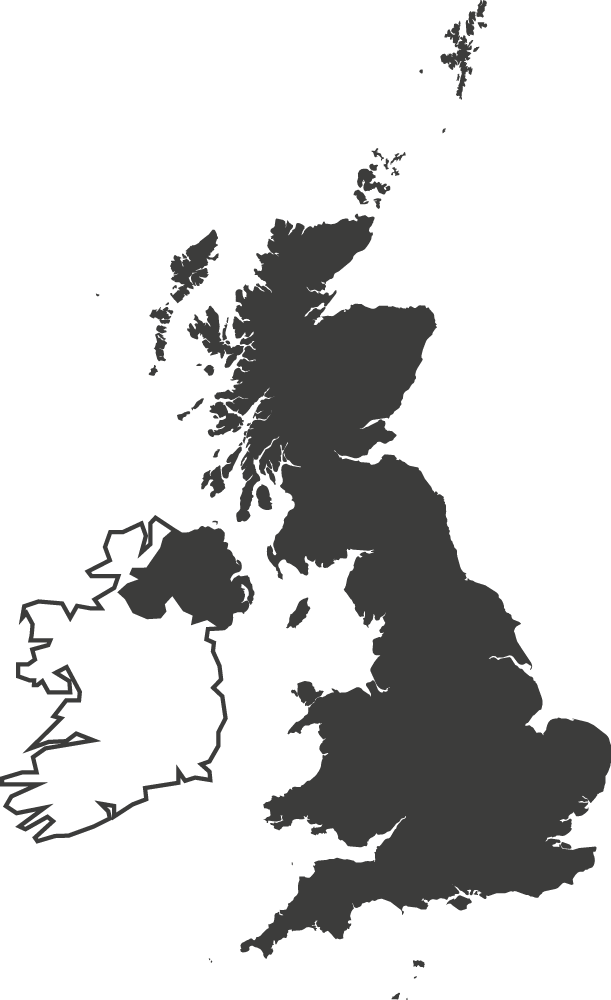
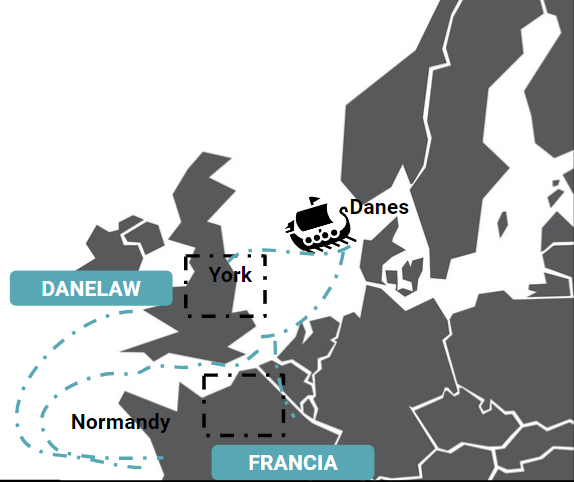
Outside Scandinavia, most Viking settlements were established in the English region of Danelaw and Normandy, a land conceded by the Franks to the Vikings.
After raiding monasteries and accepting payment for peace, the Vikings began to stay, initially in winter camps, on land they'd seized. With the establishment of the Danelaw, the Vikings took over Northumbria, East Anglia and parts of Mercia.
Linguistically, Viking settlements could be identified through the names of places. Places ending in 'by' (which, when added to a name, referred to a farm), which included Derby, Selby, Grimsby and Whitby, were Viking settlements. Some were named ending in 'thorpe, thorp, or trop' such as Scunthorpe and Grimethorpe.
The migration of Viking males and females
Following the establishment of Danelaw was the great influx of Vikings, mostly from Denmark and Norway. In the earlier years, Viking settlements in Ireland and Britain were thought to have been only males, however, recent excavation of graves showed an almost equal distribution of both sexes. This indicates that Viking raiders were accompanied by women. Another probable explanation was that Viking settlements were established by males who paired up with women from the indigenous population.
Other archaeological sites indicate that settlements were inhabited by Viking men and women, including the Shetland Islands, which was geographically nearer to Scandinavia.
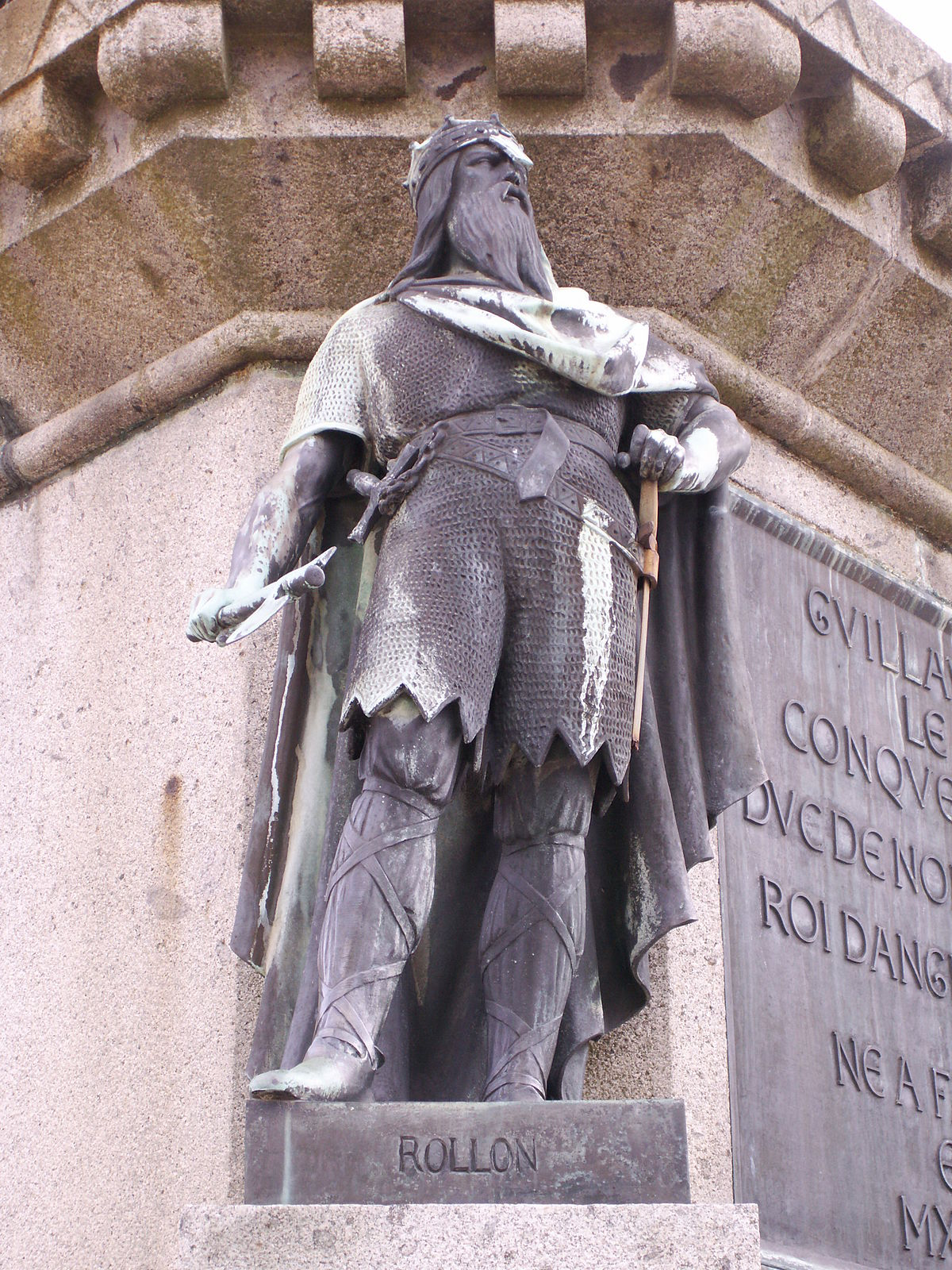
Statue of Viking leader, Rollo, in Falaise town square
The term 'Normandy' denotes its Viking origin, as it means Land of the Norsemen.
By the mid-9th century, Viking raids began to penetrate the Frankish Empire, beginning in Normandy. They sacked the towns of Rouen and Paris. Then King Charles the Bald, and later Charles the Simple, failed to defeat the Vikings, which resulted in them paying silver and gold. However, the Vikings continued to raid amidst the pay-offs.
The Treaty of Saint-Clair-sur-Epte
Under the Treaty of Saint-Clair-sur-Epte, Rollo agreed to enter into vassalage under King Charles the Simple in 911. This event made Rollo the first Norman Count of Rouen, moreover, he was baptised and married Charles' illegitimate daughter, Gisele. In exchange, Rollo and the Vikings gained French territory they had conquered.
Note
Through time, Rollo's descendants intermarried with the local inhabitants, thus producing Norman-French speaking people, a mixture of Scandinavians and local Franks and Gauls. In addition, Danish influence heavily influenced the Norman language. In later years, Rollo's descendant William, Duke of Normandy, would conquer England and become its king in 1066.
Viking raids in West and Middle Francia
Note
In the 9th and 10th centuries, West and Middle Francia suffered more Viking raids than East Francia. However, as compared to Normandy, the Vikings did not really settle in large numbers in these territories. Long-term bases were set up, and some were acknowledged as lords. In 870, Rorik became a vassal of Charles the Bald. In 1996, a significant Viking treasure (mainly silver) was excavated in Wieringen, which was dated to around 850 and is thought to have been connected to Rorik. This points to a permanent settlement in Wieringen.
Paying the Vikings for peace:
After Alfred the Great's rule as the king of Wessex, succeeding kings paid the Vikings for peace. King Ethelred, the first English King became known for the Danegeld or Dane's money (usually silver) as payment to the Vikings.
Between 1016 and 1035, Cnut, King of Denmark, ruled England. Under his reign, he nearly ended Viking raids in England. By 1066, William the Conqueror's invasion and rule of England completely ended the Viking Age.
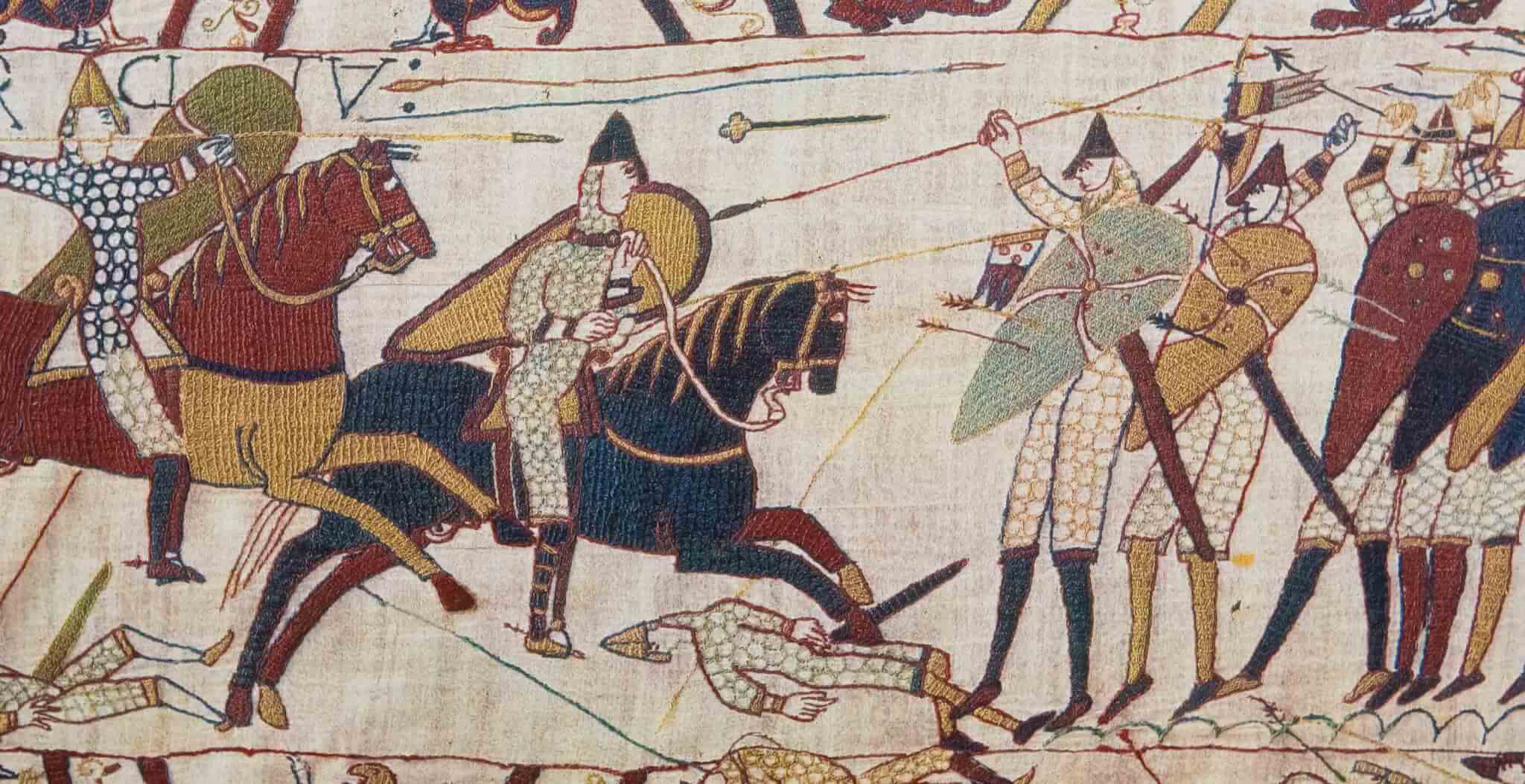
Bayeux Tapestry depicting the Battle of Hastings, 1066