The changing nature of Viking (Rus) trade and settlement in Russia from c.750 (OCR GCSE History B (Schools History Project)): Revision Notes
📚Revision Notes
The changing nature of Viking (Rus) trade and settlement in Russia from c.750

Historical context
Note
Given the capacity to sail long distances, in the 8th century, the Vikings ventured into foreign land in search of profitable trade routes. The Vikings found two alternative trade routes: (1) via the Dnieper River heading to the Black Sea, and (2) the Volga River leading to the Caspian Sea. Along the way, they established trade centres in Novgorod and Kiev, followed by Bulgar.
Vikings from Scandinavia who had populated Russia by the mid-8th century were called Rus by the Slavs or Rhos by the Byzantines. Varangians and Varyagi were also some of the names used to call the Rus. The Baltic, which became a vital trade route, was known as the Varangian Sea or Varangian Way.
Note
In 850 AD, Bishop Anskar of Hamburg provided in his biography the first evidence of Viking movement in Russia. The settlement in Russia began with armed traders who searched for goods, then established fortified trading centres, followed by permanent warbands. As trade continued to prosper, settlements were created.

Examine the map!
By 859, the Russian Primary Chronicle recorded that the Rus began taxing the Slavs and Finns. Scandinavian Vikings brought silver to Russia, mainly Middle Volga, the capital of Northern Bulgar. Initially, Viking traders faced difficulties due to hostile Slavic tribes, such as the Krivichi, Dovichi, Drevljane, Radimichi, Pechenegs, Poljani, Magyars, and the Khazars.
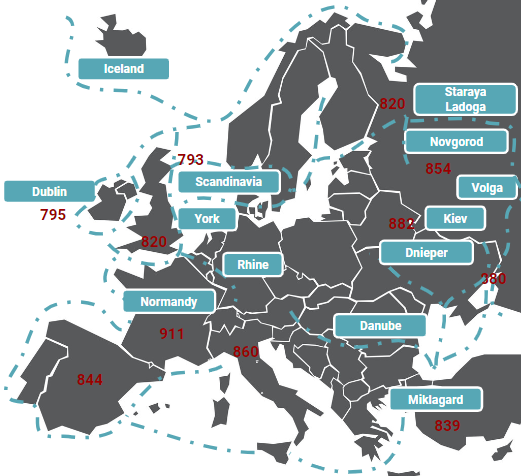
Map showing the voyages of the Vikings
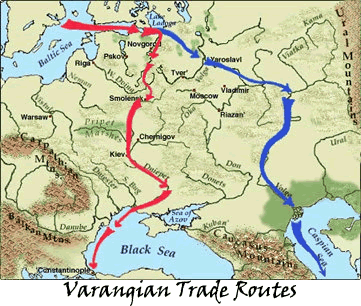
Map showing the Varangian Trade Routes
Vikings from Kiev began to collect tribute, usually furs and slaves, from Slavic settlements. The trading convoy in Kiev was soon joined by traders from Scandinavia, Novgorod, and other Russian settlements. Despite the dangers of Slavic tribes, Varangian ships continued the journey to the great city of the Byzantines.
Under proper arrangements, the Byzantines welcomed Varangian traders. As a matter of fact, each trader was provisioned by the empire for six months with basic needs, including wine, meat, bread, fish, fruits, and baths. In return, each trader would register their name with the city officials, avoid violence, and enter the city unarmed.