The nature of Viking trade and interaction with the Arab world (OCR GCSE History B (Schools History Project)): Revision Notes
📚Revision Notes
The nature of Viking trade and interaction with the Arab world

The nature of Viking trade and interaction with the Arab world
Note
Prior to trading across seas, the Vikings developed trading towns in Scandinavia, particularly near to the coast. Small towns near the beaches grew in size as trading became a lucrative source of income. By the 8th century, the trading town of Ribe was established and merchants began to set up stalls near the river.
Note
In the 1800s, a silver ring with Arabic engraving was excavated from a site at a Viking trading centre in Birka, Sweden. The inscription on the glass was translated as "to Allah".
As early as 838 AD, the Rus were said to have initial contact with the Byzantium. According to Greek and Arabic chronicles, most Swedish traders did business in Constantinople. The Vikings were known to have sailed on expeditions extending from Western Europe to Central Asia.
The Vikings typically sold items such as tin, wheat, wool, wood, iron, fur, fish, leather, walrus ivory and slaves. In return, they bought silver, spices, silk, wine, jewellery, pottery and glass. Coins were weighed using a set of folding scales.
The Arabic script found on the ring (as shown in the picture) was referred to as Kufic, an early form of Arabic alphabet used in the 8th to the 10th centuries.
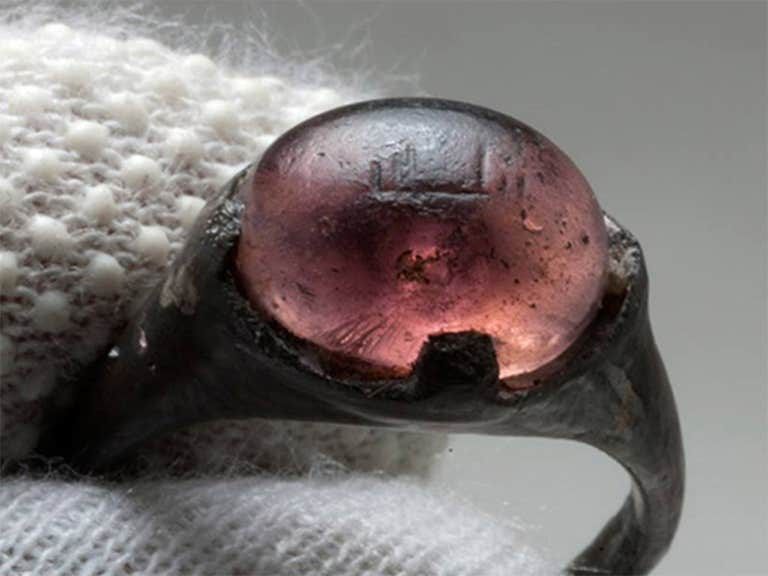
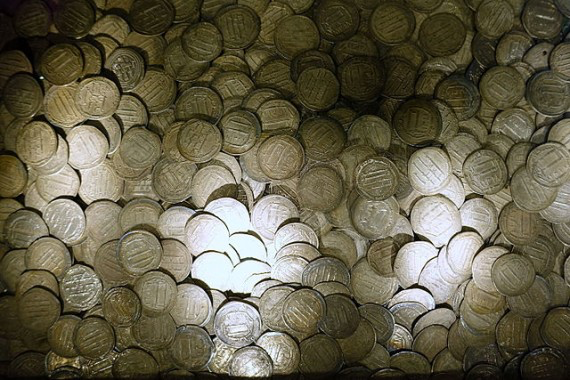
Image of the Birka ring (above) and silver Dirhams from the 7th-9th AD
They are the filthiest of all Allah's creatures: they do not purify themselves after excreting or urinating or wash themselves when in a state of ritual impurity after coitus and do not even wash their hands after food.
- Arab writer Ahmad Ibn Fadlan on meeting Viking travellers
Note
Similar to the Indians and the Chinese in the East, the Islamic Golden Age established by the Abbasid Caliphate became one of the greatest empires between the 8th and 13th centuries. In 844, Ibn Khordadbeh referred to the Vikings as the Rus who brought slaves, fur and swords to the Arab world.
At the time of Viking traders, the Arab world mainly consisted of Muslim people. Constantinople, located in modern-day Turkey, was the capital of the Byzantine Empire.
Following the Volga, the Vikings reached the Caspian Sea to Baku, until they arrived in Baghdad. By 900 CE, Baghdad was populated by over 1 million people. The centre was occupied by markets, merchants, and craftsmen, and was considered a hub of knowledge and learning.
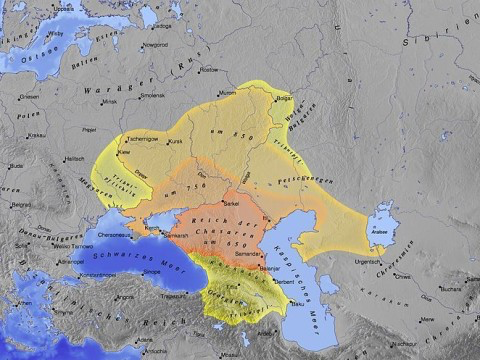
Map highlighting the Khazar's territory during the Viking encounter with Arab writers
Note
To the Muslim world, Baghdad was the centre of trade. It connected long-distance trading routes from Asia and China. As known raiders, the Vikings attacked Baku in 912, followed by Borda in 943. Despite being bold in raiding, the Vikings did not hold territory in the Arab world, compared to what they did in Western Europe, which included taking over territories. In the Arab world, they found trading more lucrative.
By the 10th century, the Abbasid Caliphate was minting thousands of dirhams from silver as currency. Most Vikings used silver for jewellery.
I have seen the Rus [Vikings] as they came on their merchant journeys and encamped by the Itil..." (Ibn Rustah) "They [Vikings] treat their servants well and dress exquisitely because they are such keen traders..."
Ahmed Ibn Fadlan
During those times, the Muslim world extended from Central Asia to Spain.