Viking relations with Constantinople and the Byzantine Empire (OCR GCSE History B (Schools History Project)): Revision Notes
📚Revision Notes
Viking relations with Constantinople and the Byzantine Empire

Context:
Located on the shores of the Bosporus strait, Constantinople was the crossroads of trade between Europe and Asia. It was the richest and most fortified city in the world.
Prior to 839, the first Rus was said to have reached Constantinople through a diplomatic mission. By June 860, a surprise attack was launched by the Rus against the city walls. Although being largely undefended due to another war against the Abbasid Caliphate, the Rus failed to enter the city of Constantinople.
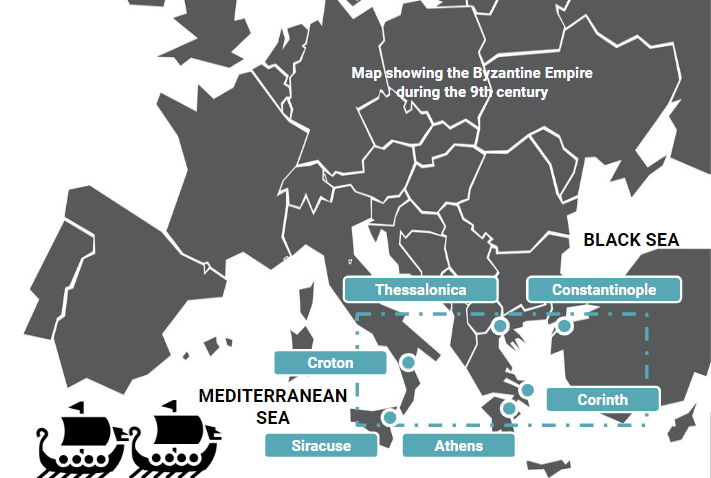
The attack on the Byzantines
Various narratives indicated that the Rus force was between 200 and 2000 ships, though most were dugout canoes and clinker-built Viking ships. After the failed takeover of the city, the Rus negotiated peace between 864 and 867. As a result, a period of amicable relations between the Rus and the Byzantium began.
However, in 907, when Oleg, Rus ruler of Novgorod, gained enough power, he initiated an attack on the Byzantium. His forces successfully disembarked in the Golden Horn. The Byzantines agreed to pay tribute, while Oleg asked for silk sails, linen sails, wine, gold, and fruit.
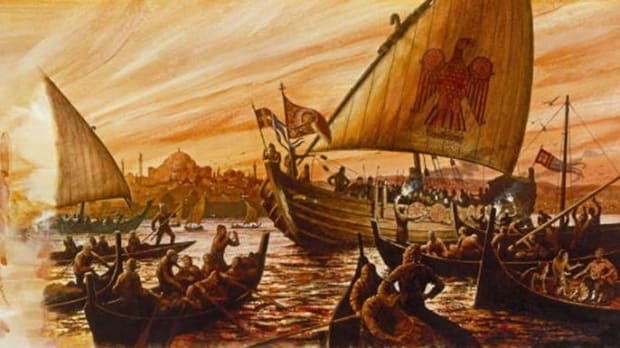
Artistic depiction of a Viking ship approaching the Byzantines at Constantinople
Note
According to the Russian Primary Chronicle, Oleg hung his shield over the City gate after his victory, however, several Greek sources discredit this tale. Rus raids against the Byzantines only ended when a trade treaty was negotiated in 911. The next recorded attack by the Rus happened in 941 by Igor, the foster son of Oleg.
Note
In 911, under the agreement, the Varangians or Rus were allowed to enter the military force of the Byzantine Emperor.
Under the provision, the famed Varangian Guard of the Byzantine Emperors was formed.
Note
The Varangians were part of the Byzantine Army division posted near the capitol Tagmata. Moreover, many Scandinavians served several units under the Tagmata.
Before joining the Varangian Guard, an aspirant had to pay an initiation fee of 7 to 16 pounds of gold. They were normally housed in the Great Palace.

Units of the Tagmata where Scandinavian Vikings used to serve
- Candidati - a cavalry composed of noble Greeks/Byzantines
- Hikanatoi lesser exclusive cavalry unit
- Excubitors - city's police force
- Arithmos - night palace guards
- Numeri or Optimati - guards of the city walls
- Hetaireia - Emperor's bodyguard
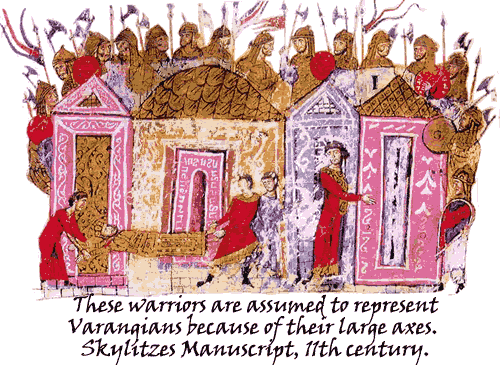
Depiction of the Varangian Guard
"Their Kings are not permanent rulers, but they select men of merit."
- Chiu-t'ang-shu, mid-10th century
Note
Historians agreed that the Varangians were highly rewarded by the Byzantine Emperor for their successful campaigns from Sicily to the Holy Land. In Constantinople, two runic inscriptions were carved in the marble walls of the Hagia Sophia. As elite guards of the emperor, the Varangians served as the physical protection of the ruler. Moreover, they also became part of the Byzantine Navy.
Over the next decades, the Varangians became the emperor's loyal favourites, which was criticised by common Byzantines. Akolouthos translated as 'the follower' served as the leader of the Varangians. He acted as the emperor's right-hand-man whom he trusted to take over Constantinople in his absence.
While the Vikings supplemented the Byzantium with military assistance, the Byzantines promoted Christianity into their ranks.
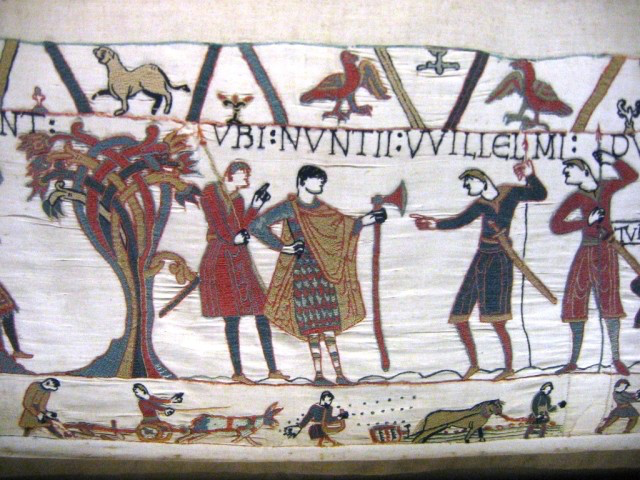
Bayeux Tapestry depicting the Varangian Guards

Glossary of Terms
Volga:
The longest river in Europe, which flows into the Caspian Sea. During the Viking expansion, the Volga trade route brought them to Russia, which created the Viking Rus.
Tagmata:
A Byzantine military unit in which the Vikings served after failed attacks on Constantinople.
Arab World:
During those times, the Arab world extended from Central Asia to Spain.
Byzantine Empire:
Also called the Eastern Roman Empire or the Byzantium, it was a vast empire that existed between 330 to 1453 CE.
Rus:
They were Viking traders from Scandinavia who migrated and settled in parts of present-day Russia.
Constantinople:
The capital of the Byzantine Empire, located in present-day Turkey.
Source Analysis:

Source A
They keep their clothes clean and the men adorn themselves with armbands of gold... They are generous to each other, honour their guests and treat well those who seek refuge with them, and all who come to visit them. They do not allow anyone to annoy or harm these. And whenever anyone dares to treat them unfairly they help and defend them."
- 10th-century explorer and geographer Ibn Rustah
Source B
They [the Vikings] were not ignorant barbarians. They knew exactly the kind of military and ideological pressure they were up against"
- Archaeologists Bjorn Myhre
Note
Critically read and analyse the sources then discuss how the Vikings were perceived in the Arab world.

Source C:
"Viking traders brought Abbasid silver coins in great quantities to Scandinavia; thousands have been found in Russia and the Baltic,"
- Timothy F. H. Allen, Joseph A. Tainter and Thomas W. Hoekstra in their book, "Supply-Side Sustainability_"_
Note
Given the source, answer the questions which follow:
-
What was the main motive of the Vikings?
-
Discuss the significance of the underlined statement.

SOURCE D
"They were given silk for everyday wear. If you are Scandinavian at that time, you are doing well if you have silk trim on your clothes. They get an enhanced share of the booty. It's this trickle of well-to-do homecoming mercenaries that spreads this image of Constantinople as the promised land of fabulous wealth."
- Haywood says of the Varangians
Note
Based on your understanding of the historical context and analysis of the source, make your own inference on the relations of the Vikings with Constantinople and the Byzantine Empire.