Double brackets (OCR GCSE Maths): Revision Notes
📚Revision Notes
Double brackets
Understanding Double Brackets
Expanding double brackets is an essential skill in algebra, and it's a natural progression from expanding single brackets. The process involves multiplying out the terms in two sets of brackets to form a quadratic expression.
Note
Skills You Need for Success
Before diving into expanding double brackets, ensure you are comfortable with:
- Expanding Single Brackets: Knowing how to expand single brackets is crucial.
- Rules of Algebra: Understanding the basic rules of algebra will help you simplify expressions correctly.
- Rules of Negative Numbers: Being able to handle negative numbers accurately is essential when multiplying terms.
Using the FOIL Method
One of the most effective methods for expanding double brackets is the FOIL method. FOIL stands for:
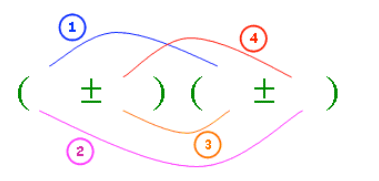
- First: Multiply the first terms in each bracket.
- Outer: Multiply the outer terms.
- Inner: Multiply the inner terms.
- Last: Multiply the last terms in each bracket. The order in which you multiply is important to ensure that no terms are missed.
Note
Remember to include the signs in front of the numbers you are multiplying ()
Worked Examples
Note
Example 1: Expand
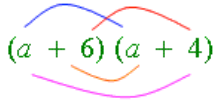
Step 1: First
- Multiply the first terms in each bracket:
Step 2: Outer
- Multiply the outer terms:
Step 3: Inner
- Multiply the inner terms:
Step 4: Last
- Multiply the last terms in each bracket:
Combine the results:
- Now, add up all the terms you've obtained:
Step 5: Simplify the Expression
- Combine the like terms (the terms with the same variable):
Final Answer:
Note
Example 2: Expand
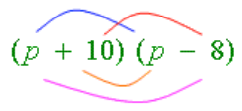
Step 1: First
- Multiply the first terms in each bracket:
Step 2: Outer
- Multiply the outer terms: (Tip: Be careful with negatives!)
Step 3: Inner
- Multiply the inner terms:
Step 4: Last
- Multiply the last terms in each bracket:
Combine the results:
- Now, add up all the terms you've obtained:
Step 5: Simplify the Expression
- Combine the like terms:
Final Answer:
Note
Example 3: Expand
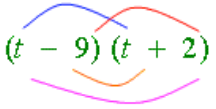
Step 1: First
- Multiply the first terms in each bracket:
Step 2: Outer
- Multiply the outer terms:
Step 3: Inner
- Multiply the inner terms: (Tip: Be careful with negatives!)
Step 4: Last
- Multiply the last terms in each bracket:
Combine the results:
- Now, add up all the terms you've obtained:
Step 5: Simplify the Expression
- Combine the like terms (the terms with the same variable):
Final Answer:
Note
Example 4: Expand
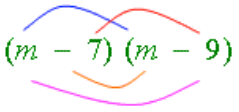
Step 1: First
- Multiply the first terms in each bracket:
Step 2: Outer
- Multiply the outer terms: (Tip: Be careful with negatives!)
Step 3: Inner
- Multiply the inner terms:
Step 4: Last
- Multiply the last terms in each bracket:
Combine the results:
- Now, add up all the terms you've obtained:
Step 5: Simplify the Expression
- Combine the like terms:
Final Answer:
Stop and reflect:
When expanding double brackets, it's important to notice patterns that can make the process quicker and easier. Let's review the examples we've covered and see if we can identify any shortcuts or patterns in the answers.
Note
Worked Examples
Notice the Patterns:
The first term of the expanded expression () is always the square of the first term in each bracket.
The middle term (e.g., ) comes from adding the products of the outer and inner terms.
The last term (e.g., ) is the product of the last terms in each bracket.
Note
Example 5: Expand
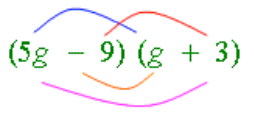
Step 1: First
- Multiply the first terms in each bracket:
Step 2: Outer
- Multiply the outer terms:
Step 3: Inner
- Multiply the inner terms: (Tip: Be careful with negatives!)
Step 4: Last
- Multiply the last terms in each bracket:
Combine the results:
- Now, add up all the terms you've obtained:
Step 5: Simplify the Expression
- Combine the like terms (the terms with the same variable):
Final Answer:
Note
Example 6: Expand
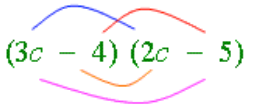
Step 1: First
- Multiply the first terms in each bracket:
Step 2: Outer
- Multiply the outer terms: (Tip: Be careful with negatives!)
Step 3: Inner
- Multiply the inner terms: (Tip: Be careful with negatives!)
Step 4: Last
- Multiply the last terms in each bracket:
Combine the results:
- Now, add up all the terms you've obtained:
Step 5: Simplify the Expression
- Combine the like terms:
Final Answer:
Note
Example 7: Expand
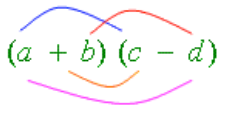
Step 1: First
- Multiply the first terms in each bracket:
Step 2: Outer
- Multiply the outer terms: (Tip: Be careful with negatives!)
Step 3: Inner
- Multiply the inner terms:
Step 4: Last
- Multiply the last terms in each bracket: (Tip: Be careful with negatives!)
Combine the results:
- Now, add up all the terms you've obtained:
Can We Simplify?
- No, because there are no like terms to combine. Final Answer:
Note
Example 8: Expand
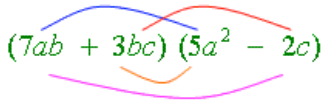
Step 1: First
- Multiply the first terms in each bracket:
Step 2: Outer
- Multiply the outer terms: (Tip: Be careful with negatives!)
Step 3: Inner
- Multiply the inner terms:
Step 4: Last
- Multiply the last terms in each bracket: (Tip: Be careful with negatives!)
Combine the results:
- Now, add up all the terms you've obtained:
Can We Simplify?
- No, because there are no like terms to combine. Final Answer:
Common Mistake
Many students incorrectly assume that squaring a binomial like ( simply results in . However, this is incorrect because it neglects the middle term that arises from the FOIL method.
Worked Example
Note
Example: Expand
Step 1: Rewrite the Expression
- Recognise that squaring means multiplying the binomial by itself:
Step 2: Apply the FOIL Method
- First: Multiply the first terms in each bracket:
- Outer: Multiply the outer terms:
- Inner: Multiply the inner terms:
- Last: Multiply the last terms:
Combine the results:
- Now, add up all the terms you've obtained:
Step 3: Simplify the Expression
- Combine the like terms (the terms with the same variable):
Final Answer: