Required Practical: Investigating Insulation (OCR GCSE Physics A (Gateway Science Suite)): Revision Notes
📚Revision Notes
1.1.13 Required Practical: Investigating Insulation
Required Practical – Insulation
Note
You need to be familiar with the practical method used to investigate the effectiveness of insulating materials.
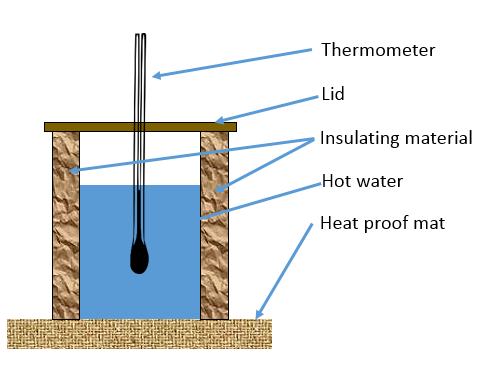
- Hot water is placed in a container with a thermometer
- Insulating material is wrapped around the container
- The type of material, or different thicknesses of a particular material can be investigated
- The temperature is recorded over a period of time.
- The temperature change for different materials/thicknesses can be compared
Potential errors in this investigation include:
- Different starting temperatures of water can lead to different rates of heat loss each time
- Heat can be lost through the top/bottom of the container
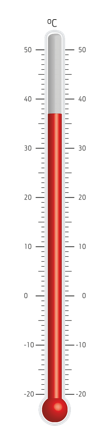
- Random error can occur when reading the thermometer
Specific Heat Capacity
The temperature change of a substance depends on the following factors:
- The amount of thermal energy supplied
- The mass of the substance
- What the substance is
Note
Different substances absorb thermal energy at different rates.
Note
The specific heat capacity of a substance is the energy needed to raise the temperature of 1kg of the substance by 1°C
= energy transferred (J)
= mass (kg)
= specific heat capacity (J/kg°C)
= temperature change (°C)
(you will be given this equation on an equation sheet in the exam)
Note
Worked Example 0.15 kg of ice cream mixture was cooled from room temperature (20 °C) to 0°C. This required 6000 J of energy. What is the specific heat capacity of this ice cream?
Rearrange:
c = 6000 ÷ (0.15x20)
c = 2000 J/kg°C
Storage Heater
Note
A storage heater uses electricity at night (when it is cheaper) to heat bricks or concrete blocks inside the heater.