Christianity Key Beliefs: The Nature of God (OCR GCSE Religious Studies): Revision Notes
📚Revision Notes
1.1.3 The Trinity
The Concept of the Trinity
Note
Christians believe in one God who exists in three distinct parts or 'persons': the Father, the Son, and the Holy Spirit. This understanding of God as three-in-one is known as the Trinity.
Biblical Foundations and Ceremonial Importance
- The Trinity is alluded to in the Book of Genesis during the creation story, indicating the presence of the Father, Son, and Holy Spirit.
- Today, the Trinity is referenced in many Christian ceremonies and is a central tenet of Christian faith.
The Nicene Creed
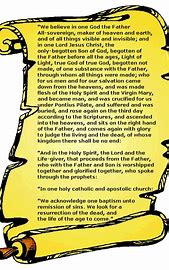
The Nicene Creed, a statement of Christian faith adopted in AD 325 at the Council of Nicaea, succinctly outlines the belief in the Trinity:
"We believe in one God, the Father, the Almighty, maker of heaven and earth. ... We believe in one Lord, Jesus Christ, the only Son of God ... of one Being with the Father ... [who] was made man ... he suffered death and ... he rose again. ... We believe in the Holy Spirit ... the giver of life, who proceeds from the Father and the Son ... who has spoken through the prophets."
Statement
1. God the Father
- Christians believe that God the Father is the creator and sustainer of everything.
- He is transcendent, meaning He exists beyond and independent from the physical universe.
- The Father is seen as the source of all life and the ultimate authority.
2. God the Son
- The Son, Jesus Christ, is believed to be both fully divine and fully human.
- He is considered immanent, meaning he is present and active in the world.
- Jesus is seen as personal and understanding of human suffering.
- He serves as a model for Christian behaviour and is recognised as the Saviour.
Note
The Gospel of John emphasises that Jesus has always been God's Son:
"In the beginning was the Word, and the Word was with God, and the Word was God. He was with God in the beginning. Through him all things were made; without him nothing was made that has been made." (John 1:1-3).
St Paul also described Jesus as having "equality with God" (Philippians 2:6).
3. God the Holy Spirit
- The Holy Spirit is considered the guiding and empowering presence of God in the world today.
- The Holy Spirit is depicted in various forms in the scriptures, such as wind, fire, or a dove, symbolising God's active presence.
The Gospel of John states, "I will ask the Father, and he will give you another advocate to help you and be with you forever - the Spirit of truth" (John 14:16-17).
Note
The Holy Spirit is believed to provide strength, courage, and wisdom, guiding Christians and the Church.
Holy Spirit
The Holy Spirit in the Nicene Creed
Note
The Nicene Creed originally stated belief in "the Holy Spirit which comes from the Father". This was modified in 381 CE at the Council of Constantinople to "the Holy Spirit which comes from the Father and the Son". This alteration contributed to the split between the Roman Catholic Church in the West and the Eastern Orthodox Church in 1054 CE.
The Problem of Evil
Note
Christians grapple with the existence of evil and suffering in a world governed by an omnipotent, omniscient, and omnibenevolent God. This dilemma is known as the problem of evil.
Exam Practise
Explain two ways in which belief in the Trinity influences Christians today. [4marks]
Note
The belief in the trinity is the belief that the Father, God is loving so Christians may feel loved and will want to express this love to others. For example, this may be done by giving to charity. The Spirit, God is a source of spiritual strength; so Christians can feel the Spirit at work in their lives. This strengthens and supports them.