Human Rights Instruments (Junior Cert CSPE): Revision Notes
📚Revision Notes
Human Rights Instruments
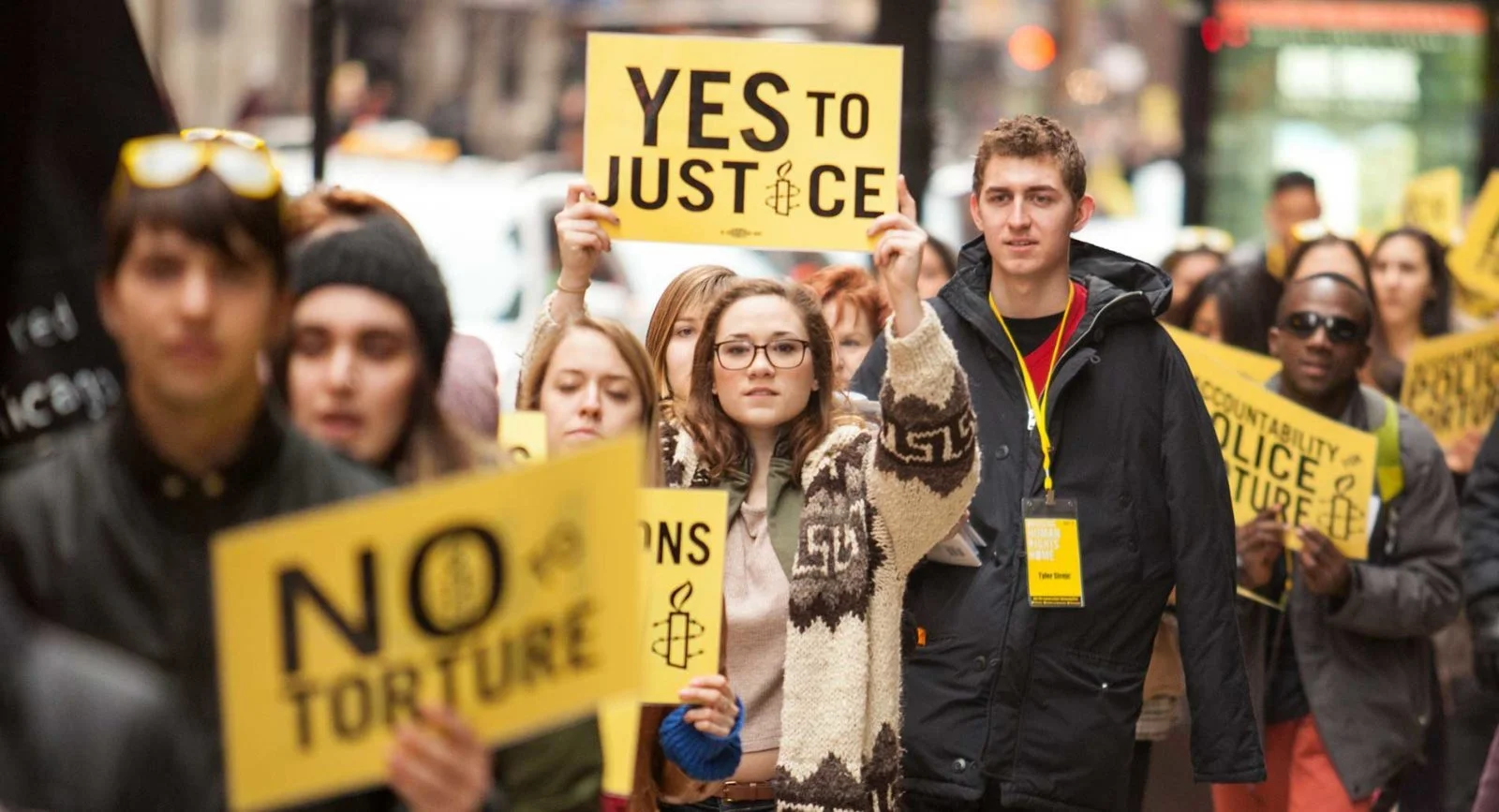
Inspiring human rights defenders
Around the world, brave individuals and organisations work tirelessly to protect people's dignity and fight for justice. These human rights defenders often put themselves at great personal risk to stand up for what's right, and their stories inspire others to take action.
Note
Human rights defenders come from all walks of life - they can be ordinary citizens, lawyers, journalists, teachers, or activists who choose to stand up for justice and human dignity, often facing significant personal risks in the process.
Key examples of human rights defenders
Individual defenders:
- Malala Yousafzai (Pakistan): A young woman who was shot by the Taliban for speaking out about girls' right to education. After recovering, she continued her campaign and won the Nobel Peace Prize in 2014
- Martin Luther King Jr. (USA): Led the Civil Rights Movement, promoting equality and non-violence. His famous "I Have a Dream" speech remains a powerful symbol in the fight against racial discrimination
- Mary Robinson (Ireland): Former Irish President and UN High Commissioner for Human Rights who has campaigned for women's rights, climate justice, and global equality
Organisations:
- Amnesty International: A global NGO (non-governmental organisation) that campaigns against torture, the death penalty, and wrongful imprisonment
Example
Case Study: Malala Yousafzai and education rights
Malala's story perfectly demonstrates how individual courage can create global change:
- In 2012, she was attacked for advocating girls' education in Pakistan
- She survived and became a worldwide voice for education rights
- Her Nobel Peace Prize in 2014 brought international attention to the issue
- Her story highlights the importance of the UNCRC (right to education) and UDHR (equality and freedom of expression)
How human rights developed over time
The concept of human rights didn't appear overnight - it evolved over many centuries through key documents and events.
Note
Understanding the historical development of human rights helps us appreciate how these concepts evolved from limited privileges for a few to universal rights for all humanity.
Important milestones in human rights history
Early foundations:
- 1215 - Magna Carta (England): Limited the king's power and recognised certain rights for citizens
- 1776 - American Declaration of Independence: Declared that "all men are created equal" with rights to "life, liberty, and the pursuit of happiness"
- 1789 - French Declaration of the Rights of Man and Citizen: Established principles of liberty, equality, and fraternity
Modern era:
- 1945 - United Nations founded: Created after World War II to promote peace and human rights
- 1948 - Universal Declaration of Human Rights (UDHR): The first global agreement on human rights
- 1950 - European Convention on Human Rights (ECHR): Provided legal protection for rights across Europe
- 1989 - UN Convention on the Rights of the Child (UNCRC): Gave children special protection and rights
Key international human rights agreements
Three major documents form the foundation of modern human rights protection:
Important
While these three instruments share common goals, they have different legal statuses: the UDHR is not legally binding, the UNCRC is binding on countries that ratify it, and the ECHR is legally binding with enforcement through the European Court of Human Rights.
Universal Declaration of Human Rights (UDHR)
- Adopted: 1948 by the United Nations
- What it does: Sets out 30 basic rights and freedoms for all people (such as the right to life, equality, and freedom of thought)
- Legal status: Not legally binding but hugely influential worldwide
- Significance: First global agreement on human rights
UN Convention on the Rights of the Child (UNCRC)
- Adopted: 1989
- What it covers: Recognises children as having specific rights to education, healthcare, protection from harm, and a voice in decisions affecting them
- Global reach: Ratified by nearly every country, including Ireland
- Importance: Treats children as rights-holders, not just objects of protection
European Convention on Human Rights (ECHR)
- Signed: 1950 by members of the Council of Europe
- Legal power: Legally binding - people can take cases to the European Court of Human Rights in Strasbourg
- Protected rights: Includes free speech, fair trial, privacy, and freedom from torture
Example
Case Study: European Court of Human Rights and press freedom
This case shows how the ECHR works in practise:
- Journalists in countries like Hungary and Turkey faced censorship or arrest for criticising their governments
- They brought cases to the European Court of Human Rights
- The Court ruled in favour of press freedom, protecting Article 10 of the ECHR (freedom of expression)
- This demonstrates how individuals can challenge government abuses at a European level
Different categories of human rights
Human rights cover every aspect of life and can be organised into eight main types:
The eight types of human rights
- Social rights: Access to housing, healthcare, and education
- Cultural rights: Right to participate in cultural life and protect traditions
- Language rights: Right to speak and learn your own language (for example, Irish language rights in Ireland)
- Economic rights: Right to work, fair pay, and safe working conditions
- Civic rights: Freedom of speech and freedom of assembly (the right to protest)
- Religious rights: Freedom to practise or not practise a religion
- Environmental rights: Right to a clean and safe environment
- Political rights: Right to vote, run for election, and participate in government
Note
These eight categories often overlap and interconnect. For example, the right to education (social right) enables people to participate more fully in political life (political rights), while environmental rights affect health and housing (social rights).
Example
Case Study: Traveller community and language rights in Ireland
This example shows how minority rights are protected:
- In 2017, the Irish government officially recognised the Traveller community as an ethnic minority
- Travellers had campaigned for equal treatment in housing, healthcare, and education
- This recognition protects their cultural and language rights, as well as the principle of equality
- It demonstrates how minority groups can successfully advocate for their rights
When rights conflict or are abused
Sometimes different rights can clash, or governments and other groups abuse people's rights.
Important
Rights conflicts are complex and require careful balancing. Courts and governments must weigh different rights against each other, often seeking solutions that protect everyone's fundamental dignity while allowing for reasonable limitations.
Examples of rights conflicts
When one person's rights interfere with another's:
- A protest protects the right to free speech, but it might conflict with others' right to move freely if roads are blocked
Examples of rights abuses
Unfortunately, rights violations still happen worldwide:
- Journalists imprisoned: In some countries, reporters are gaoled for criticising the government (violation of freedom of expression)
- Discrimination against minorities: Refusing housing or jobs to certain groups denies their equality rights
Irish example: Rights conflicts
- Housing debate: The right to housing can sometimes conflict with property owners' and landlords' rights
Example
Case Study: Amnesty International's campaign against the death penalty
This shows how NGOs can influence governments:
- Amnesty has worked for decades to abolish capital punishment
- Many countries (including South Africa, Ireland, and much of Europe) have banned it
- The campaign links to UDHR Article 3 - the right to life
- This demonstrates how NGOs can influence governments and protect human dignity
Everyone's responsibility to defend human rights
Protecting human rights isn't just the government's job - we all share the responsibility to promote and protect these fundamental freedoms.
How you can defend rights in different contexts
In school:
- Stand up against bullying
- Support equality for all classmates
- Treat everyone with dignity and respect
In your community:
- Volunteer for charities
- Campaign on issues like homelessness or climate change
- Support local equality initiatives
Globally:
- Sign petitions for human rights causes
- Support fair trade products
- Raise awareness about rights abuses
Digital responsibility:
- Treat others respectfully online
- Avoid spreading hate or misinformation
- Use social media responsibly
Note
Individual actions, no matter how small they may seem, contribute to a larger culture of respect for human rights. When many people take small positive actions, they can create significant social change.
Example
Case Study: Marriage equality in Ireland (2015)
This example shows citizens using their rights to protect others' rights:
- In a national referendum, Irish citizens voted to allow same-sex marriage
- This reflected the right to equality and non-discrimination
- It showed civic participation in action - citizens using their political rights (voting) to protect others' rights
- It demonstrates how democracy can advance human rights
Reflexion and ongoing learning
Studying human rights helps us understand how interconnected our world is and encourages us to think critically about fairness and justice.
Why human rights education matters
Learning about these issues:
- Shows us how connected everyone's lives are globally
- Encourages us to ask: "What can I do to make my community more just and fair?"
- Helps us recognise both progress (like Ireland's Marriage Equality Referendum in 2015) and ongoing challenges (such as homelessness, racism, and climate crisis)
- Prepares us to become active, informed citizens
The importance of reflexion
As students, continuing to learn and question helps you develop the skills needed to participate fully in society and make positive changes in the world around you.
Note
Human rights education is not just about learning facts and dates - it's about developing critical thinking skills, empathy, and a commitment to justice that will serve you throughout your life as an active member of society.
Summary
Key Points to Remember:
- Human rights defenders like Malala Yousafzai and organisations like Amnesty International inspire others through their courage and dedication
- Human rights developed gradually over centuries, with major milestones including Magna Carta (1215), UDHR (1948), and UNCRC (1989)
- Three key instruments - the UDHR, UNCRC, and ECHR - are vital documents that shape law and protect human dignity across the world
- Eight types of rights cover all aspects of life: social, cultural, language, economic, civic, religious, environmental, and political protections
- Everyone has a responsibility to promote and defend human rights, from school level to global activism, and reflexion helps us understand our role as active citizens