Mechatronics Overview (Junior Cert Engineering): Revision Notes
📚Revision Notes
Mechatronics Overview
What is mechatronics?
Mechatronics is an exciting multidisciplinary field that combines three key areas of engineering: mechanics, electronics, and computing. Think of it as bringing together the best of different engineering worlds to create smarter, more efficient systems.
At its core, mechatronics involves taking mechanical systems (like motors and gears) and combining them with electronic components (like sensors and circuits) and computer programming to create products that can think and act automatically. This integration allows engineers to develop systems that are more functional, precise, and efficient than traditional mechanical-only systems.
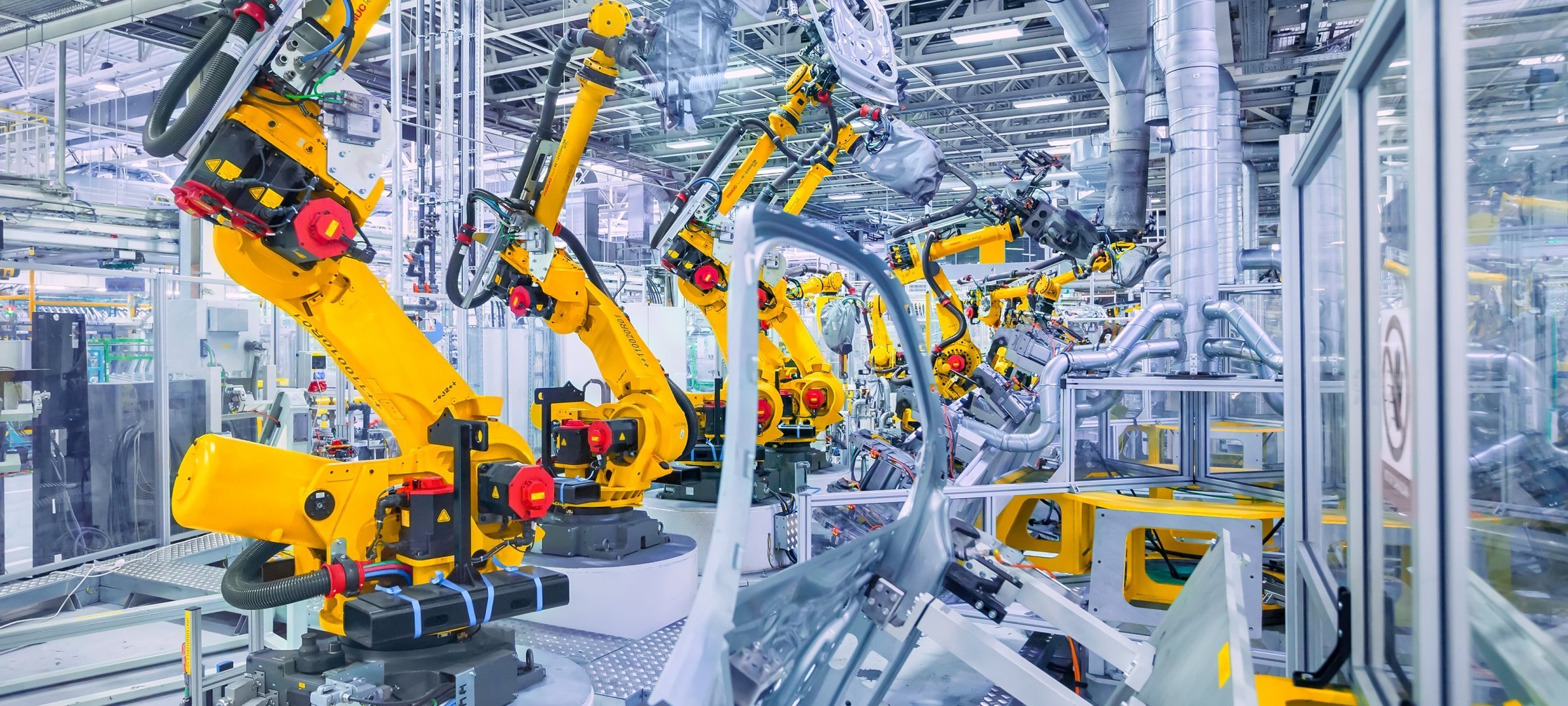
The field focuses heavily on automation - creating systems that can work independently with minimal human intervention. This is essential for modern manufacturing and the development of smart technologies we use every day.
Note
The beauty of mechatronics lies in its integrated approach. Rather than treating mechanical, electronic, and software components as separate systems, mechatronics engineers design them to work seamlessly together from the very beginning of the design process.
Key disciplines in mechatronics
Mechanical engineering
This involves the design and analysis of mechanical components such as:
- Sensors - devices that detect and measure physical properties
- Actuators - components that create movement or action
- Mechanical structures - the physical framework and moving parts
- Examples include robotic arms, automated machinery, and mechanisms in consumer products like cameras with auto-focus systems
Electronics
Electronic components and circuits control and monitor the mechanical parts of a system. Key elements include:
- Sensors that collect data from the environment
- Microcontrollers or microprocessors that process this data and make decisions
- Control circuits that operate actuators
- This might involve circuit design, printed circuit boards (PCBs), and electronic components
Control systems
Control systems use mathematical principles and feedback loops to regulate how mechanical components behave. This ensures:
- Precise system performance
- Stability during operation
- Optimal system efficiency
- The ability to automatically adjust to changing conditions
Important
Feedback loops are fundamental to mechatronic systems. They allow systems to continuously monitor their performance and automatically make corrections, which is what makes modern automated systems so reliable and precise.
Software and programming
Modern mechatronic systems require software to coordinate all components. This includes:
- Writing code for microcontrollers
- Creating user interfaces that people can interact with
- Integrating systems with computer networks
- Developing programmes that control automated processes
Sensors and actuators
These are the "eyes and muscles" of mechatronic systems:
- Sensors gather information about the system's environment (cameras, accelerometers, temperature sensors)
- Actuators take action based on this information (motors, solenoids, mechanisms that create movement)
Example
Real-World Example: Automatic Car Parking System
Step 1: Sensors detect the environment
- Ultrasonic sensors measure distances to nearby objects
- Cameras provide visual feedback of parking space
Step 2: Control system processes the information
- Microcontroller calculates optimal parking path
- System determines steering angles and speeds needed
Step 3: Actuators execute the parking manoeuvre
- Electric motors control steering wheel movement
- Brake and throttle actuators control vehicle speed
This demonstrates how all mechatronic disciplines work together in a single system.
Integration and teamwork
Mechatronics requires a collaborative approach, bringing together experts from different engineering disciplines. Professionals must understand and bridge the gaps between mechanical, electrical, and software engineering to create cohesive systems.
What do mechatronics professionals do?
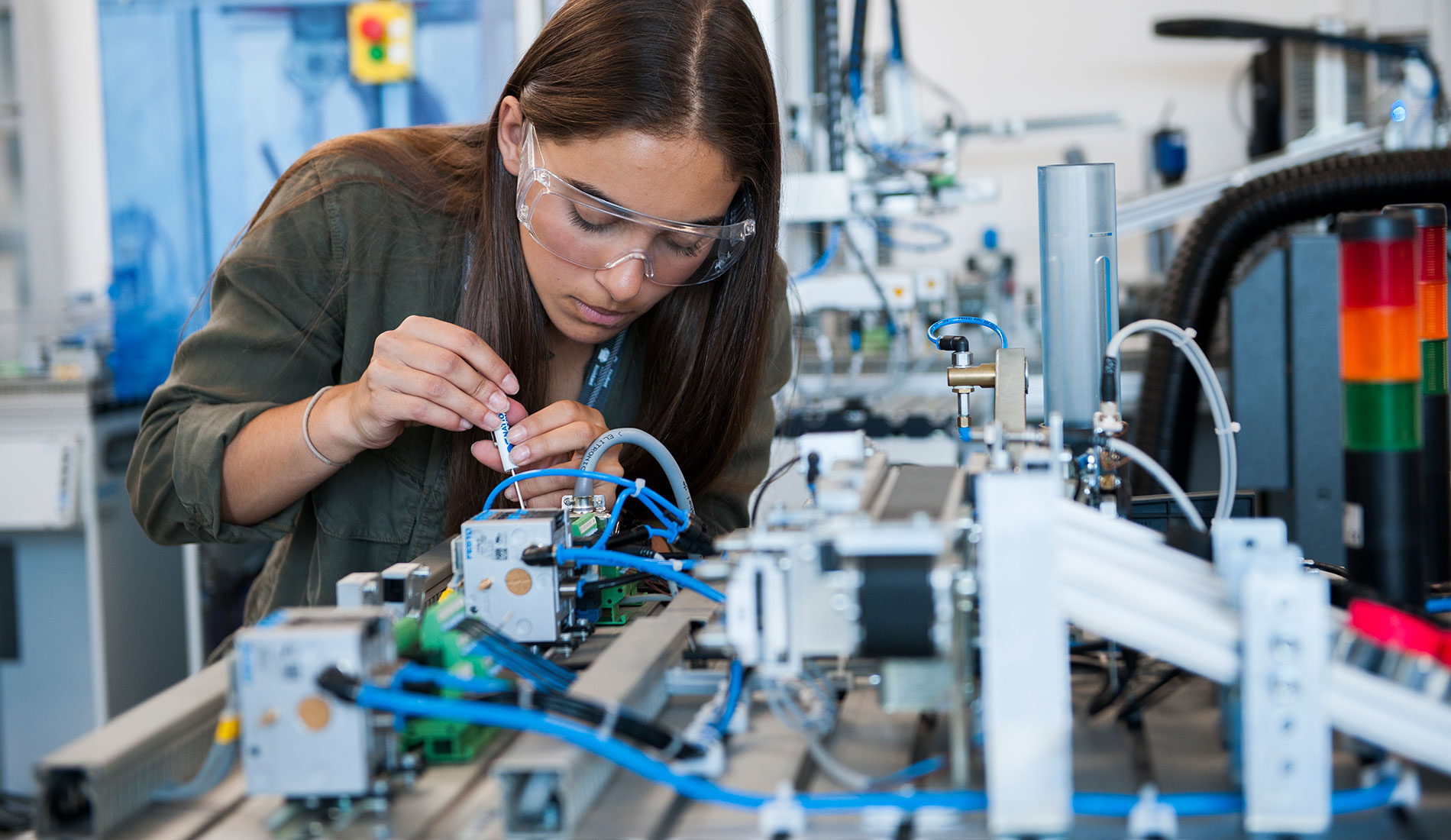
Mechatronics specialists work across multiple engineering disciplines and have a solid foundation in both mechanical and electrical engineering fundamentals. This broad knowledge base allows them to communicate effectively with different engineering teams.
Typical work includes:
- Designing and developing automated industrial systems
- Working with robotics ranging from massive industrial robots to smaller robots for precise operations
- Creating control systems for manufacturing processes like bottling and packaging
- Developing drone technology and control systems
- Designing automated systems for amusement park rides
- Building prototype systems and testing new technologies
Industries where mechatronics professionals work:
- Manufacturing - designing and maintaining automated production equipment
- Robotics - developing robotic systems for various applications
- Automotive - creating smart vehicle systems and automated manufacturing processes
- Aerospace - working on aircraft systems and space technology
- Mining and extraction - developing automated equipment for dangerous environments
- Healthcare - creating medical devices and automated diagnostic equipment
- Consumer electronics - developing smart appliances and electronic devices
Note
The versatility of mechatronics skills means professionals can often transition between different industries throughout their careers, as the fundamental principles of integrating mechanical, electronic, and software systems apply across many sectors.
Career opportunities and job titles
Mechatronics opens doors to many exciting career paths. Common job titles include:
- Automotive Engineer - designing vehicle systems and manufacturing processes
- Control System Engineer - developing automated control systems
- Data Logging Engineer - managing system data collection and analysis
- Instrumentation Engineer - designing measurement and monitoring equipment
- Project Engineer - managing engineering projects from concept to completion
- Software Engineer - developing software for mechatronic systems
- Systems Engineer - integrating different system components
- Service Engineer - maintaining and troubleshooting complex systems
Essential skills for mechatronics specialists
Technical skills
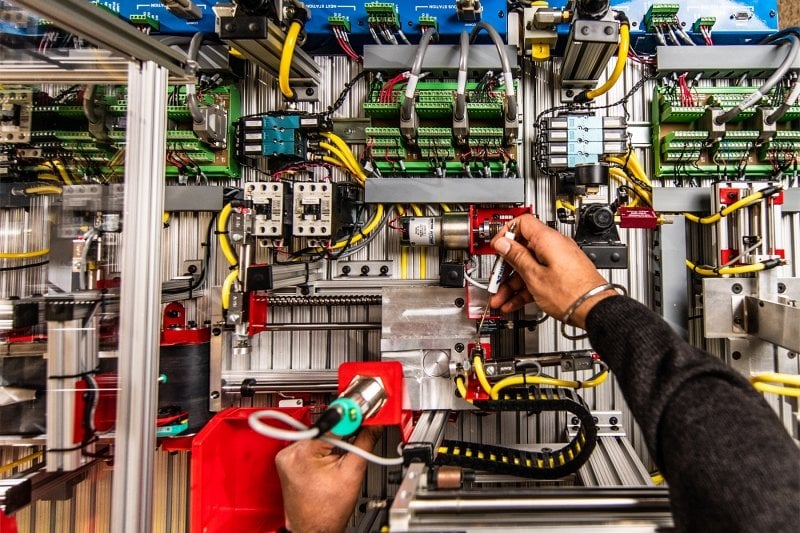
Mechatronics professionals need broad multidisciplinary skills, making them versatile and able to work across traditional engineering boundaries.
Key technical abilities include:
- Creative problem-solving - finding innovative solutions to complex challenges
- Computer-Aided Design (CAD) - using software for modelling, simulating, and analysing engineering systems
- Understanding of mechanical, electronic, and software engineering principles
- Ability to work with complex systems that integrate multiple technologies
Important
The breadth of skills required in mechatronics means that professionals must be lifelong learners, continuously updating their knowledge as technology evolves. However, this also makes mechatronics specialists highly valuable in the job market.
Personal skills
- Teamwork - collaborating effectively with diverse engineering teams
- Communication - explaining technical concepts to colleagues from different disciplines
- Analytical thinking - breaking down complex problems into manageable parts
- Adaptability - working with rapidly evolving technology
Applications and real-world examples
Mechatronics systems are found everywhere in modern life:
Manufacturing and industry
- Industrial automation - automated production lines that can manufacture products with minimal human intervention
- Quality control systems - automated inspection and testing equipment
- Material handling - robotic systems that move and sort materials
Consumer products
- Smart appliances - washing machines, dishwashers with automated programmes
- Automotive systems - anti-lock braking systems, automatic parking assistance
- Mobile devices - smartphones with automatic screen rotation and camera focus
Specialised applications
- Medical devices - automated diagnostic equipment and robotic surgical tools
- Transportation - automated train systems and traffic management
- Entertainment - automated rides and interactive displays
Example
Real-World Application: Smart Washing Machine
Mechanical components: Drum, motor, pumps, and valves Electronic components: Sensors for water level, temperature, and load weight Software: Programmes that select wash cycles and adjust timing Integration: The software uses sensor data to automatically adjust water levels, temperature, and cycle duration for optimal cleaning while minimising water and energy consumption.
This everyday appliance demonstrates how mechatronics creates smarter, more efficient systems.
Innovation and future trends
Mechatronics plays a crucial role in advancing technology by developing smarter and more capable machines. The field focuses on:
- Automation advancement - making systems more independent and efficient
- Smart technology integration - connecting systems to networks and the internet
- Sustainable solutions - creating more energy-efficient automated systems
- Industry 4.0 - the next generation of smart manufacturing
The field continues to evolve rapidly as new technologies emerge, making it an exciting area for future engineers to explore.
Note
Emerging technologies like artificial intelligence, machine learning, and the Internet of Things (IoT) are creating new possibilities for mechatronic systems, leading to even smarter and more autonomous machines.
Remember!
Summary
Key Points to Remember:
- Mechatronics combines three key areas: mechanics, electronics, and computing to create smart, automated systems
- It's highly multidisciplinary: requiring knowledge across mechanical, electrical, and software engineering
- Applications are everywhere: from industrial robots to smartphone features, mechatronic systems are part of daily life
- Career opportunities are diverse: spanning multiple industries from automotive to healthcare
- Key skills include: creative problem-solving, teamwork, CAD software proficiency, and strong communication abilities
- The field focuses on automation: creating systems that can work independently and efficiently with minimal human intervention