Text Messages & Online Chats (Junior Cert French): Revision Notes
📚Revision Notes
Text Messages & Online Chats
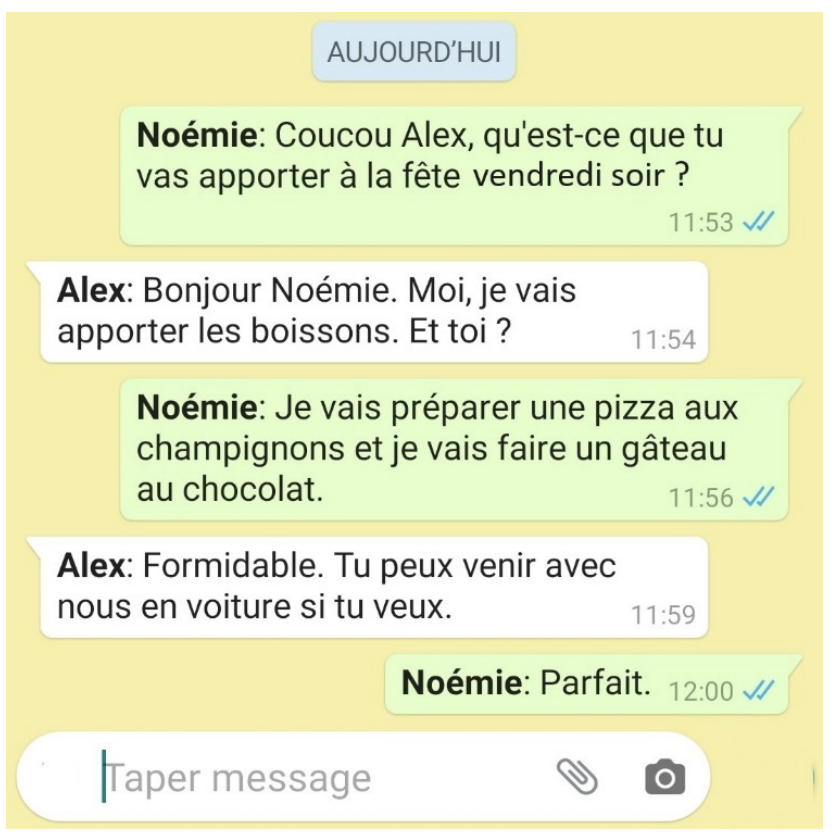
Text messages and online chats are informal digital communications that appear frequently in Junior Cycle French reading tasks. These texts reflect how young French speakers communicate in everyday situations, featuring casual language, abbreviations, and conversational tone. Understanding these communications requires familiarity with informal French expressions and common abbreviations used in digital conversations.
Note
Understanding the Context
These digital communications represent authentic French usage among young people. Unlike formal written French, text messages and chats prioritise speed and informality, leading to unique vocabulary and grammar patterns that you'll need to recognise for exam success.
What to expect in exams
In Junior Cycle French reading assessments, you'll encounter text messages or chat conversations between friends, family members, or acquaintances. These typically involve making arrangements, sharing opinions, or casual conversations about daily activities. The informal register includes shortened words, slang expressions, and relaxed grammar that differs from formal written French.
Important
Key Difference: Informal vs Formal Register
Text messages use informal French that breaks many standard grammar rules. Expect shortened words, missing articles, and casual expressions that would be inappropriate in formal writing. This informal register is completely normal in digital communication contexts.
Vocabulary bank
| French | English |
|---|---|
| SMS / texto | text message |
| tchatter / discuter en ligne | to chat / to talk online |
| un message / un mot | a message / a note |
| salut / coucou | hi / hey |
| bisous / bises | kisses (informal goodbye) |
| à plus / à plus tard (A+) | see you later |
| mdr (mort de rire) | lol (literally: dying of laughter) |
| stp / svp | please (informal / formal) |
| rdv (rendez-vous) | meeting / appointment |
| je t'appelle / rappelle | I'll call you / call back |
| dispo (disponible) | available |
| occupé(e) | busy |
| ce soir / demain / tout de suite | this evening / tomorrow / right now |
| oui / non / peut-être | yes / no / maybe |
Phrase bank
| French | English |
|---|---|
| Salut, tu viens au rdv demain ? | Hi, are you coming to the meeting tomorrow? |
| Désolé, je ne suis pas dispo ce soir | Sorry, I'm not available this evening |
| On se voit à 18h au café ? | Shall we meet at 6pm at the café? |
| Mdr, ce film était trop nul ! | Lol, that film was really rubbish! |
| Je t'appelle plus tard | I'll call you later |
| Tu es libre maintenant ? | Are you free now? |
| À plus ! Bisous | See you later! Kisses |
Common subjects in texts and chats
French text messages and online chats typically focus on several key areas:
Making plans involves arranging meetings, discussing times, and choosing locations for social activities. Checking availability means asking whether someone is free or busy at particular times. Casual updates include sharing what someone is doing at the moment or discussing recent events. Opinion sharing covers thoughts about films, music, school, or daily happenings. Finally, these communications often include short greetings and informal goodbyes that maintain social connections.
Note
Most Common Topics
The majority of text message questions in exams focus on practical arrangements - when, where, and with whom people are meeting. Pay special attention to time expressions and availability statements as these often provide direct answers to comprehension questions.
Types of exam questions
Reading comprehension questions about text messages and chats typically focus on key information within the conversation. You might be asked to identify who is sending or receiving the message, determining the relationship between the speakers. Questions often focus on timing, asking when people are planning to meet or when events will happen. Location questions require you to identify where meetings or activities will take place. You may need to explain why someone cannot attend an event or participate in plans. Opinion questions ask you to identify what someone thinks about a particular topic, film, or situation discussed in the conversation.
Example
Typical Exam Question Pattern
Question: "Quand est-ce que Marie et Tom vont se rencontrer?" (When are Marie and Tom going to meet?)
Text extract: "Salut Tom ! Tu es dispo demain soir à 19h ?"
Answer: The time expression "demain soir à 19h" directly answers the question - tomorrow evening at 7pm.
False friends and common confusions
Several French words in text messages can create confusion for English speakers, and recognising these potential traps is crucial for exam success.
Important
Watch Out for These Common Traps!
- rdv stands for "rendez-vous," meaning any meeting or appointment, not just romantic encounters.
- Bises or bisous simply mean "kisses" as a friendly sign-off, similar to "love" in English messages, rather than literal kisses
- Occupé means busy with tasks or activities, not necessarily physically occupied like a seat
- Actuellement means "currently" or "at the moment," not "actually" as English speakers might assume
- Demain means tomorrow, which differs from dimanche (Sunday), a common confusion for beginners
Remember that abbreviations like mdr, stp, and A+ appear frequently in informal French digital communication, so learning these common shortened forms will help you understand the messages more easily.
Strategies and tips
When reading French text messages and online chats, developing effective reading strategies will significantly improve your comprehension and exam performance.
Note
Essential Reading Strategies
Focus on abbreviations: Expect to encounter abbreviations throughout the conversation. Learn common shortened forms like rdv, mdr, and stp as these appear regularly in informal digital communication.
Pay attention to time expressions: Words such as ce soir, demain, and à 18h often provide direct answers to comprehension questions about when events will occur.
Identify the conversation purpose: Check whether the message focuses on making plans or cancelling arrangements, as this affects the overall meaning of the conversation.
Notice any excuses mentioned, such as je ne suis pas dispo or je dois travailler, which explain why someone cannot participate in activities.
Keep the informal tone in mind when reading these texts. Short sentences, casual language, and relaxed closings are normal features of French digital communication. Focus on understanding the main purpose of the conversation, whether the speakers are arranging something, sharing information, or simply reacting to news or events.
Important
Avoid These Common Student Errors
- Confusing rdv with romantic meetings only
- Misunderstanding bises as literal kisses
- Mixing up demain (tomorrow) with dimanche (Sunday)
- Assuming actuellement means "actually" instead of "currently"
Avoid these mistakes by learning the precise meanings of these frequently used terms in their casual communication context.
Summary
Key Points to Remember
- Text messages and online chats use informal French with many abbreviations and casual expressions
- Focus on time words like "ce soir" and "demain" as these often answer exam questions directly
- Learn common abbreviations: rdv = meeting, mdr = lol, stp = please, A+ = see you later
- These conversations typically involve making plans, checking availability, sharing opinions, or casual updates
- Watch out for false friends like actuellement (currently, not actually) and understand that bises is just a friendly sign-off