Where You Live (Junior Cert French): Revision Notes
📚Revision Notes
Weather
| French | English |
|---|---|
| le temps | the weather |
| la météo | the weather forecast |
| il fait beau | it's nice weather |
| il fait mauvais | it's bad weather |
| il fait chaud | it's hot |
| il fait froid | it's cold |
| il fait frais | it's cool |
| il fait humide | it's humid |
| il y a du soleil | it's sunny |
| il y a des nuages | it's cloudy |
| il y a du brouillard | it's foggy |
| il y a du vent | it's windy |
| il y a de la pluie | it's raining |
| il pleut | it's raining |
| il neige | it's snowing |
| il y a de la neige | there's snow |
| il grêle | it's hailing |
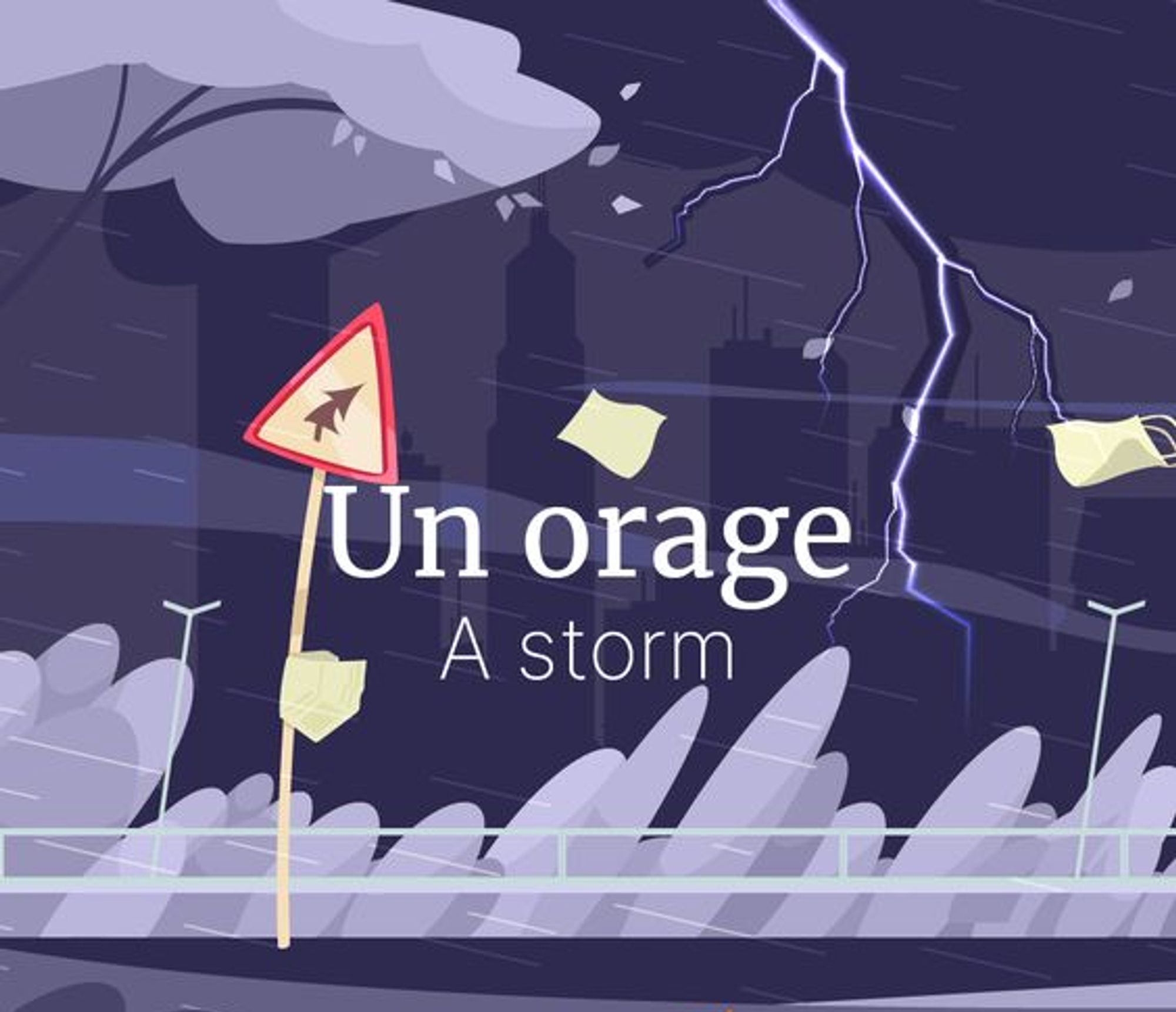
| il y a de l'orage | it's stormy |
| il y a du tonnerre | there's thunder |
| il y a des éclairs | there's lightning |
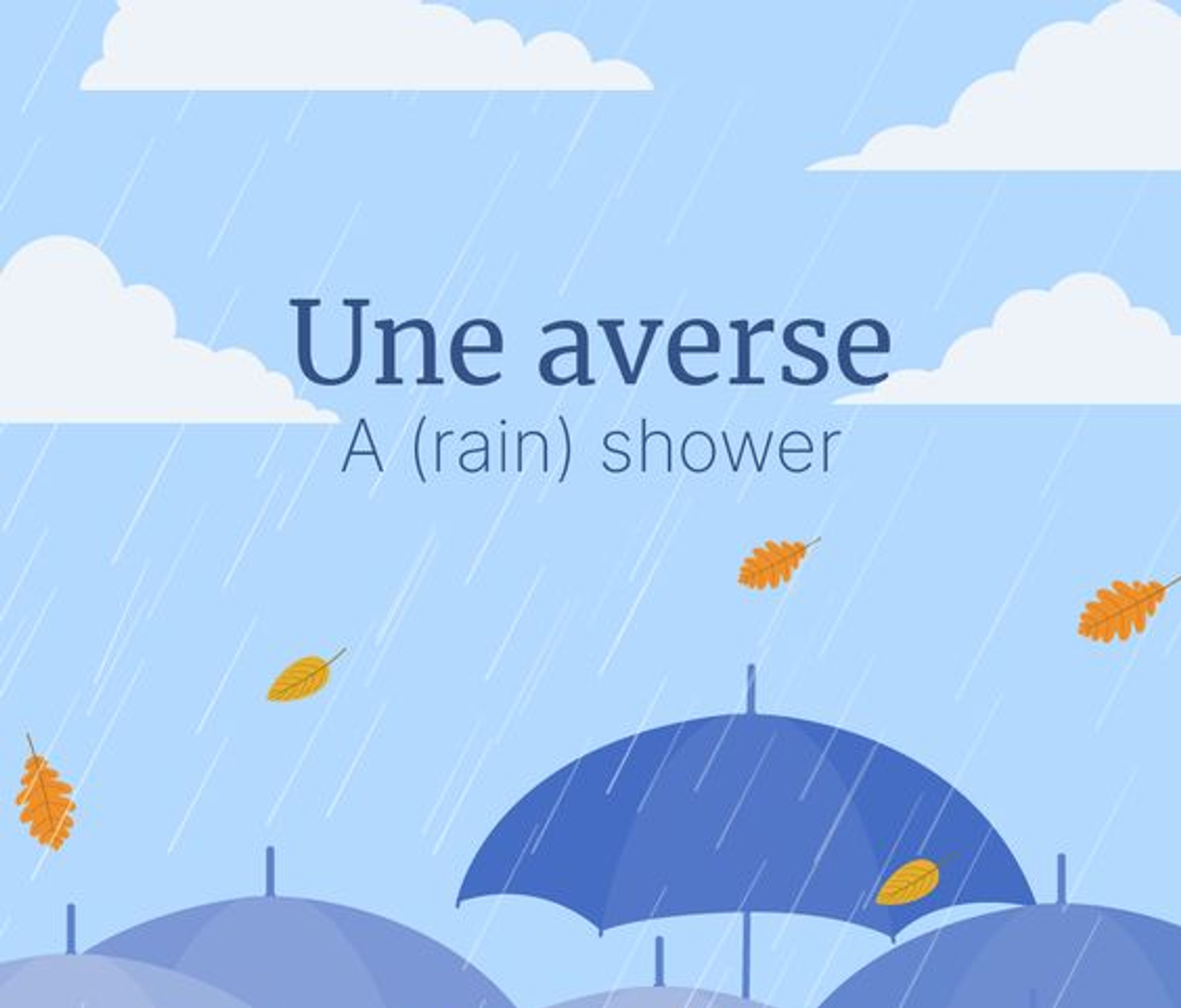
| il y a des averses | it's showery |
| il fait orageux | it's stormy |
| il y a de la brume | it's misty |
| French | English |
|---|---|
| un parapluie | an umbrella |
| des lunettes de soleil | sunglasses |
| de la crème solaire | sunscreen |
| un imperméable | a raincoat |
| un manteau | a coat |
| une écharpe | a scarf |
| des bottes | boots |
| un chapeau | a hat |
| des gants | gloves |
| une casquette | a cap |
| une veste | a jacket |
| un pull | a jumper |
| un maillot de bain | a swimsuit |
| une serviette de plage | a beach towel |
Using 'Il fait' and 'Il y a'
- Il fait: Use "Il fait" when describing general weather conditions such as temperature and overall feel of the weather.
- Il fait chaud. (It's hot.)
- Il fait beau. (It's nice weather.)
- Il y a: Use "Il y a" when describing specific weather phenomena like fog, wind, or rain.
- Il y a du brouillard. (It's foggy.)
- Il y a du vent. (It's windy.)
Using Weather Verbs
- Pleuvoir (to rain): Il pleut (It's raining)
- Neiger (to snow): Il neige (It's snowing)
- Grêler (to hail): Il grêle (It's hailing)
- Geler (to freeze): Il gèle (It's freezing)
Sample Sentences
- En hiver, il fait souvent très froid et il neige beaucoup. - In winter, it's often very cold, and it snows a lot.
- En été, il fait chaud et il y a du soleil presque tous les jours. - In summer, it's hot and sunny almost every day.
- Au printemps, il y a des averses, mais parfois le soleil brille. - In spring, there are showers, but sometimes the sun shines.
- L'automne est souvent gris et il pleut beaucoup. - Autumn is often grey, and it rains a lot.
- Quand il fait beau, j'aime me promener dans le parc. - When the weather is nice, I like walking in the park.
Expressing Opinions about the Weather
- J'adore quand il neige. – "I love it when it snows."
- Ce brouillard givrant est dangereux. – "This freezing fog is dangerous."
- Le temps est trop humide aujourd'hui. – "The weather is too humid today."
- La tempête de neige a été intense. – "The snowstorm was intense."
- Je trouve le vent très fort aujourd'hui. – "I find the wind very strong today."
- Les rafales de vent sont effrayantes. – "The gusts of wind are scary."
- Il y a eu une forte averse de grêle hier. – "There was a heavy hail shower yesterday."
Useful Sentences
- Quel temps fait-il? – What's the weather like?
- Il pleut des cordes. – It's raining heavily. (Literally: It's raining ropes; equivalent to "It's raining cats and dogs.")
- Le ciel est clair. – The sky is clear.
- Il fait un temps de chien. – The weather is terrible.
- Il fait un froid de canard. – It's freezing cold. (Literally: It's a duck's cold.)
- Il fait un soleil de plomb. – It's scorching hot. (Literally: The sun is made of lead.)
- Il y a des éclaircies. – There are sunny intervals/bright spells.
Note
Memory Hack: To remember "canicule," think of "canicule" as the "canine" heat of summer – just like a hot dog in the summer heat!
Note
Exam Tip: Practice talking about the weather not only by describing the current conditions but also by expressing how different weather affects your mood or plans. For example, say how a sunny day makes you want to go outside or how a rainy day might make you feel like staying indoors. This will help you use a broader range of vocabulary and impress the examiner.
Talking About the Weather
En général, j'aime quand il fait beau et qu'il y a du soleil. Quand il fait beau, je peux sortir et me promener dans le parc. En été, il fait souvent chaud, mais parfois il y a des jours de canicule. L'année dernière, il y a eu une canicule en juillet. Il faisait très chaud, et il était difficile de dormir la nuit. Pendant ces journées, je suis resté à l'intérieur et j'ai bu beaucoup d'eau pour rester hydraté. En hiver, en Irlande, il fait souvent froid et humide. Il y a beaucoup de pluie, et parfois il y a du brouillard. J'aime bien l'hiver aussi, surtout quand il neige un peu. C'est rare, mais c'est toujours un moment magique.
In general, I like it when the weather is nice and sunny. When it's nice out, I can go outside and take a walk in the park. In summer, it's often hot, but sometimes there are heatwave days. Last year, there was a heatwave in July. It was very hot, and it was difficult to sleep at night. During those days, I stayed indoors and drank a lot of water to stay hydrated. In winter, in Ireland, it's often cold and damp. There is a lot of rain, and sometimes there is fog. I like winter too, especially when it snows a little. It's rare, but it's always a magical moment.
Scenario:
You are having a conversation with your friend Emma about the weather and what you need to take with you before leaving the house.
Question 1:
Emma: Quel temps fait-il aujourd'hui ?
(What's the weather like today?)
Your Answer:
Il fait beau et il y a du soleil. Je pense que je vais porter des lunettes de soleil et prendre de la crème solaire.
(It's nice weather and it's sunny. I think I'll wear sunglasses and take some sunscreen.)
Question 2:
Emma: Est-ce qu'il pleut aujourd'hui ?
(Is it raining today?)
Your Answer:
Non, il ne pleut pas, mais il fait froid. Je vais porter un pull et peut-être une veste.
(No, it's not raining, but it's cold. I'll wear a jumper and maybe a jacket.)
Question 3:
Emma: Qu'est-ce que tu prends quand il pleut ?
(What do you take when it rains?)
Your Answer:
Quand il pleut, je prends un parapluie et je porte un imperméable.
(When it rains, I take an umbrella and wear a raincoat.)