Earthquakes II (Junior Cert Geography): Revision Notes
📚Revision Notes
Earthquakes II
Note
This section focuses on how humans deal with earthquakes. Earthquakes I focuses on the physical processes associated with earthquakes.
Social Impact of Earthquakes
Earthquakes can have severe social impacts on affected communities, especially depending on the strength of the earthquake and the country's preparedness.
- Loss of life: Many people can die instantly due to collapsing buildings and infrastructure.
- Injuries: Thousands can be injured, ranging from minor cuts to severe injuries needing urgent medical attention.
- Homelessness: A large number of people can be left homeless as buildings are destroyed or unsafe to live in.
- Infrastructure damage: Key services such as water, electricity, and sanitation systems may be disrupted or destroyed, leading to long-term difficulties for survivors.
- Outbreak of diseases: Poor sanitation and overcrowded shelters can lead to the spread of diseases like cholera. In 2010, a 7.0 earthquake in Haiti killed 230,000 people. This shows the damage an earthquake can cause.
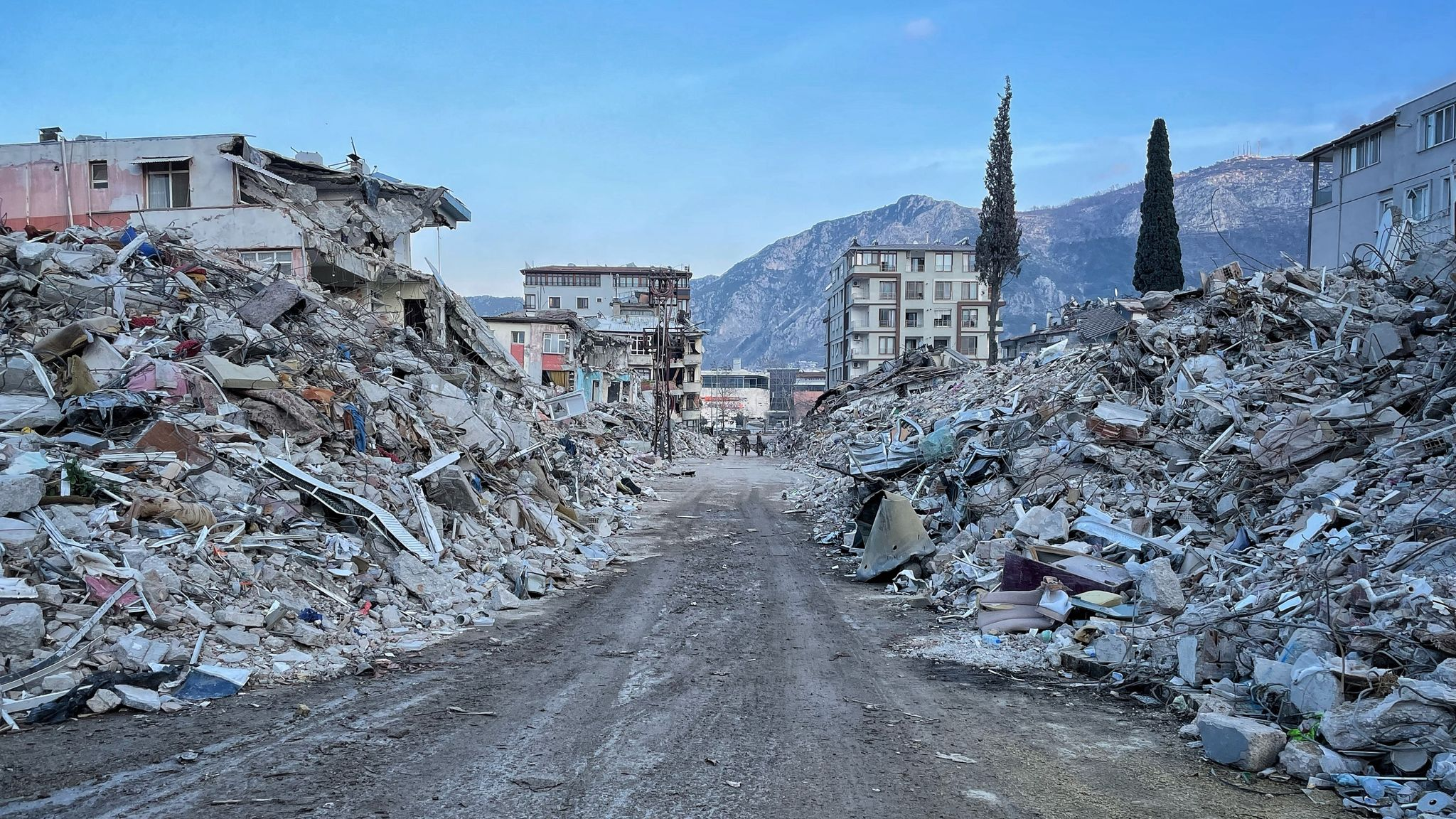
Earthquake damage
Economic Impact of Earthquakes
Earthquakes can cause significant economic damage, both immediately and long-term.
- Infrastructure damage: Key infrastructure like roads, bridges, airports, and telecommunication systems can be destroyed, disrupting transportation and communication.
- Building destruction: Many homes, commercial buildings, and public structures, such as schools and government buildings, may be damaged or completely destroyed.
- Cost of rebuilding: The cost to rebuild and repair infrastructure and buildings can be enormous, requiring years of effort and significant financial resources.
- Aid and recovery costs: Governments and international organisations may need to spend large amounts of money on emergency aid and long-term recovery efforts.
- Impact on economic development: In developing countries, an earthquake can set back economic development for years, making it harder for the country to recover and prepare for future disasters.
Dealing with Earthquakes
Humans may predict, plan and prepare for earthquakes in order to mitigate their impact.
Predicting
- Earthquakes are likely to occur near plate boundaries, but we can't predict when.
- By tracking the time since the last earthquake in an area, we can estimate when another might happen.
- Ground movement is monitored using lasers and other technology to detect early signs of an earthquake.
- The release of radon gas from rocks and unusual animal behaviour can also be warning signs.
- Even though these methods aren't certain, they help people prepare in advance.
Planning
- Governments can reduce the impact of earthquakes by banning construction on fault lines.
- Braces can be added to building corners to make them stronger against shaking.
- In earthquake-prone areas like Japan and Mexico, buildings may have shock absorbers in their foundations to limit the shaking.
- Plastic pipes for water and gas are used to prevent breakage during an earthquake.
- All these features make buildings more earthquake-resistant.
Prepararing
- In Japan, schools teach 'duck, cover and hold' drills so students know how to protect themselves during an earthquake.
- This practice helps reduce injury from falling objects like glass.
- Emergency response services are always ready with search-and-rescue teams to find trapped people after an earthquake.
- Emergency kits, including food, water, and medical supplies, are important to help people survive after an earthquake.