Primary Economic Activities (Junior Cert Geography): Revision Notes
📚Revision Notes
Primary Economic Activities
Primary Activities
Primary activities are jobs that involve using natural resources from the Earth. This includes things like farming, fishing, forestry, and mining. Farming is the most important primary activity in Ireland.
Systems
Systems are important for our study of economic activities. A system is a method of organising tasks to achieve a goal. It is made up of three main parts: inputs, processes, and outputs.
- Inputs: These are the resources or materials needed to start the system. For example, in a car manufacturing plant, inputs would include steel, rubber, and electronic components.
- Processes: These are the actions taken to transform the inputs into something new. In the car manufacturing example, processes would include assembling, welding, and painting.
- Outputs: These are the final products of the system. The output in this case would be the finished cars.
Additional Parts:
- Waste: Materials that can't be reused and are discarded, like scrap metal in the factory.
- By-product: A secondary product that can still be useful, such as leftover materials that can be recycled.
The output of one system can be the input for another. For example, steel from a steel mill becomes the input for the car manufacturing process. Understanding systems helps improve efficiency and allows for problem-solving. It also encourages new ideas for developing products or services by seeing how different parts of a system work together.

Farming
Farming is the activity of growing crops or raising animals for food, raw materials, and other agricultural products.
Types of Farming
- Pastoral Farming: Involves raising animals such as cows, sheep, and goats for products like meat, milk, and wool.
- Tillage/Arable Farming: Focuses on cultivating crops like cereals, vegetables, and other plants that are harvested for food or other uses.
- Mixed Farming: Combines both crop cultivation and animal rearing on the same farm, providing a balanced approach to farming.
- Market Gardening: The specialised and intensive growing of fruits, vegetables, and flowers, often in controlled environments like greenhouses.
- Subsistence Farming: Produces enough food to meet the needs of the farmer's family, with little or no surplus for sale.
- Commercial Farming: Focuses on producing large quantities of crops or livestock to sell in markets for profit.
Farming as a System
- Farm inputs include land, labour, machinery, seeds, animals, fertilisers, pesticides, and water. These resources are essential for starting and maintaining farming activities.
- Farm processes involve ploughing, planting, fertilising, weeding, feeding animals, and harvesting. These activities turn inputs into farm products.
- Farm outputs are crops like grains and vegetables, and animal products like meat, milk, and eggs. By-products like manure are also produced.
Factors which affect Farming
- Climate: Temperature, rainfall, and the length of the growing season are the most important factors. Ireland's mild, wet climate is ideal for grass growth, which supports dairy and beef farming, while the drier south-east is better suited to tillage.
- Relief: The shape of the land influences farming. Steep or upland areas are unsuitable for crops or grazing. In such areas, farmers often plant trees to prevent soil erosion and generate extra income when the trees mature.
- Aspect: The direction a farm faces can affect how much sunlight and rainfall it receives. Farms that face south get more sunlight and moderate rainfall, which supports good grass growth.
- Soil Type: Different soils support different types of farming. Gley soils are heavy and poorly drained, making them unsuitable for tillage, so they are used for grass. Brown soils are well-drained and suitable for crop rotation, while peaty soils are rough and mainly used for grazing sheep or cattle.
- Drainage: Well-drained land is better for crops, while poorly drained land is prone to flooding and is used for less intensive farming activities, such as grazing.
- Floodplains: Flat areas near rivers are often rich in nutrients due to periodic flooding, making them ideal for grazing and growing grass.
The EU and Irish Farming
Irish farming is heavily influenced by the EU's Common Agricultural Policy (CAP). CAP provides farmers with subsidies and direct payments to support their incomes, sets rules around production, and funds environmental schemes that reward farmers for protecting hedgerows, water quality, and biodiversity. Without CAP support, many smaller Irish farms would struggle to remain viable.
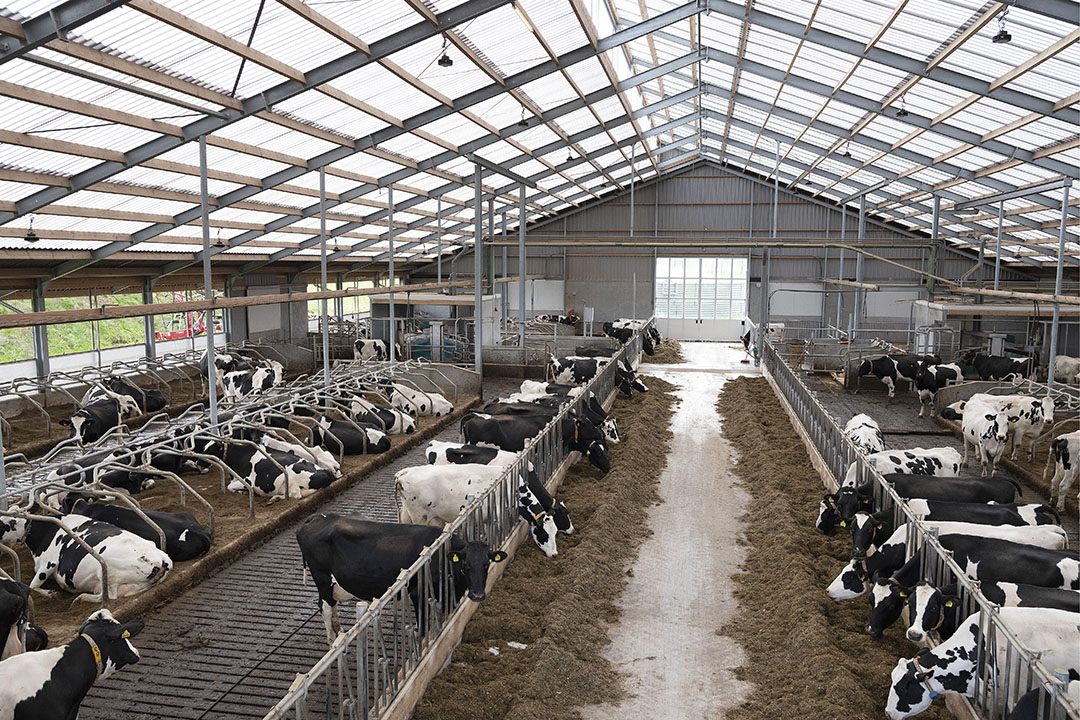
Case Study: A Dairy Farm in Munster
A typical dairy farm in counties like Cork or Tipperary benefits from mild temperatures, high rainfall, and rich brown soils that produce excellent grass. Inputs include cattle, milking machinery, animal feed, and fertiliser. Processes include grazing management, milking twice a day, and reseeding pasture. Outputs include milk (sold to processors like Glanbia/Tirlán), beef from older animals, and slurry as a by-product used to fertilise the land.
Fishing
Fishing is the activity of catching fish and shellfish from the sea, rivers, and lakes for food and other products. Ireland's long coastline and rich fishing grounds make it an important primary activity, especially in coastal counties such as Donegal, Galway, and Cork. Major fishing ports include Killybegs, Castletownbere, and Dunmore East.

Types of Fishing
- Inshore Fishing: Carried out close to the coast using small boats, targeting species like lobster, crab, and mackerel.
- Deep-Sea Fishing: Carried out far from the coast using large trawlers, targeting species like cod, herring, and mackerel.
- Aquaculture (Fish Farming): The farming of fish and shellfish in tanks or sea cages, especially salmon, mussels, and oysters along the west coast.
Fishing as a System
- Inputs: boats, nets, fuel, labour, navigation and sonar equipment, and bait.
- Processes: locating shoals, casting and hauling nets, sorting the catch, and storing it on ice.
- Outputs: fresh and frozen fish, shellfish, and processed products such as fishmeal. By-products include fish oil.
Factors Affecting Fishing
- EU Common Fisheries Policy (CFP): Sets quotas limiting how much of each species can be caught to prevent overfishing.
- Overfishing: Catching fish faster than they can reproduce has reduced stocks of cod and herring.
- Technology: Modern sonar, GPS, and large factory trawlers allow bigger catches but increase pressure on fish stocks.
- Climate Change: Warming seas are shifting where fish species live, affecting traditional Irish fishing grounds.
Forestry
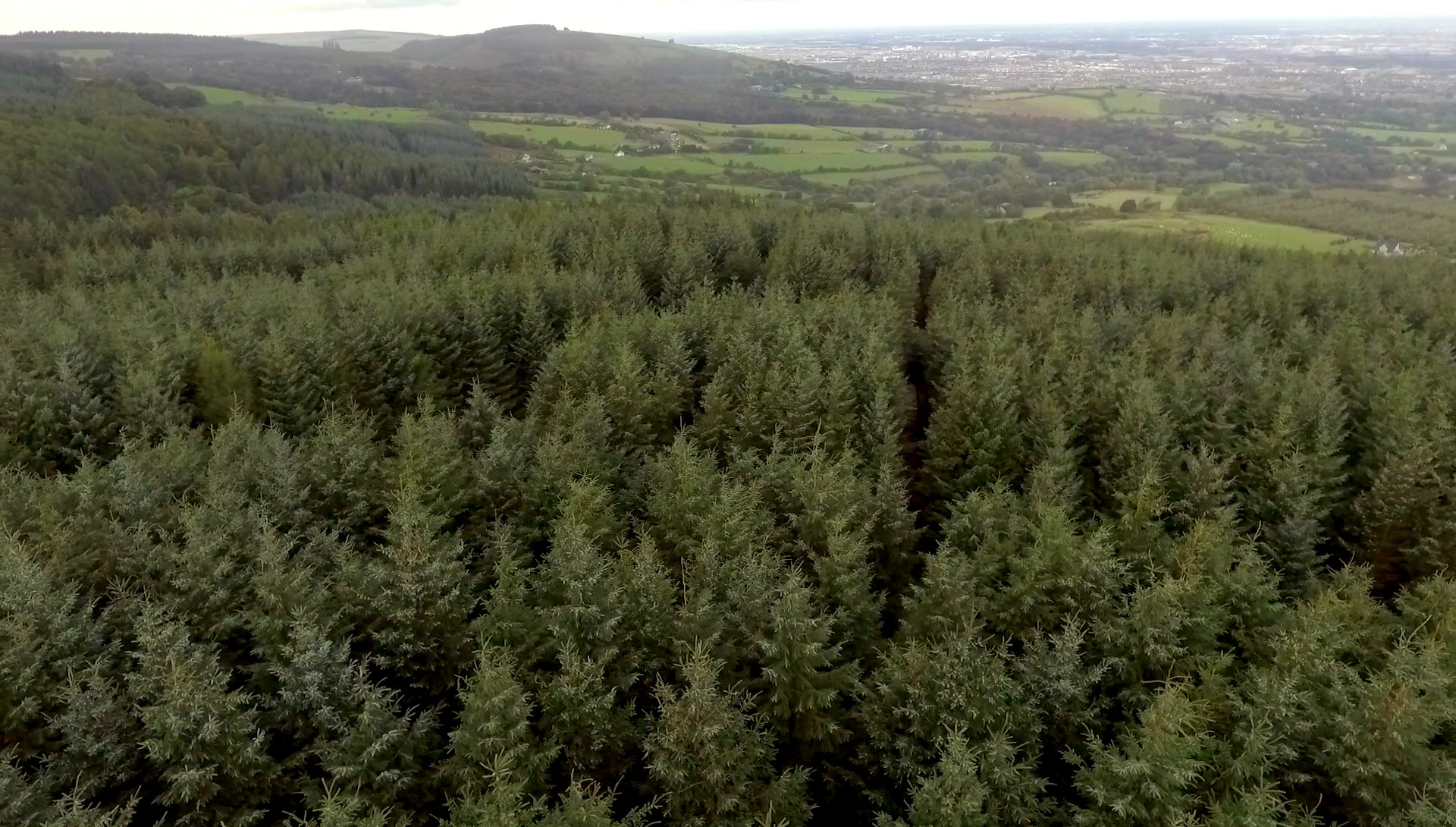
Forestry is the planting, management, and harvesting of trees for timber and other wood products. About 11% of Ireland is covered in forest, which is low by European standards. Most Irish forests are managed by Coillte, a state-owned forestry company.
Types of Forest
- Coniferous (Softwood) Forests: Make up the majority of Irish forestry. Fast-growing species like Sitka spruce are planted because they thrive in Ireland's wet, acidic soils and can be harvested in 30–40 years.
- Deciduous (Hardwood) Forests: Made up of native species like oak, ash, and beech. They grow more slowly but support greater biodiversity.
Forestry as a System
- Inputs: land, saplings, labour, fertiliser, machinery (chainsaws, harvesters), and forest roads.
- Processes: preparing land, planting saplings, thinning, protecting trees from pests and disease, and felling mature trees.
- Outputs: timber for construction, pulp for paper, wood chip for biomass energy, and Christmas trees. By-products include sawdust and bark, often used for animal bedding or garden mulch.
Impact of Forestry
- Environmental: Forests absorb carbon dioxide, reduce flooding, and provide habitats. However, large single-species plantations can reduce biodiversity and increase soil acidity.
- Economic: Forestry provides timber for the construction industry, supports rural jobs, and contributes to exports.
- Social: Forest parks like Avondale and Lough Key provide recreation and support tourism.
Mining and Quarrying
Mining and quarrying involve extracting minerals and rocks from the Earth for use in industry and construction. Ireland has significant mineral resources, particularly zinc and lead, and is one of the largest zinc producers in Europe.
Examples in Ireland
- Tara Mines, Co. Meath: The largest zinc and lead mine in Europe.
- Gypsum, mined in Co. Cavan and Co. Monaghan, is used to make plasterboard.
- Limestone quarries are found across the country and supply material for cement and roads.
Mining as a System
- Inputs: land, mineral deposits, labour, heavy machinery, energy, and explosives.
- Processes: surveying the site, drilling and blasting, extracting and crushing the ore, and processing it to separate the valuable minerals.
- Outputs: refined metals (zinc, lead), construction materials (gypsum, limestone, aggregate). By-products include waste rock and tailings.
Impact of Mining
- Environmental: Mining can cause scarring of the landscape, dust, noise, and water pollution from tailings if not properly managed.
- Economic: Provides well-paid jobs, exports, and raw materials for Irish industries like construction.
- Social: Supports rural communities but can lead to local opposition over noise, traffic, and environmental concerns.
Peat Extraction
Peat is a non-renewable resource that has historically been harvested from bogs in Ireland. It has been used as a fuel and in horticulture and gardening. There are two main types of peat bogs in Ireland: raised bogs found in flat or gently sloping lowlands, especially in the Midlands, and blanket bogs located in upland areas and regions with heavy rainfall, mainly in the West of Ireland. Peat was an important source of energy in Ireland, but its use has now largely ended due to environmental concerns.
Peat Extraction as a System
- Inputs: bogland, labour, specialised machinery, fuel, and drainage equipment.
- Processes: draining, levelling, milling, drying, ridging, and harvesting the peat (see below).
- Outputs: peat briquettes, moss peat for horticulture, and (formerly) fuel for peat-fired power stations.
Extracting Peat
Peat extraction involves several steps using specialised machinery:
- A ditcher digs drains to remove excess water from the bog.
- A grader levels the surface of the bog to prepare it for extraction.
- A miller cuts a thin layer of peat from the surface of the bog.
- A spoon harrow turns the milled peat to allow it to dry.
- A ridger piles the dried peat into ridges for easier collection.
- A harvester gathers the milled peat for processing.
- The harvested peat is then compressed into briquettes for fuel.
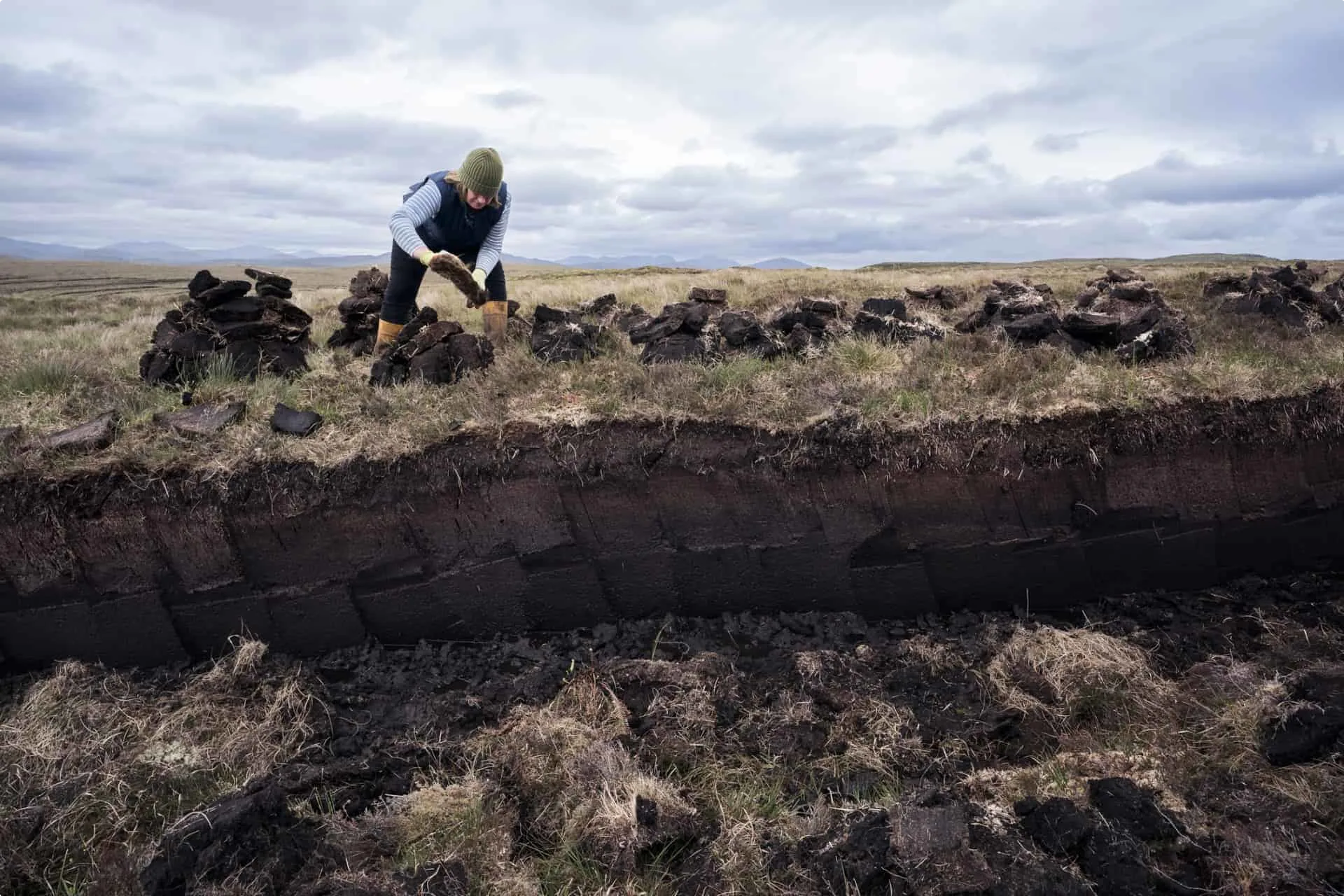
Prior to machinery, peat had to be harvested by hand
Impact of Peat Extraction
- Environmental Impact: Burning peat released large amounts of CO₂ and contributed to acid rain. Bord na Móna is now restoring used bogs into wetlands and eco-parks, which preserves the land, locks in carbon, and promotes tourism.
- Economic Impact: Peat once provided fuel for electricity, products like briquettes, and rural jobs. However, it was less efficient than other fuels. Bord na Móna ended large-scale peat harvesting for electricity in 2020, and briquette production ended in 2024, and the company is now moving into renewable energy and bog restoration.
- Social Impact: Peat harvesting historically created jobs that improved rural living standards and reduced emigration. The end of peat extraction has meant Bord na Móna retraining workers for new "Just Transition" roles in renewables and rehabilitation.