The Atmosphere (Junior Cert Geography): Revision Notes
📚Revision Notes
The Atmosphere
The Atmosphere
The atmosphere is a thin layer of gases around Earth. It acts like a blanket, keeping the planet warm and protecting us from harmful sun rays.
Composition of the Atmosphere
- 78% Nitrogen
- 21% Oxygen
- 1% Other Gases
Layers of the Atmosphere
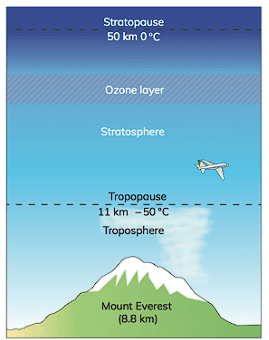
- Troposphere: Lowest layer, up to 11 km high. This is where weather happens and aeroplanes fly. Temperatures drop as you go higher.
- Stratosphere: Above the troposphere, extending to 50 km high. Contains the ozone layer, which protects us from UV radiation. Temperatures rise as you go up.
- Stratopause: Boundary at 50 km high, with a temperature of about 0°C.
Global Wind Patterns
How Winds Are Formed
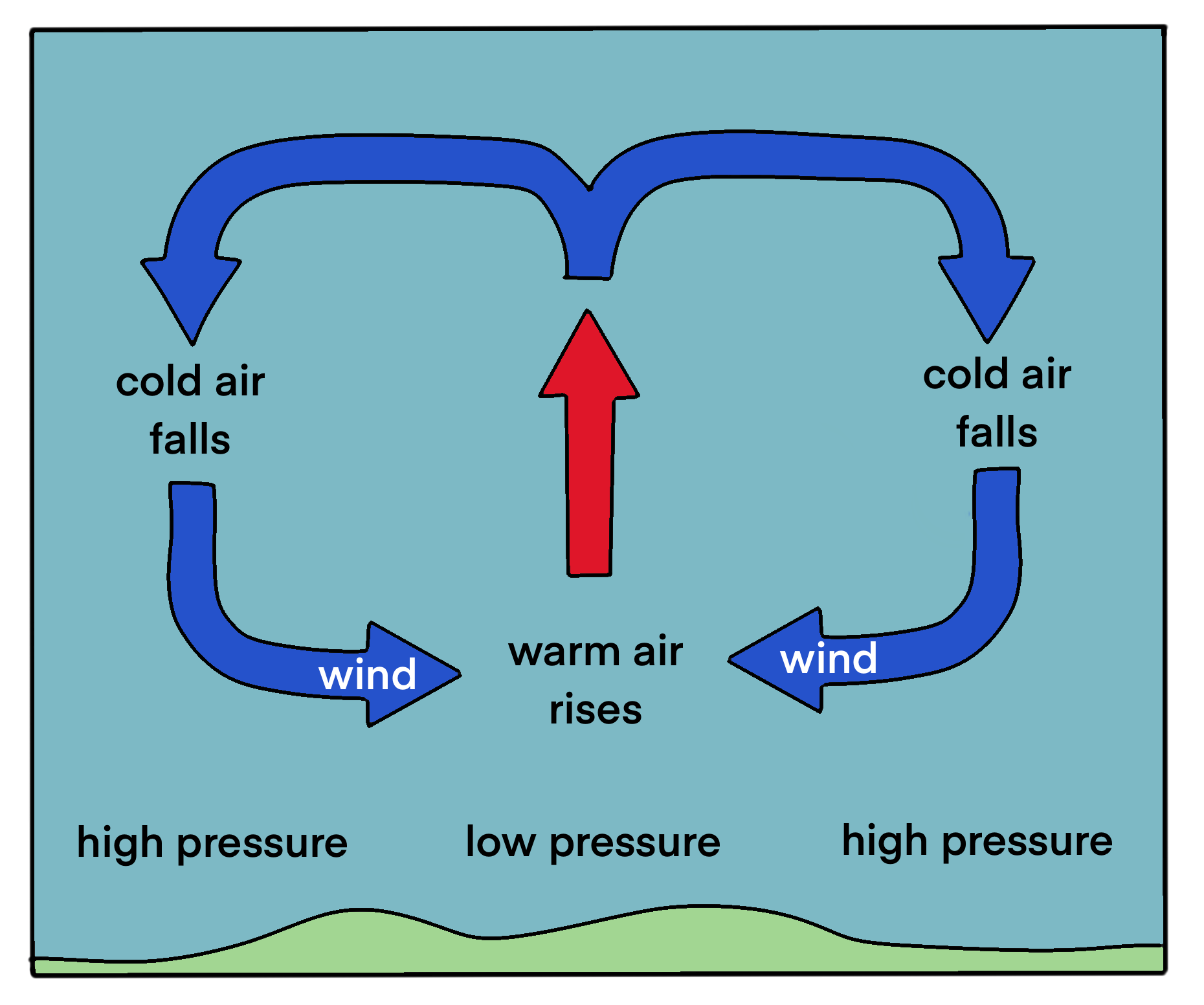
- Wind is simply moving air. It forms when warm air rises, creating low pressure, and cold air sinks, creating high pressure.
- Air moves from areas of high pressure to areas of low pressure, which creates wind.
Global Wind Belts
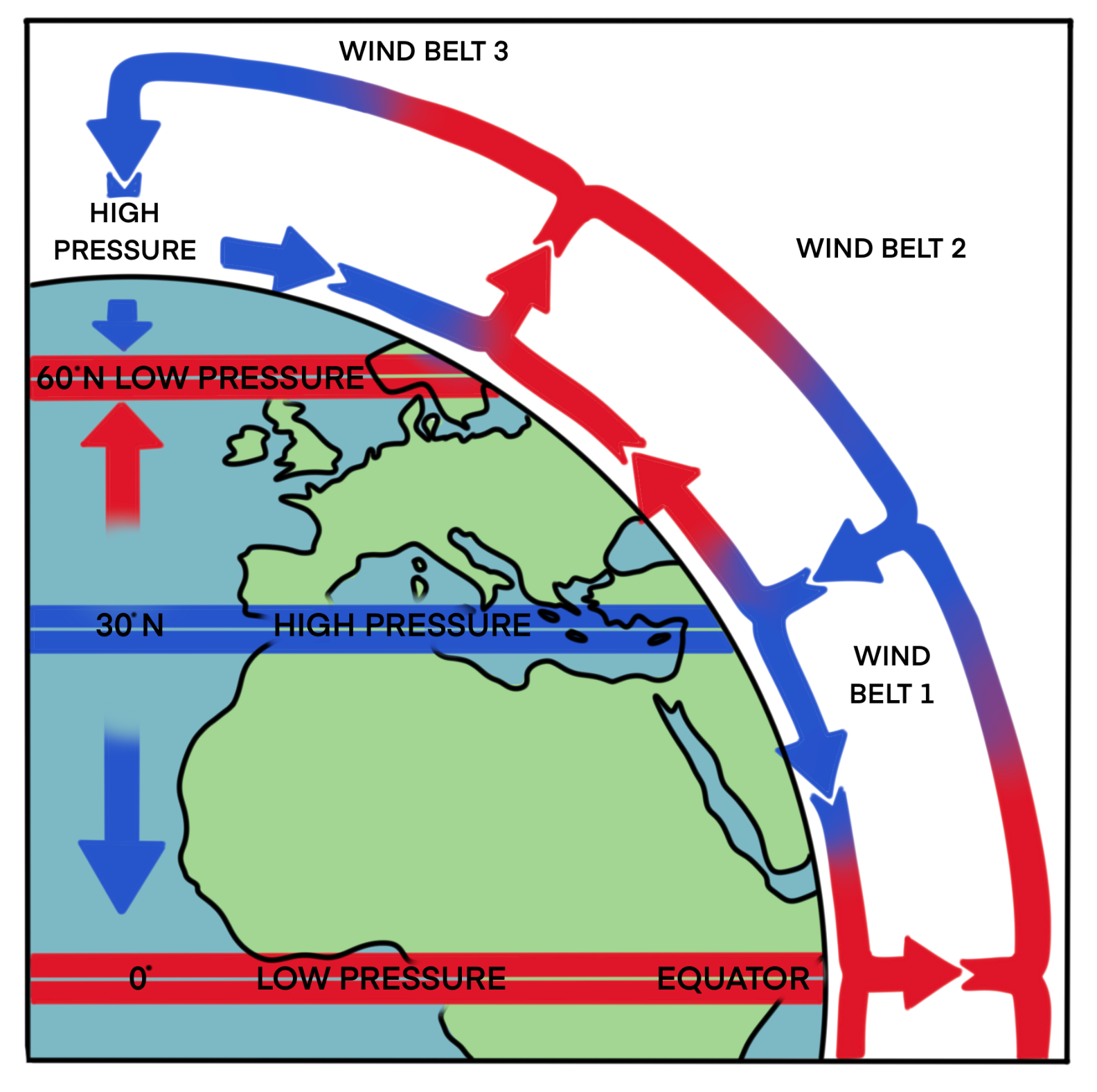
- Wind Belt 1 (0°-30°): Near the equator, air heats up and rises, creating low pressure. As the air cools at around 30°, it sinks and creates high pressure. This cycle forms the first wind belt, with air moving back towards the equator.
- Wind Belt 2 (30°-60°): Air from 30° warms and rises, then cools and moves away from 60°, forming the second wind belt.
- Wind Belt 3 (60°-90°): At the poles (90°), cold air sinks, creating high pressure. This cold air moves towards 60°, where it warms, rises, and creates low pressure. This forms the third wind belt.
Coriolis Effect
- The Coriolis Effect happens because the Earth rotates from west to east.
- This rotation makes winds change direction:
- Northern Hemisphere: Winds are deflected to the right.
- Southern Hemisphere: Winds are deflected to the left.
- This deflexion of wind direction due to Earth's rotation is called the Coriolis Effect.
How Winds Are Named
- Winds are named based on the direction they come from.
- A wind blowing from the north to the south is called a northerly wind.
- A wind blowing from the south-east is called a south-easterly wind.
- In Ireland, the prevailing winds are south-westerly winds, meaning they come from the south-west.